
by Jochen Szangolies
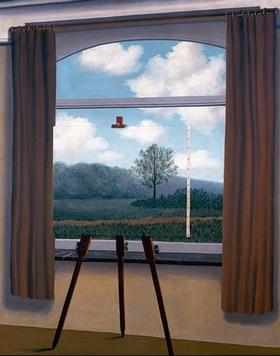
The world is not the world. How’s that for a gnomic, faux-profound fortune cookie opener? There’s all sorts of places we can go now, from Chopra-esque quantum mysticism to watered-down Western lifestyle Buddhism. But I think that this statement is actually true in a perfectly ordinary, quotidian sense that is probably obvious to pretty much everyone on reflection, yet which causes avoidable problems because we’re normally insufficiently aware of it. That sense is simply that what we’re aware of, the things we see, hear, smell, and so on, isn’t what’s out there, what exists independently of our observation of it.
Thus, the seemingly-innocuous term ‘world’ immediately bifurcates: into a directly experienced, lived reality where we take ourselves to inhabit a three-dimensional space populated with chairs and trees and other beings like us, and an ‘external reality’ from which we and our experience of chairs and trees and the like is subtracted to yield—well, what? There’s the rub: because that world is by definition never part of our experienced world, even so much as referring to it in a non-question begging manner that doesn’t project the properties of our experience onto whatever’s out there is fraught. But this is perhaps the most dire, and most common, philosophical error: to think that just because our seemings seem a certain way, whatever being is out there ought to be that way, too.
Again, I’m not under any delusion of dispensing some great pearl of insight here. Most people, when pressed, will readily agree that while things like colors, smells, and other examples of what John Locke called ‘secondary’ qualities may exist in the perception of a thing, they do not necessarily inhere in the thing itself. And speaking of things itself, Kants distinction between the phenomena of perception and the noumena, the mind-independent unknowable objects ‘behind’ our perceptions, leaps readily to mind. The veil of Maia, the brain in a vat, Descartes deceived by his demon, Zhuangzi and the butterfly: there is no shortage of images that capture the basic idea that what we see and what is may be wildly different. But while this concept is readily available upon reflection, I believe that it is rarely present as a factor shaping the way we go about our everyday business. So while we abstractly know that the world is not the world, by and large, we think, plan, and act as if it is. And I think that’s a problem. Read more »