by Michael Liss
But they shall all sit under their own vines and under their own fig trees, and no one shall make them afraid…. (Micah 4-4)
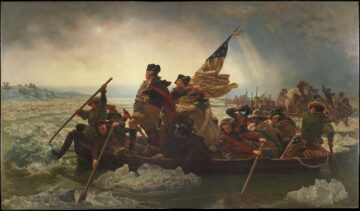
Ah, those figs and vines. George Washington liked this sentiment so much that he used it or a variant at least 50 times in his correspondence. It meant going home to Mount Vernon and staying home. It meant disengagement from whatever activities he had committed to on behalf of others. It meant emulating Cincinnatus, the Roman General who, as legend would have it, was living modestly in retirement on his four-acre farm outside of Rome until the Senate called him back to deal with a crisis and invested him with a dictator’s power. Cincinnatus went on to defeat the invading Aequians, and just 15 days after assuming the dictatorship, he resigned and returned to his plow.
Finally, it meant something immensely important to Washington himself, a man who did not lack self-esteem. Retiring to his figs and vines was a seminal display of republican virtue, an ineradicable example to all who would follow him in leadership that one must act with integrity, that power is granted by the people “in trust” and belongs only to the grantor, not the grantee. Power must be returned at the appropriate moment. Washington understood the conditions of that grant, its essentialness to the American experiment, and acted upon it.
We mythologize our great men well beyond the reality of their lives and accomplishments, but that Washington did this not just once, in resigning his commission, but also a second time, in refusing to run for a third Presidential term, seems almost superhuman. George III thought so: when told by the American artist Benjamin West that his long-time adversary was going to resign, the King said, “If he does that, he will be the greatest man in the world.”
The “Greatest Man In The World” is an impressive title. Still, there’s a strange disconnect in trying to animate this titanic figure, the Washington of monuments and marble statues and Mount Rushmore. He was nothing at all like the bouncing, voluble wrecking ball that was TR, or Jefferson’s suave, violin-playing political poet, or Lincoln’s melancholic, introspective grappler of existential questions of life or death, freedom or slavery. Washington’s eloquence was certainly not in words—instead it was in his capacity to endure and to lead. Read more »
 For a couple of days, some things at 3QD may not work exactly as expected. We will be updating some of the pages at the site in the next few days. We appreciate your patience!
 .
.

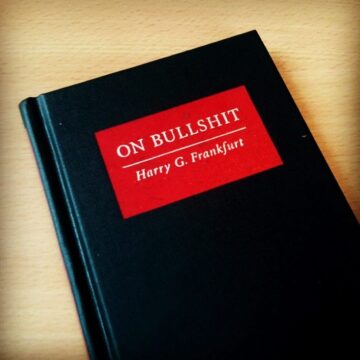 Some things in life are very hard to give up. For me, I hope in a most singular manner, it is bullshit. I have spent nearly twenty years reading whatever literature I can find on what bullshit might be. Since the publication of Professor Harry Frankfurt’s
 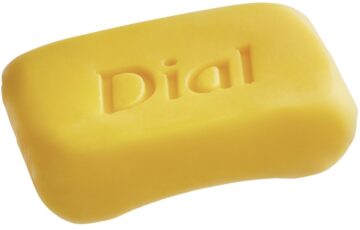 In the late 1960’s and early 70’s, my maternal grandmother spent a lot of time in the United States. She would return to Iran, her suitcase filled with presents like candy and fruity bubble gum for her grandchildren, and pretty shirts and dresses for our mom. She also brought back a part of her daily American life: cartons of red Winston cigarettes, Crest toothpaste, hand and face creams with English writings on the bottles, and Dial Soap in that beautiful saffron gold color that was unlike any soap I had seen or smelled before. Our soaps in Iran were usually either flower scented and over perfumed, or green and organic because of the local olive oil used to make them. Everyone valued the green soaps, but I just wanted the American gold soap. I would watch her put the soap back in a plastic container after her shower to keep it from drying and when she was away from her room, I would go open the plastic container and smell the
 With apologies to Charles Dickens, it will be the best of times, it will be the worst of times.