by Mindy Clegg

The popular TV horror-drama The Walking Dead followed an evolving cast of characters in the aftermath of a zombie apocalypse. The comic on which it was based called it “a continuing tale of survival.” And that it is. Time after time, the survivors settle into some particular situation, only to be met by some new threat that upends their safety and sends them out into a dangerous world time and again. The real danger is other people, not the zombies who become a manageable threat. By the end of the series (SPOILER ALERT) some of the original core group manage to find a community large enough to ensure some peace and normalcy, even as the apocalypse grinds on outside their gates. Many read the show/comic as a warning about humanities’ propensity for unbridled violence in the absence of civilization. Without the threat of the state monopoly on violence, most humans will turn to some sort of violent primitivism, goes the argument. But different messages can come from the show and comic.
Rather than being evidence of man’s Hobbsian state of nature, I’d argue that it’s evidence of what happens when the structures of neo-liberalism begin to crack, but not the underlying ideology of neo-liberal individualism. This precisely describes what we’re seeing under the second Trump administration and in other authoritarian regimes around the world. Since the emergence of capitalist modernity and especially in the wake of two global wars, the world has been organized into nation-states in the international rules-based order. Authoritarians of the postmodern right tell us that these systems are the problem, and destroying them will fix it. But they seek to tear apart systems in order to benefit themselves, not to replace it with anything beneficial for humanity. But can these systems now under attack be employed for more democratic ends? I’d argue yes, they can. Systems are tools and tools can be used in multiple ways, for good or ill. We can turn these systems for good.
The nation-state is the building block of the modern international rules-based order. Modern nationalism, a modern understanding of political belonging, was deployed during the 19th century against eastern empires that western empires sought to destabilize. The Ottoman Empire was one such target of this process of destabilization. Nationalist activist from the Balkans, often educated in Paris or London, brought back new-fangled ideas about an immortal national body being suppressed and abused by an illegitimate imperial (orientalist) power.1 Such ideological machinations would not just disrupt the peace of the Ottomans, but would soon boomerang back on the French and British empires, such as with the Irish rebellion against British colonialism or Vietnamese and Algerian uprisings against the French, among others. By the time the Second World War ended, a war which some have described as imperial rule coming home to roost, a new system was emerging that favored the nation-state over empires, the US and Soviet-led interstate system. Read more »

 If you had to design the perfect neighbor to the United States, it would be hard to do better than Canada. Canadians speak the same language, subscribe to the ideals of democracy and human rights, have been good trading partners, and almost always support us on the international stage. Watching our foolish president try to destroy that relationship has been embarrassing and maddening. In case you’ve entirely tuned out the news—and I wouldn’t blame you if you have—Trump has threatened to make Canada the 51st state and took to calling Prime Minister Trudeau, Governor Trudeau.




 How are we to live, to work, when the house we live in is being dismantled? When, day by day, we learn that programs and initiatives, organizations and institutions that have defined and, in some cases, enriched our lives, or provided livelihoods to our communities, are being axed by the dozen? Can one, should one, sit at the desk and write while the beams of one’s home are crashing to the floor? Or more accurately: while the place is being plundered? There have been moments of late when I’ve feared that anything other than political power is frivolous, or worse, useless. In those moments, I myself feel frivolous and useless. And worse than that is the fear that art itself is useless. Not to mention the humanities, which right now in this country is everywhere holding its chin just above the water line to avoid death by drowning. It can take some time to remember that these things are worth our while, not because they’ll save us today, but because they’ll save us tomorrow.
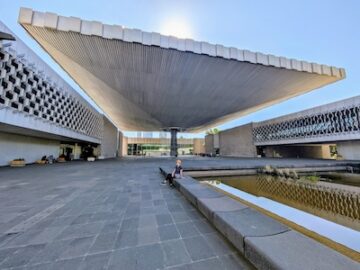
 I love public transportation.

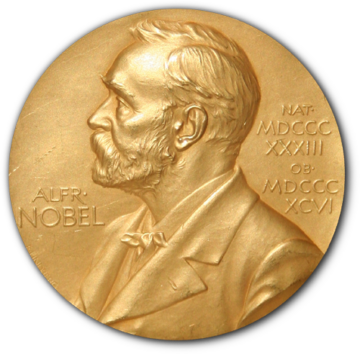 The list of Nobel laureates in physics, chemistry, and medicine includes men and women, Jews, Christians, Muslims, Hindus, Buddhists, and atheists, gay men, lesbians, and cis-scientists, people from Europe, Asia, Africa, North America, South America, and Australia. So, is the ultimate example of meritocracy also the epitome of Diversity, Equity, and Inclusion?