by Marie Snyder

I recently listened to a podcast of Dr. Louis Cozolino, a neuroscientist and psychoanalyst, discussing what he would teach if he were training psychotherapists. The first year would be phenomenology: the power of Carl Rogers’ perspective to train how to develop an alliance through reflective listening while keeping countertransference out of the session. The second year would be physiology: developmental neuroscience and the evolutionary history of brains and bodies. The third year might be called intersectionality: the interpenetration of the spectrum of options that affect clients – brain, mind, family, culture – and a reaction against therapy as a mere opiate to calm the oppressed and exploited. The final year would be on narratives and stories that we live by and on that half second that it takes our brain to construct our experience of the present and feed it back to us.
Cozolino insists that it’s not enough to just sit and listen to people vent. After developing a non-judgmental alliance with the client, therapists need to be “amygdala whisperers,” to be able to down modulate amygdala activation to stop any inhibitory effect on the parietal system that enables problem solving. In other words, they need to soothe anxieties while arousing enough interest for clients to be able to learn new information. Then it’s time to challenge the client’s old system of thinking, slowly and delicately, a little at a time, to help them expand previous conceptualizations of themselves and the world. There’s a necessary plan and a strategy to the sessions. Read more »
 Notational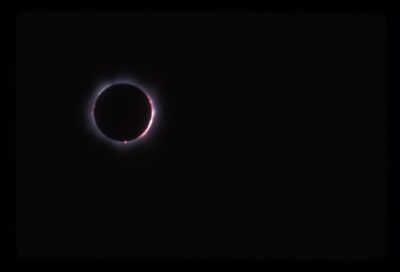

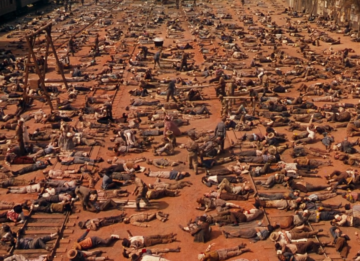 A cinematographer would recognize this as a crane shot, or its replacement, the drone shot. This crane or drone doesn’t move. It defines the POV (point of view) of the painter, and shows how far his perspective can reach and how much he can cram into the in-between, that 2D surface which expands vertically with every higher angle of his POV, as in this crane shot from Gone with the Wind.
 Like many of us, they assembled an inordinate number of puzzles during the COVID-19 restrictions. And like many puzzlers, they came to wonder:
 In the middle ’60s when I first was a new husband, a new teacher, and new father, I met my first indication of the changing consciousness of women in a freshman English class. I was teaching the Yeats poem “A Prayer for My Daughter.” I found it, and in many ways still do a marvelous poem and I spoke of it to my class with great enthusiasm saying that this is what I would wish for my daughter – that she would be “beautiful” but not “too beautiful” and “learned courtesy” for:
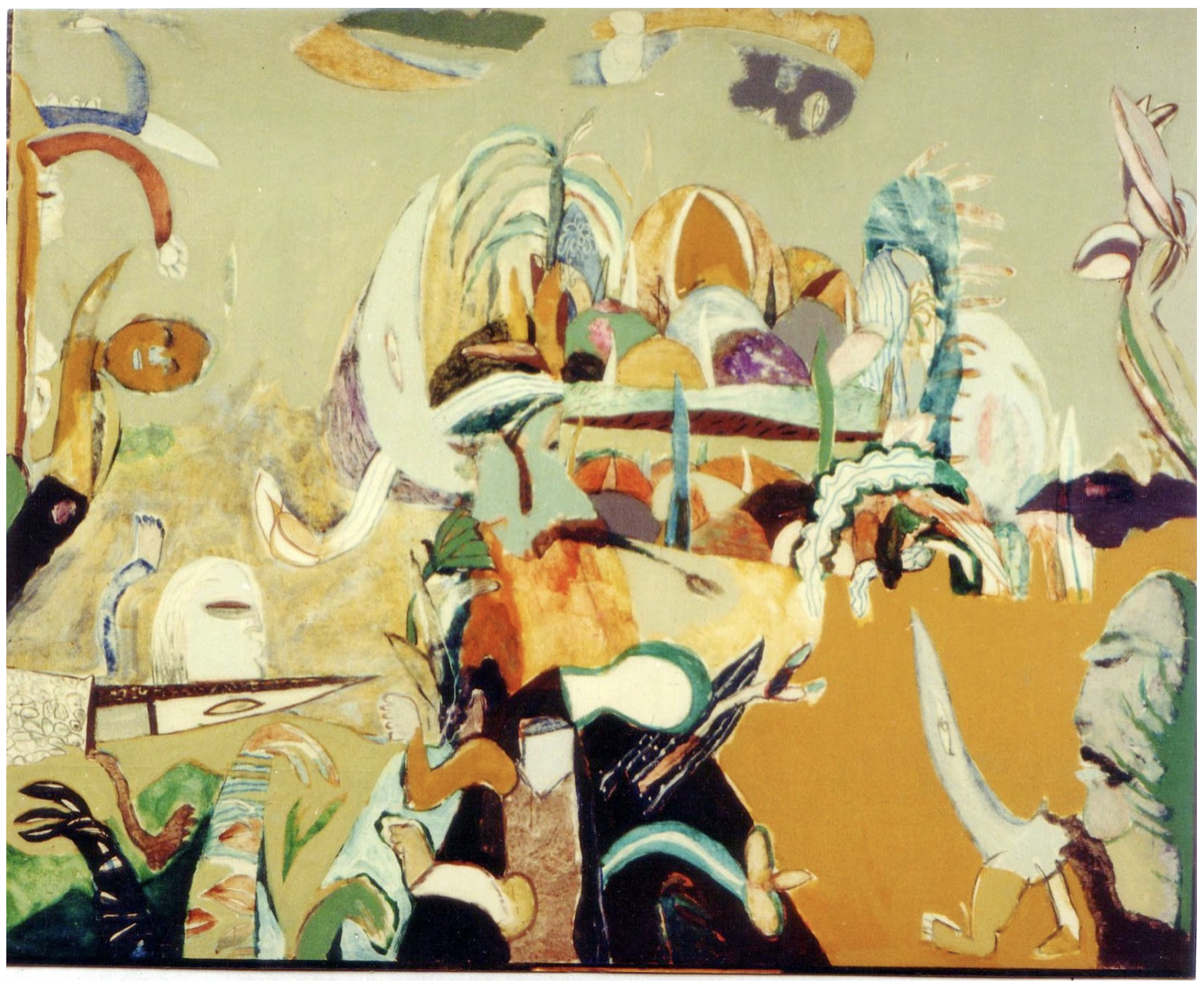 Dilara Begum Jolly. Untitled, ca 2014.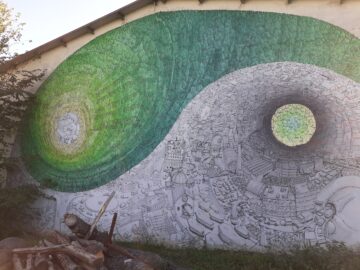
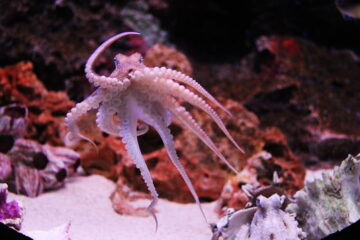
 I’ve heard owls are signs of a big shift in your life; I also know that I only really look for owls during those times.
  The
The  Poets. Dancers. Singers. Scientists. Generals. Explorers. Actors. Engineers. Diplomats. Reformers. Painters. Sailors. Builders. Climbers. Composers. In a pretty-good eighteenth-century copy of a portrait by Holbein the Younger, Thomas Cromwell is not so much a man as a slab of living, dangerous gristle. Henry James looks dangerous too, in a portrait by John Singer Sargent that more people would recognize as great if inverted snobbery hadn’t turned under-rating Sargent into a whole academic discipline. Humphrey Davy, painted in his forties, could not be more different. He looks about 14; thinking about science has made him glow with delight.
 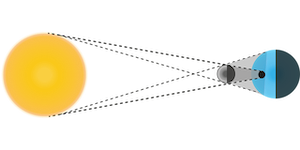 There are worse places to be a stargazer than south-central Indiana; it’s not cloudy all the time here. I’ve spent many lovely evenings outside looking at stars and planets, and I’ve been able to see a fair number of lunar eclipses, along with the occasional conjunction (when two or more planets appear very close together on the sky) and, rarely, an occultation (when a celestial body, typically the moon but sometimes a planet or asteroid, passes directly in front of a planet or star).