
by Derek Neal
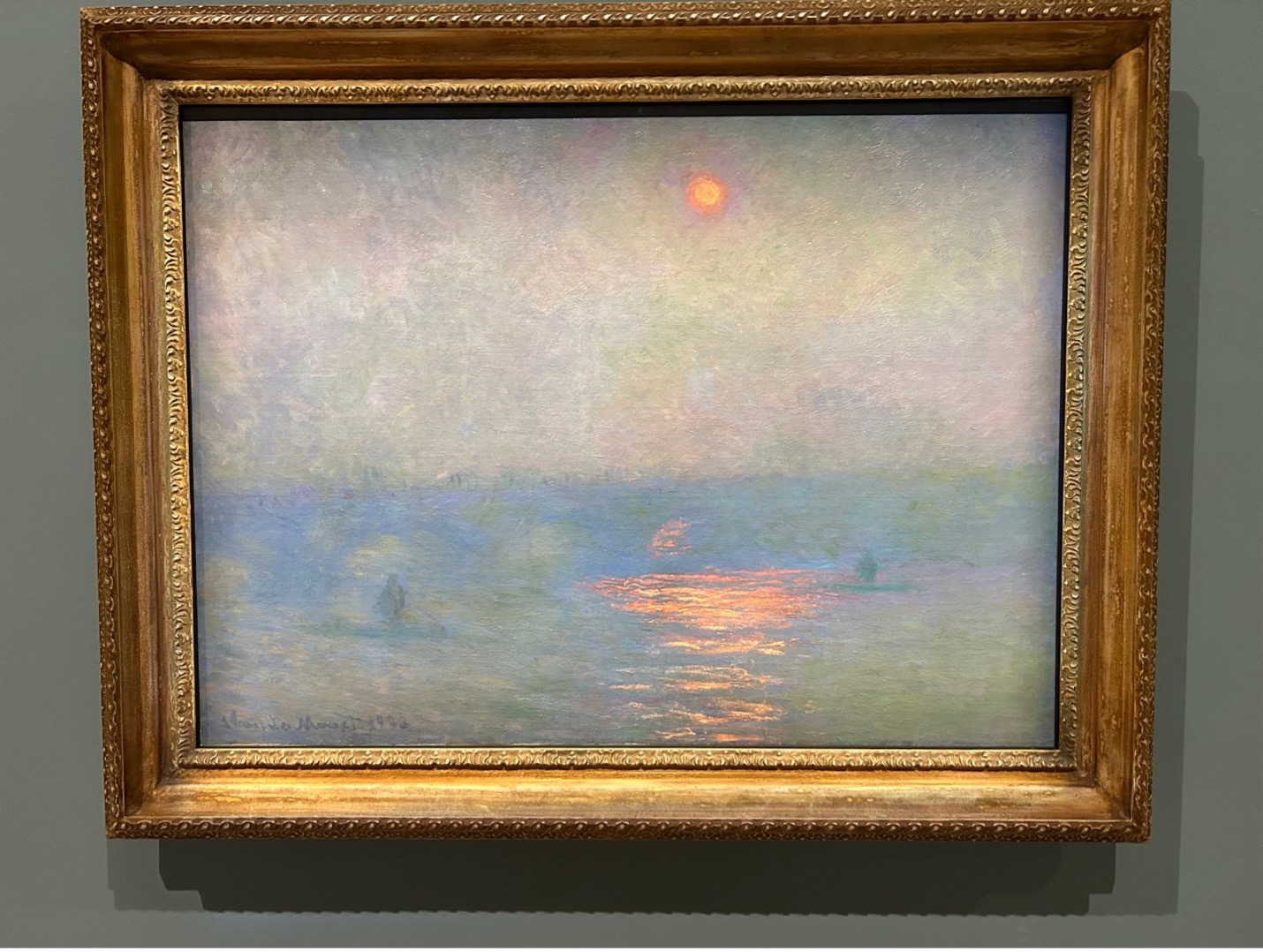
The mornings have become dark. These weeks are always strange, the end of October, just before the clock falls back and the mornings brighten again. For now I get ready in a sort of hinterland; it’s not night, but it’s not day either. The sky is a sheet of gray. I back out of the driveway, turn onto the main road. In the fog, the streetlights appear as beacons. Their brightness shocks me, and I remember a Monet painting I saw once in New York, a scene not of waterlilies or his garden, but the sun as a bright orange disk in the London fog. The wall text mentioned how Monet thought London was beautiful because of the fog, not despite it. This morning, the fog acts as a filter, casting a dull grayness everywhere but allowing the greens and reds of the streetlights to pass through. The road is relatively empty, I slip through a yellow light, leave the other cars behind, and I’m out on the open road, cruising downhill as the lights glow ahead of me.
I love driving. I was looking through my fiction writing recently—not much, just a page or two here and there—and I was surprised to see that much of it has to do with driving, or, if not driving, with the movement of the human body through space and time at an accelerated rate (ice skating and biking also feature). We are not made to move at such speeds, and when we do, something happens to our consciousness. Life feels different. Not every time, of course, but sometimes, and when it does, writing from a fictional viewpoint rather than in the style of an article seems the only way to transfer that phenomenological experience to the page.
The first thing I ever wrote that was any good falls into this category. I was in university, in a class for writing tutors, and we were tasked with writing a personal essay. I didn’t know how to write a personal essay—I didn’t know how to write about something meaningful to me without it coming off as trite and clichéd to others—so instead I submitted a short passage about diving into a lake I’d spontaneously written one summer day. I knew it was good because I’d written it while life felt different and I’d somehow managed to capture that experience in language. The essay was chosen as an example for the class. Then we had to expand our pieces into a longer story, but I couldn’t do it. I tried to re-enter the headspace that I’d inhabited while writing about diving, swimming, and floating, but no matter how hard I tried, nothing clicked. I wrote something and my teacher told me that she couldn’t follow it—it didn’t make sense. Read more »


 Philip Graham: The home page of your new and expanded author’s website,
 The question of the day on everyone’s minds is whether AI is a boom or a bust. But if we lift our eyes ever so slightly from the question of the day and look at the bigger picture, two bigger questions come into view.
 In Arabic, the word
 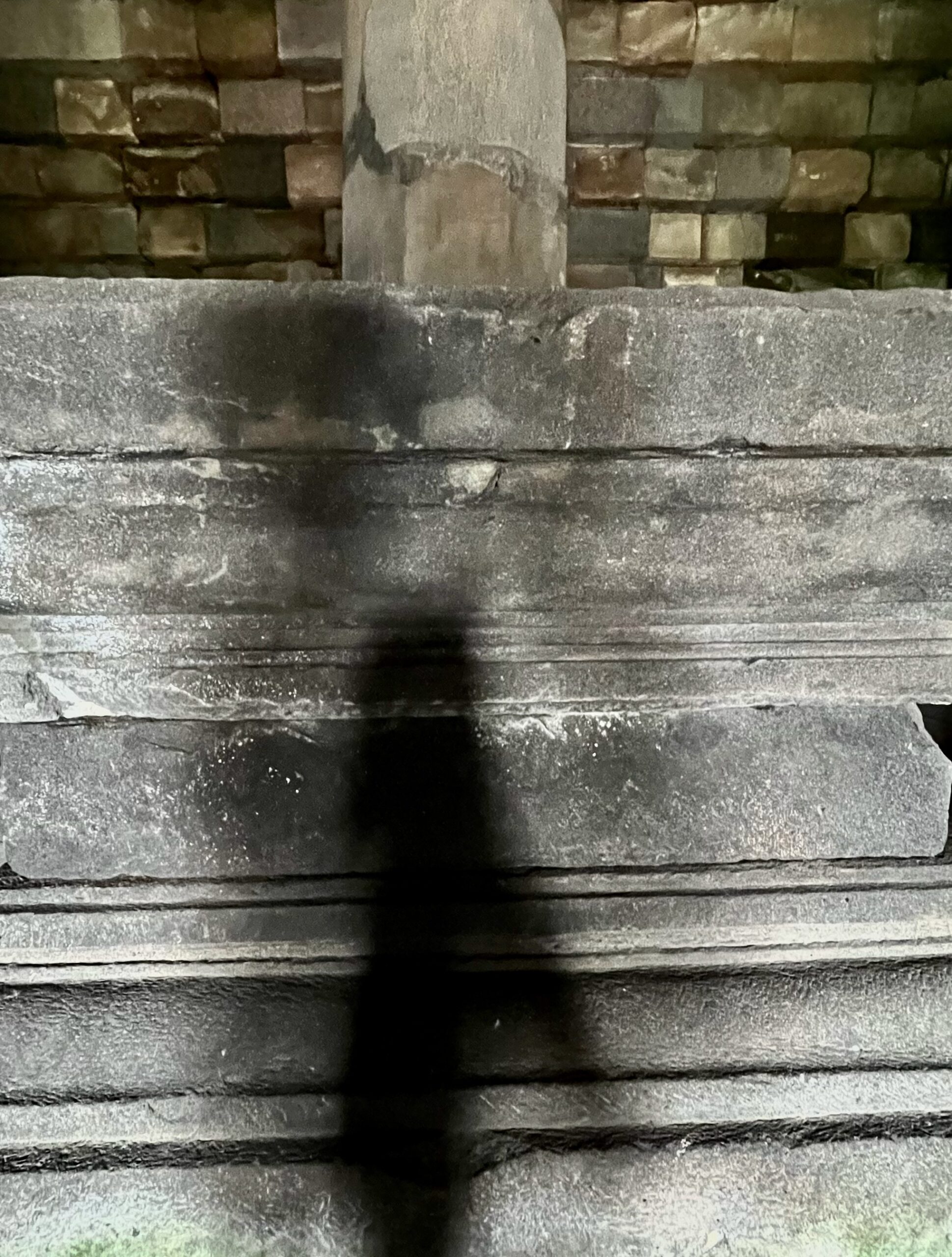 Sughra Raza. Self-portrait in Temple, Jogjakarta, Indonesia, October 2025.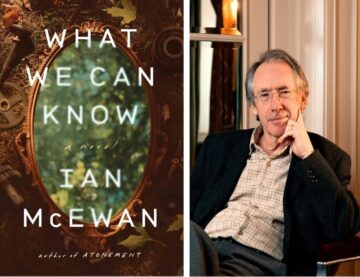



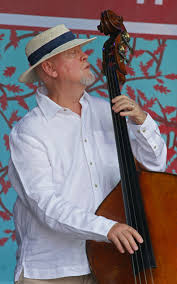 There can have been very few musicians who played such key roles, in so many different bands in so many different genres, as Danny Thompson. When he died at 86 in September, music lost one of its great connectors.
 Language: Ooh, a talkie!
 There are contradicting views and explanations of what dopamine is and does and how much we can intentionally affect it. However, the commonly heard notions of scrolling for dopamine hits, detoxing from dopamine, dopamine drains, and

 When you walk through the gates to enter the B-52 Victory Museum in Hanoi, you immediately find the wreckage of what has been one of the most terrifying machines ever built: an American Boeing B-52 Stratofortress. Apparently, this wreckage largely came from Nixon and Kissinger’s “Christmas Bombings” of 1972.