
by Eric Schenck
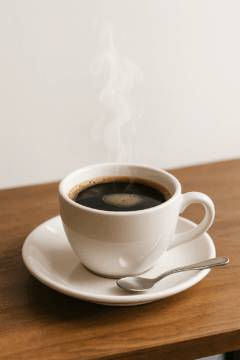 In Arabic, the word kahwa means coffee. At least that’s how I learned it. The Egyptian dialect doesn’t seem to care about the letter qoff, and will leave the sound off just about every word it appears in. The result?
Ahwa.
It still means coffee, but the word takes on a much bigger meaning in Egyptian culture. That’s because the word also means “café.” And not a Western style café like Starbucks, where you sit inside with air conditioning and sip on fancy drinks. No – this is something much, much different.
The ahwa, as I will come to find out, is the “café of the people.”
And I love it.
*
Egyptian ahwas are a funny place. They start out intimidating. It’s 2015, I’ve just moved to Cairo, and I don’t quite know what to make of the thousands of outdoor cafés that seem to be everywhere. They are almost constantly full of people. Loud, fast-paced, and covered in a slight haze of shisha smoke, ahwas are a shock to your senses. They give me a sort of anxiety I never knew I had.
But they quickly become one of my favorite things about Egypt.
They’re just about everywhere, and follow a predictable pattern. Go sit outside, get the attention of some guy that works there, and then wait until he’s finished his cigarette. Get what you want, and then just watch as you sip. Cairo is one of the biggest cities in the world. Almost regardless of where your chosen ahwa is, there will be something interesting to look at. It’s all very basic, but it’s a kind of café culture that is instantly appealing.
You get your drinks placed on rickety tables. You sit on plastic chairs that workers carry out in stacks. Old men in suits sit and read newspapers, and you feel like you’ve gone back in time. And the fact that you can get delicious coffee, cheaper than just about anywhere else, and watch the world go by while you’re puffing on some shisha?
An added bonus.
*
One thing that’s interesting about ahwas is that most people that sit at one don’t actually drink coffee. The national drink of choice is black tea, and at these coffeehouses it’s no different.
For me, though, there is something special about sipping coffee at these places. Ahwa mazboot becomes my drink of choice. This is Turkish coffee (the grounds at the bottom of the glass, not to be drunk) with just a pinch of sugar. I’ve never been particularly big on coffee, and certainly not on sugar. But for some reason, ahwa mazboot wins my heart. I stick with it the entire time I’m in Cairo.
The different levels of sugar in the coffee is a reminder of how big a language can be. When ordering you will always say “ahwa”, followed by the word that indicates just how much sugar you want. I prefer mazboot (medium), but the level can go all the way from sada (no sugar) to zyada (extra sugar). They even have seryaosy (extra-extra sugar).
All these words show me, once again, how different Standard Arabic and the Egyptian dialect are. And that’s not even to mention all the slang I eventually learn. Talqima refers to the overall sweetness level of tea, whereas the man that works at an ahwa is called (wait for it) an ahwagy.
But my personal favorite? If you are going to aa’ed ‘al ahwa (“Sit at the ahwa”) you may very well be implying that you are hiding from some kind of responsibility. I learn this from an older colleague. I wonder if he is having problems with his wife when he asks me if I want to go to an ahwa with him after work.
*
Each ahwa has its similarities. Each one will have tables, usually just big enough for a few drinks. Each one will have chairs. I notice plastic chairs are at the more “upscale” ahwas, but wooden ones are always used at the ahwas with the most charm. Sometimes you can sit inside (if there is, in fact, an inside), but most of the time you will set up shop on the street itself.
Each ahwa is also wholly different. One good example are the ahwas that host soccer game viewings. Football is the national sport of Egypt, and even if you aren’t a fan (as I’m not), it’s impossible not to get sucked in.
Certain ahwas with large outdoor seating areas will roll out several TV’s when an important match is on. It seems like the entire country shows up to these games. People pack into chairs and smush together to get a view. They sip tea and smoke cigarettes while the ahwa workers come around and take their orders. Most ahwas don’t do this – they simply aren’t big or popular enough.
But for the ones that do, it’s a great thing to be a part of.
*
As wonderful as football matches are, my favorite times at the ahwa will be solitary moments. These outdoor café are the best places you will find in Cairo to people watch, and they’re also wonderful if you want to sit with your thoughts. Most of the time I’m at one, I’m alone.
Egypt is a country with a population of over 100 million, and about a quarter of them live in Cairo alone. To say that there are groups of people falling on top of each other doesn’t do it justice. Crowds here are unlike anything. The main draw of the ahwa is not only everything I see, but a convenient way of escaping it. Or at least to feel like I am.
I come to appreciate not only being alone at an ahwa… but being there in the early morning. If I go early enough, right around 7, I hit the sweet spot. People aren’t yet hustling to work. I feel, in a strange way, like I have a giant city to myself.
Sometimes I will bring a book to read. Sometimes I bring Egyptian Arabic vocabulary cards. And sometimes I don’t bring anything at all. I just sit, order a second ahwa mazboot, and think about nothing in particular. Maybe this is my way of bonding with the ahwa. We don’t have to say anything to understand each other.
*
The preferred activity at ahwas is backgammon (tawla). I’ve only played it a few times, but I quickly become acquainted with the rules.
One day, I’m sitting at the ahwa close to my apartment. An old man asks the workers for a backgammon set, then motions to me. Thankfully he speaks slow as a snail, and I understand him asking if I want to play. What do I have to lose?
By some miracle, I actually win. The guy that works there sees the final result of our game, then looks at me approvingly. He says something to the old man, then pats him on the shoulder. They both burst out laughing. My opponent looks me in the eyes, shaking his head. He extends his hand across the table, and I shake it.
I’m officially in with the cool kids.
*
About a year into my stay in Cairo, my Egyptian coworker sits me down for a lecture on the ahwa. Tamr knows I like going to them, and he takes the chance to describe the beauty of the Egyptian café. Somehow he connects it to an argument of Egypt’s virtues.
“See,” he tells me, thumping his hand on the table, “Egypt is a country for everyone, and the ahwa is where we gather. It’s the café of the people!”
This phrase in particular sticks out. The notion of the ahwa as “the café of the people”, as a kind of communal gathering ground for the average Egyptian, is nice. Romantic, even. It sounds grand when somebody speaks it out loud.
But I don’t quite buy it. Take the lack of females. You usually won’t see a lot of women at an ahwa. And depending on where you are in the city, sometimes you won’t see any. And even though there are plenty of refugees from countries like Somalia and Ethiopia, people that have been living in Egypt for years, you’ll be hard-pressed to find them here. If some people just aren’t welcome at an ahwa – how right can Tamr be?
Still, he does have a point. In a very real way, regardless of who actually goes to them, ahwas are a gathering place. They’re full of people. Almost constantly. And for that reason alone, they give you a peel into Egypt as whole. It’s a microcosm of the country. They’re bustling, loud, and crowded. They’re disorganized, an assault on your senses, and almost endlessly charming.
This is the ahwa. This is Egypt.
*
I read that the ahwa is an Egyptian man’s second wife. I laugh, but then quickly realize it’s not far off from what they mean to me as well.
For three years in Egypt, the Egyptian ahwa will be there for me during the shitty times. The day after the Egyptian men with guns storm my first job, I sit at one to collect my thoughts. What do I do now? How do I make money? Is Egypt actually that safe after all?
The ahwa is also there when things are great. Those moments when I have an hour-long conversation in Egyptian Arabic and understand every word said to me. Those times I take a trip to Soor Azbakeya, find an especially great book, and lose myself in the pages over a coffee. The days where I feel like Cairo is where I’m supposed to be
Life in Egypt will end up being weird, unpredictable, and endlessly frustrating. But it was also be three of the best years of my life. And the ahwa will always be there for the ride, just around the corner, waiting to pour me a Turkish coffee, with just a little bit of sugar.
And I love it for that.
***
Enjoying the content on 3QD? Help keep us going by donating now.