
by Daniel Gauss
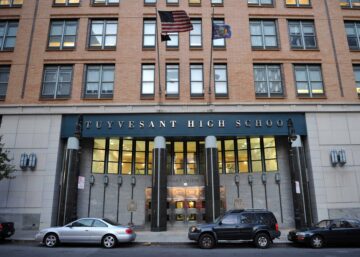 In the context of growing concern about educational equity, the persistent racial disparities associated with the Specialized High School Admissions Test in New York City continue to spark debate. As cities and school systems nationwide reconsider the role of standardized testing, the story of the origins of this test shed light on how deeply embedded policies can appear neutral while, in reality, reinforcing inequality.
Both New York City’s civil service exam of the 1930s and the admissions test to New York City’s elite public high schools (the SHSAT) originated from a need to eliminate favoritism and political influence in acceptance policy. Both exams led to significant racial disparities. The civil service exam was reformed and government employment became more inclusive by the early 1970s, but no meaningful attempt has been made to make such adjustments in regard to the specialized high schools.
There can be no doubt that there have been lingering and chronic racial disparities at New York City’s elite and publicly-funded specialized schools following the adoption of the SHSAT. Numbers from 2024 show that Black students comprised just 4.5% of offer recipients, rising slightly from 3% in Fall 2023, but remaining far below their population percentage in the public school system (20.2%). Latinx students saw an increase to 7.6% of offers (up from 6.7%) but this still shows a major underrepresentation compared to their 28.3% share.
On the other hand, Asian students received around 52% of offers (while making up about 15% of the public school system), and White students received about 26% (while comprising about 16% of the system); together, White and Asian students accounted for roughly 78% of acceptances (Chalkbeat, June 18, 2024). These figures reflect a persistent demographic imbalance over decades.
So how did we get here?
In 1971, New York City had three elite public high schools that attracted the crème de la crème of students: Stuyvesant High School, established in 1904 as a boys’ trade school that morphed into a STEM powerhouse; Brooklyn Technical High School, founded in 1922 with a focus on engineering and project-based learning; and Bronx High School of Science, founded in 1938 with an advanced science and math curriculum emphasizing research and new ideas.
However, each school had its own admissions policy, and some criteria were so subjective as to be ethically compromised. By 1971, rumors circulated that certain “connected” individuals could influence admissions, favoring less qualified students over more deserving ones.
There were accusations that political pressure allowed local politicians or school officials to determine admissions, particularly benefiting children from wealthier families. Before the SHSAT, students would gain entry through recommendation letters, interviews, or other subjective criteria, allowing favoritism to thrive. Some community leaders, for example, openly criticized Brooklyn Tech’s admissions process, believing that white Catholic students received preferential treatment due to political connections.
So, in 1971, New York applied the same principle to specialized science high school admissions that Fiorello LaGuardia had used to clean up favoritism and patronage in New York City government, using standardized exams to eliminate perceived political influence.
Admission to these schools became merit-based through a high-stakes standardized exam, made into law in 1971 with the Hecht-Calandra Act. This law made the Specialized High Schools Admissions Test (SHSAT) the sole basis for admission, promising a competitive, objective selection process.
The SHSAT became the only criterion for admission to Stuyvesant, Bronx Science, Brooklyn Tech, and future specialized high schools. The law prevented any racial quotas or alternative admissions methods from being imposed by the city government. Yet, by preventing racial quotas and alternative methods of admission, it also deflected affirmative action policies that could have ensured racial integration of New York City’s best public high schools.
LaGuardia’s civil service exam had also, previously, inadvertently ensured racial imbalances in regard to city workers. So, ironically, at the time that the civil service exam was being altered to ensure greater diversity, a similar type of exam system was established that would result in racial inequality for high school students. There was a clear double standard.
The Civil Service Reforms of the 1950s–70s recognized that purely test-based hiring had discriminatory effects, so they introduced affirmative action, modified exams, recruited more earnestly and changed hiring criteria.
The SHSAT was introduced in 1971 and instead of addressing systemic inequities through standardized testing, they doubled down on a single high-stakes test for high school admissions, disadvantaging Black and Latino students who lacked access to elite test prep and other social and economic “cultural-capital” opportunities. The civil service exams? “Oh no, they’re biased! Let’s fix them.” The SHSAT? “Oh yes, this one is totally fair. Let’s go with it.”
So the racial imbalance that resulted from the SHSAT was perhaps not inadvertent, indeed, it seemed predictable. In fact, the SHSAT was established at a time when an effort was being made to desegregate NYC schools. The test may have been perceived as a way to maintain the racial and class composition of specialized schools.
By 1971, Black and Puerto Rican communities sought greater access to high quality schools and activists proposed reforms like geographic quotas and stronger outreach programs to bring more minority students into specialized high schools. To its credit, the New York City Board of Education was open to these reforms while Hecht-Calandra came from the state level, thus rendering local attempts at ensuring diversity ineffective.
Therefore, the most diverse city in the USA has had a law from Albany, New York compelling it to, year after year, supply selection criteria for their best public high schools which consistently provide a skewed racial demographic.
Vincent Hecht and John Calandra were White politicians from Queens and the Bronx, representing large working-class White populations who did not support school integration. Assessments different from a standardized test (e.g. grades, teacher recommendations or community quotas), would have meant more students of color would likely be admitted to specialized schools. Through a single high stakes test, the Hecht-Calandra Act appealed to “objectivity,” while having the effect of maintaining a racial status quo.
This didn’t, by the way, just happen in New York City. The Boston Latin School, Lowell High School in San Francisco, and other selective public schools also had similar “merit-based” tests, facing the pressures of proposed integration. Standardized testing has disproportionately favored middle-class and White students for decades. It has often served as a mechanism for limiting integration while maintaining the appearance of fairness.
The SHSAT is a relic of a time when racial integration of northern schools was feared by White politicians and White voters. The debate has often been about how to ensure more minority student admissions without changing the SHSAT. That’s a cop-out. Perhaps it is time to take bold action, like that taken to change the civil service exams, to ensure a more fair and equitable admissions assessment.
If a student wants to gain admission to a specialized high school, they have to go beyond their school’s curriculum and engage in the process of test prep. This favors students whose families can afford expensive test prep courses for many years. Providing perfunctory test prep for ‘disadvantaged’ students for a limited time does not solve this problem. Students should not have to seek test prep help in the first place.
If a student works hard, behaves respectfully, completes all assignments diligently, excels academically, masters complex concepts, and shows a clear desire to grow and contribute, why isn’t that enough for admission to a “specialized” high school?
Rather than identifying the most talented or capable students, the SHSAT rewards those who have been extensively drilled, often beginning in elementary school. This system excludes many bright, motivated students who could thrive in a rigorous academic environment but lack the financial resources or parental pressure to pursue relentless prep.
It damages our collective future by sidelining talent, promoting the wrong social values, and encouraging a narrow, mechanical view of intelligence. The result is a tragic waste of human potential.
The intense competition for spots in specialized schools also creates a culture where some parents pressure their children from an early age, possibly sacrificing their mental health and well-being for a single test. This can lead to burnout, anxiety, and depression in students, many of whom may feel that their value as human beings is closely tied to one narrow aspect of academic performance.
When classrooms lack diversity, students lose the chance to interact with peers from different backgrounds, which can perpetuate and reinforce racial stereotypes and societal divisions. These specialized high schools do little to address racial misunderstanding and prejudice; in fact, one could argue they contribute to making such biases more acceptable.
Students in specialized high schools often find themselves in a hypercompetitive environment where grades, test scores, and college admissions become the only measures of success. This stifles creativity, discourages risk-taking, and fosters an atmosphere where students see their peers as rivals rather than collaborators.
The narrow focus on a single standardized test means that students with talents in the arts, leadership, social realm or hands-on skills are often overlooked. A more holistic admissions process could encourage a broader range of excellence rather than prioritizing a single, rigid and hollow assessment.
Proponents of specialized high schools often point out that 14 alumni who took the SHSAT have gone on to win Nobel Prizes. If we had built a system rooted in equity, creativity, and genuine intellectual cultivation, not just test-taking skill, perhaps ten times as many brilliant students, from all racial and socioeconomic backgrounds, would have had the opportunity to excel on the world stage. Great test-taking ability doesn’t predict Nobel-level thinking.
So how do we create a fair admissions system, one that rewards real academic effort and can’t be gamed by wealth, nepotism, or privilege?
The University of Texas at Austin once offered a brilliant model. Under its Top 10% Plan (now Top 6%), any student who graduated in the top 10% of their high school class, regardless of the school’s location or resources, was guaranteed admission. For many students of color attending under-resourced or segregated schools, this provided a path to opportunity based on consistent effort and performance, not test prep or privilege.
The genius of the Texas plan was that it rewarded students for doing well where they were, not for outcompeting peers at expensive prep academies. It promoted sincerity, integrity, and long-term effort over test-taking tricks. That’s what real merit looks like.
Brown v. Board of Education (1954) made clear how harmful racial segregation in public education is, both to individuals and to society as a whole. Yet New York State continues to mandate a high-stakes admissions test that consistently produces racial disparities. A similar testing system was already dismantled.
In Griggs v. Duke Power Co. (1971), the U.S. Supreme Court ruled that employment practices (including tests) that disproportionately harm minority applicants violate civil rights law, even without proof of intentional discrimination. In New York City, civil rights advocates challenged civil service and firefighter exams for their disparate impact on Black and Latino applicants, most notably in United States v. City of New York (2009), which led to significant reforms in FDNY hiring practices.
So the question remains: if a previous system was struck down, why does this one still stand? Is that not grounds to bring this into the courtroom and argue that students of color are being denied their 14th Amendment right to equal protection under the law?
Standardized tests like the SAT, ACT and SHSAT may present themselves as impartial tools of merit, but in practice, they often serve as filters for wealth and privilege. Their results correlate more closely with socioeconomic status than with intellectual potential, and their use in high-stakes admissions processes has consistently led to the exclusion of low-income and minority students.
If a standardized test can be shown to result in stark racial disparities in admissions, and if New York City adopted this test at the very moment it was dismantling another exam with similar effects, then the SHSAT functions less as a neutral measure of merit and more as a strategic instrument of exclusion. Its impact mirrors that of a grandfather clause or a Jim Crow law.
A mechanism that predictably and consistently excludes certain groups is not merely flawed, it is suspect by design. Perhaps the SHSAT isn’t broken, but is working exactly as intended by its creators in the early 1970s. Perhaps it is Jim Crow retooled for a post-civil rights era, established at a time when racial exclusion was more acceptable. It doesn’t need to say who gets excluded. It still just makes sure they are.
***
Recent Demographics Concerning Racial Diversity at New York City’s Specialized Schools:
Chalkbeat New York. Specialized high school offers to Black and Latino students increase, but remain low. June 18, 2024. https://www.chalkbeat.org/newyork/2024/06/18/specialized-high-school-offers-to-black-and-latino-students-increase-but-remain-low