
by Michael Liss
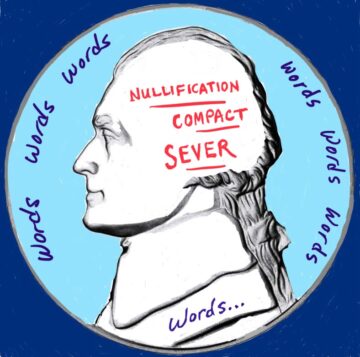 Words, so many words. Words that inspire “Ask Not,” and those that call upon our resolve “[A] date that will live in infamy.” Words that warn about the future “[W]e must guard against the acquisition of unwarranted influence, whether sought or unsought, by the military-industrial complex,” and those that express optimism about it “I’ve been to the mountaintop.” Words that deny their own importance “[T]he world will little note nor long remember what we say here,” while elevating themselves and the dead they honor to immortality.
These words, these good words. They are the building blocks of our civic culture. In a democracy like ours, where we do not demand conformity, but rather abide by rules that are essentially an exchange of promises, words are paramount. What do they mean, how binding are they, do they express an unbreakable eternal truth, or do they grow sclerotic, even obsolete? If so, how do we change them? Is there an essence, a central truth that is and must be immutable?
To get any of those answers, we should begin with Jefferson, the central designer and primary wordsmith in the architecture of independence.
We hold these truths to be self-evident, that all men are created equal, that they are endowed by their Creator with certain unalienable rights, that among these are life, liberty, and the pursuit of happiness.
Wonderful, isn’t it? Thrilling. It is our intellectual origin story. It should fill us with pride—that, for these principles, we took on the most powerful nation on Earth and, after years of reversals, won. Soon we will celebrate the 249th Anniversary of the Declaration of Independence. We can trot out some nerdy historian to point out that maybe it’s not really the 4th of July—maybe it’s the 2nd or 3rd. We can indulge ourselves in cautionary reminders how perhaps we haven’t lived up to the promises that are in the Declaration. We can certainly bewail the state of contemporary politics. Or we can just enjoy it, maybe go to a small town if we don’t live in one, see the old cars and the pride of the older soldiers, the flags and bunting, the picnics, the fireworks, the tradition of a 4th of July speech by some local worthy.
Blather—of course it is. Like everything else, we commoditize it, commercialize it, invariably bury the lead: At its best, Independence Day should be a reaffirmation of the Declaration’s central promise. Read more »
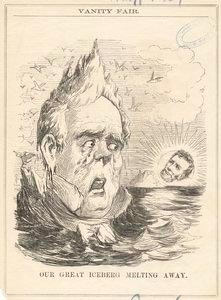 November 6, 1860. Perhaps the worst day in James Buchanan’s political life. His fears, his sympathies and antipathies, the judgment of the public upon an entire career, all converge into a horrible realty. Abraham Lincoln, of the “Black Republican Party,” has been elected President of the United States.