
by Akim Reinhardt
 The United States has always faced a fundamental tension. On one side are those who champion, enforce, and/or profit from hierarchies of power: white supremacist racism, sexist patriarchy, Christian fundamentalism, and capital concentrations chief among them. Arrayed against these hierarchies of power are people who promote and work for racial equality, gender and sexual equality, cultural tolerance, the amelioration of poverty, and genuine freedom both for and from religious beliefs and practices.
For nearly two and a half centuries, these tensions have produced victories and defeats for all sides. While more of course remains to be done: the 20th century witnessed a steady rise in poor people’s (and everyone else’s) quality of life; women began making substantial advances a hundred years ago; racial, ethnic, and religious minorities have made important gains since World War II; LGBT people have achieved remarkable progress during the last half-century; and more recently, agnostics and atheists have begun carving out spaces of acceptance.
While these struggles are all longstanding, dividing lines are usually not very simple or clear cut. Ever since settler colonial slave owners began authoring stirring documents about freedom, many Americans have been on the side of freedom and equality on an issue or two, and against it on others. History offers no shortage of racist feminists, sexist civil rights workers, exploitative plutocrats who seek to help the poor in their spare time, homophobes of every stripe, and so on. Because there are so many divisions and contests, and because the lines of alliance and contestation are often unclear and shift over time, the major U.S. political parties have historically teetered back and forth on various issues. Read more »


 By a happy chance, the section I was invited to read from, alongside Andreas Flückiger and William Brockman, two associates of the Foundation, at the


 After my several visits to Kerala, I wrote up an article, “On Life and Death Questions in India” for EPW, where I highlighted the welfare and demographic achievements of Kerala, the most advanced region in India in terms of many indicators of social democracy. Soon Raj and his colleagues (including my friend, T.N.Krishnan) produced a large, quantitative report for the United Nations Development Program, which brought to international attention the so-called Kerala model of development.

 that this Group
  that these signatories include 17 members of Imperial’s own Faculty, Faculty at 11 other universities and research institutes, 19 Fellows of the Royal Society as well as several members of comparable overseas bodies, 4 Sirs, a Nobel Prize winner (


 Sughra Raza. Bey Unvaan. February, 2022.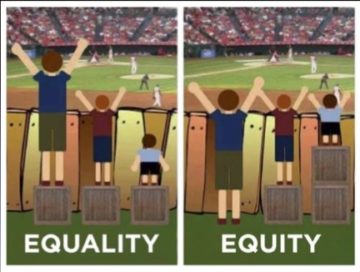


 Why do I have to help?
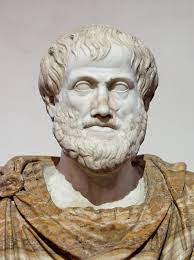 Among the ideas in the history of philosophy most worthy of an eye-roll is Aristotle’s claim that the study of metaphysics is the highest form of eudaimonia (variously translated as “happiness” or “flourishing”) of which human beings are capable. The metaphysician is allegedly happier than even the philosopher who makes a well-lived life the sole focus of inquiry. “Arrogant,” self-serving,” and “implausible” come immediately to mind as a first response to the argument. It’s not at all obvious that philosophers, let alone metaphysicians, are happier than anyone else nor is it obvious why the investigation of metaphysical matters is more joyful or conducive to flourishing than the investigation of other subjects.