
by Emrys Westacott
 Vladimir Putin’s decision to invade Ukraine is clearly a historically momentous event, already appearing to cause a seismic shift in the geopolitical landscape. What the long-term consequences will be are hard to say. The most obvious losers are the millions of Ukrainians–killed, injured, bereft, and displaced–who are the immediate victims of Putin’s onslaught. The most likely winner will probably be China, on whom Russia is suddenly much more economically dependent due to the sanctions imposed by the West, and who can therefore now expect Putin to dance to whatever tune it whistles.
The heroism of President Zerlensky and all the other Ukrainians willing to risk their lives in resisting the Russian military juggernaut is remarkable and inspiring. But exactly how countries who wish to support Ukraine should respond to what Putin has done is a question to which no-one has an entirely satisfactory answer.
Supplying the resistance with weapons and ammunition will make the war more costly to the Russian military. Confiscating or freezing the foreign assets of Russian oligarchs will “hurt” these people in limited ways (e.g. by messing up their foreign holiday plans). Economic sanctions will inflict considerable damage on the Russian economy, and the effects will be felt across the board, primarily, as is usually the case, by those who are not well off. Cultural sanctions, such as FIFA barring Russia from international soccer competitions, and universities cutting ties with academic institutions in Russia, will communicate to the Russian population the extent to which the country is isolated as a result of the invasion.
On moral grounds, all these measures are justified, even obligatory. But one also has to ask the pragmatic question: how are they supposed to work? That is, how might they lead to an end to the war–an end that consists of something other than a long -term Russian occupation or a Putin-propped puppet government? Read more »
 The Ouvroir de Littérature Potentielle (Workshop of Potential Literature), Oulipo for short, is the name of a group of primarily French writers, mathematicians, and academics that explores the use of mathematical and quasi-mathematical techniques in literature. Don’t let this description scare you. The results are often amusing, strange, and thought-provoking.
 Despite living here for nearly three years now, I have no social life to speak of. At risk of sounding self-loathing, a not insignificant part of the problem is probably just me: I’m not the most social person in the world. Plus, there’s the pandemic, which hit six months after we moved here. But I don’t think it’s just me, or even just the pandemic. An awful lot of people who moved here as adults, decades ago, and are much nicer and more sociable than I am, have said the same thing: making friends in Toronto is hard.
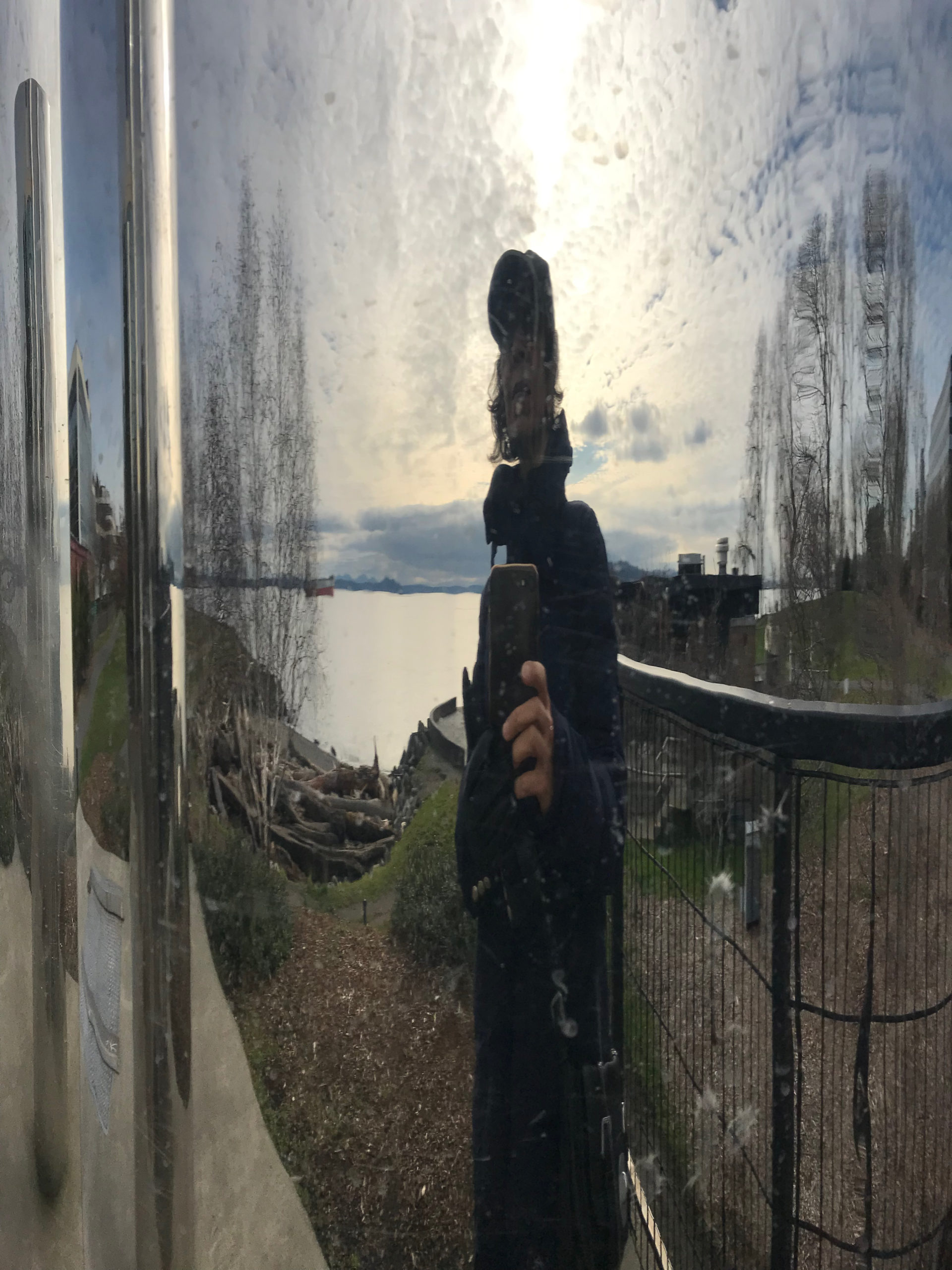 Sughra Raza. Self-portrait With Trees. Seattle, February, 2022.
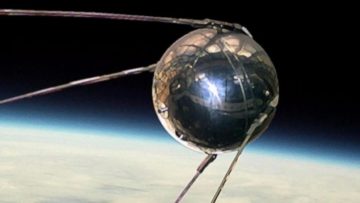 On 4 October 1957, in my mind’s eye, I was playing alone in the back yard when the radio in the breezeway broadcast a special news bulletin that changed my life. We had moved from Chicago to Minneapolis in 1951 and my parents had bought a recently built house on a dead-end street in a relatively cheap residential area out near the airport. The house was built in the modern suburban style that people called a ranch-style bungalow and its most interesting post-war feature was the breezeway, a screened-in patio attached to the house. The screens that kept flies and mosquitos at bay in warm weather were swapped for glass panels when the weather turned cold and we changed our window screens for storm widows.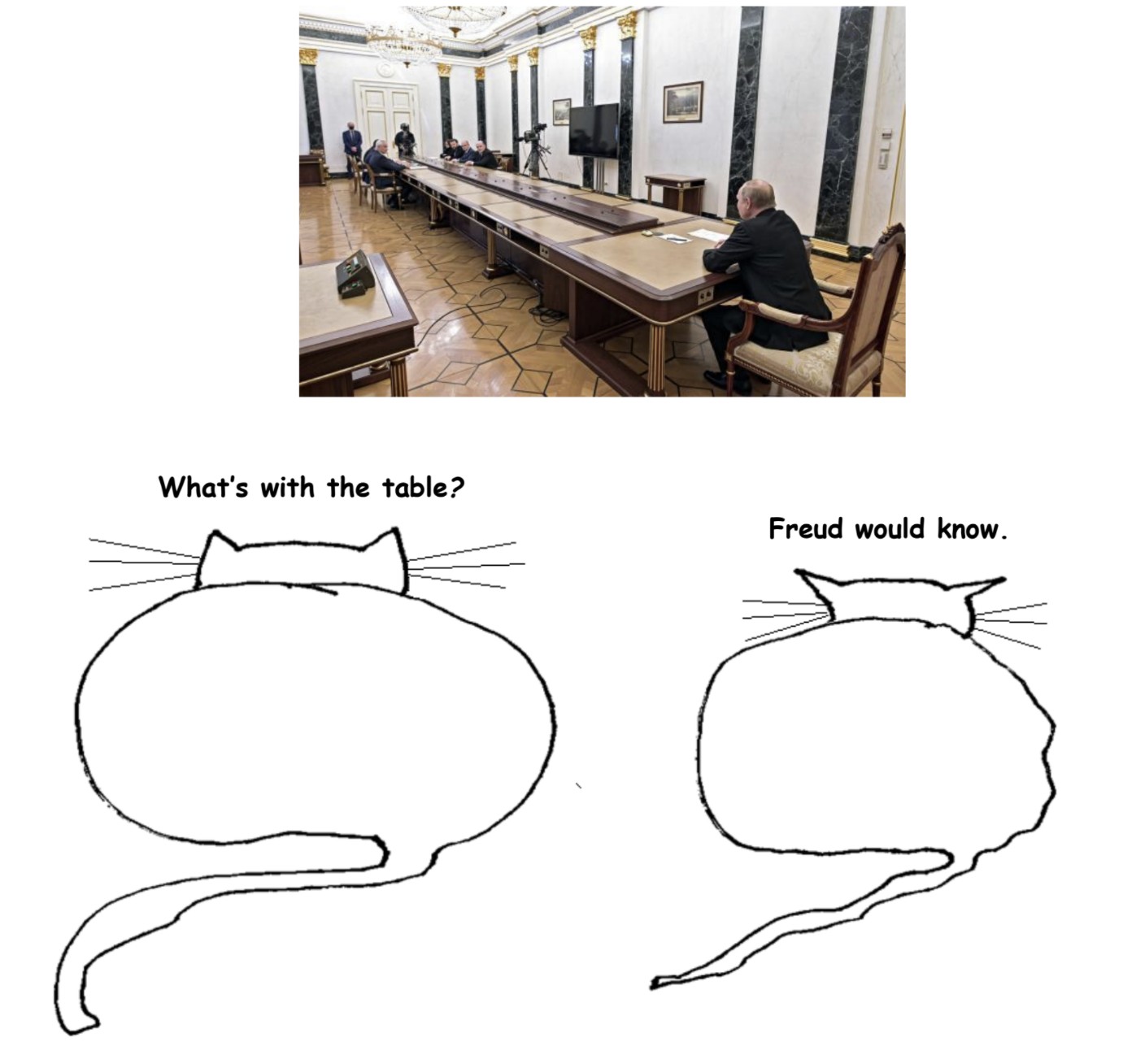
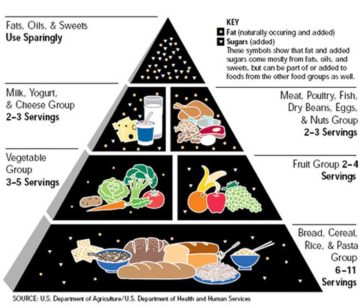 We have many choices when deciding what to eat. For most of human history, however, there has likely been little to no choice at all: people ate what was available to them or what their culture led them to eat. Now things are not so simple. As I mentioned in
 I enjoyed my days in Delhi School of Economics, but some aspects of the university’s policy in recruitment and promotion of teachers used to trouble me. Let me just give two examples. One is from DSE itself, but illustrative of a much more general problem in university life. We had a middle-aged colleague who had long wanted to be promoted to Readership (Associate Professorship), but failed in the usual process, because he had not done any serious research to speak of in many years. He was full of leftist clichés, and was popular with some sections of leftist students. He first started complaining that he was being passed over in promotion because his ‘right-wing’ colleagues (the term used in Economics those days was ‘neo-classical’—in the same pejorative way the term ‘neo-liberal’ is used nowadays) were biased in undervaluing his work. This after a time did not work, as even some leftist scholars in the Department shared views similar to those of the ‘right-wing’ colleagues on this matter. Then he tried a different tack.
 It’s my oldest memory. I am three, standing harnessed between my parents, in a brand-new two-seater 1959 Jaguar convertible roadster. We are on an empty gravel road someplace in Virginia and my Dad decides to let his new baby fly. I can see In front of me the windshield and, below, a gray leather dashboard that has two things of great interest…a speedometer and a tachometer. The motor hmmmmmms as he takes the car through the forward gears, the tachometer first rising and then falling, the speed increasing. The big whitewall tires are crunching the rough road; cinders are flying; we hit 60 MPH, then 70, then 80; and I’m clapping my hands and piping out “Faster, Daddy! Faster!” My mom goes from worried to furious “Slow down, Ernie, slow down!” As he passes 90, I look down for a moment and she’s slapping her yellow shorts. I peek at the rearview mirror and see a huge cloud of dust. 95, 100, and finally 105. Then without warning, and without using the brakes, he starts to slow, gradually downshifting; the speedometer and tachometer fall; and that’s where my memory ends.
 The peopling of Polynesia was an epic chapter in world exploration. Stirred by adventure and hungry for land, intrepid pioneers sailed for days or weeks beyond their known horizons to discover landscapes and living things never before seen by human eyes. Survival was never easy or assured, yet they managed to find and colonize nearly every spot of land across the entire southern Pacific Ocean. On each island, they forged new societies based on familiar Polynesian models of ranked patrilineages, family bonds and obligations, social care and cohesion, cooperation and duty. Each culture that arose was unique and changeable, as islanders continually adjusted to altered conditions, new information, and shifting political tides. Through trial and hardship, most of these civilizations—even on some of the tiniest islands, like