
by Barbara Fischkin
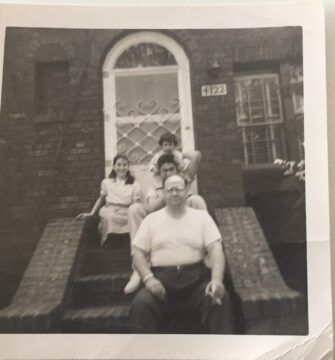
Moving forward, I plan to use this space to experiment with chapters of a memoir. Please join me on this journey. Another potential title: “Barbara in Free-Range.” I realize this might be stepping on the toes of Lenore Skenazy, the celebrated former New York News columnist, although I don’t think she’d mind. Lenore was also born a Fishkin, albeit without a “c” but close enough. We share a birthday and the same sensibilities about childhood. These days Lenore uses the phrase “free-range,” typically applied to eggs, to fight for the rights of children to explore on their own as opposed to being over-supervised and scheduled.
I feel free-range, myself. I don’t like rules, particularly the unnecessary and ridiculous ones. My friend Dena Bunis, who recently died suddenly and too soon, once got a ticket for jaywalking on a traffic-free bucolic street in Orange County, California. She never got a jaywalking ticket in other far more congested places like New York City and Washington, D.C.
As a kid, I was often free-range, thanks to my parents, old timers blessed with substantial optimism. I have been a free-range adult. I was a relatively well-behaved teen but did not become a schoolteacher as recommended as a good job for a future wife and mother. I wanted a riskier existence as a newspaper reporter. I did not marry the doctor or lawyer envisioned as the perfect husband for me by ancillary relatives and a couple of rabbis. Instead, I married Jim Mulvaney, now my Irish Catholic spouse of almost forty years, because I knew he would lead, join or follow me into adventures.
I left newspapering as my career was blooming to write books, none of which made me a literary icon or even a little famous. I am glad I wrote them. Read more »
 A little over a year ago I published
 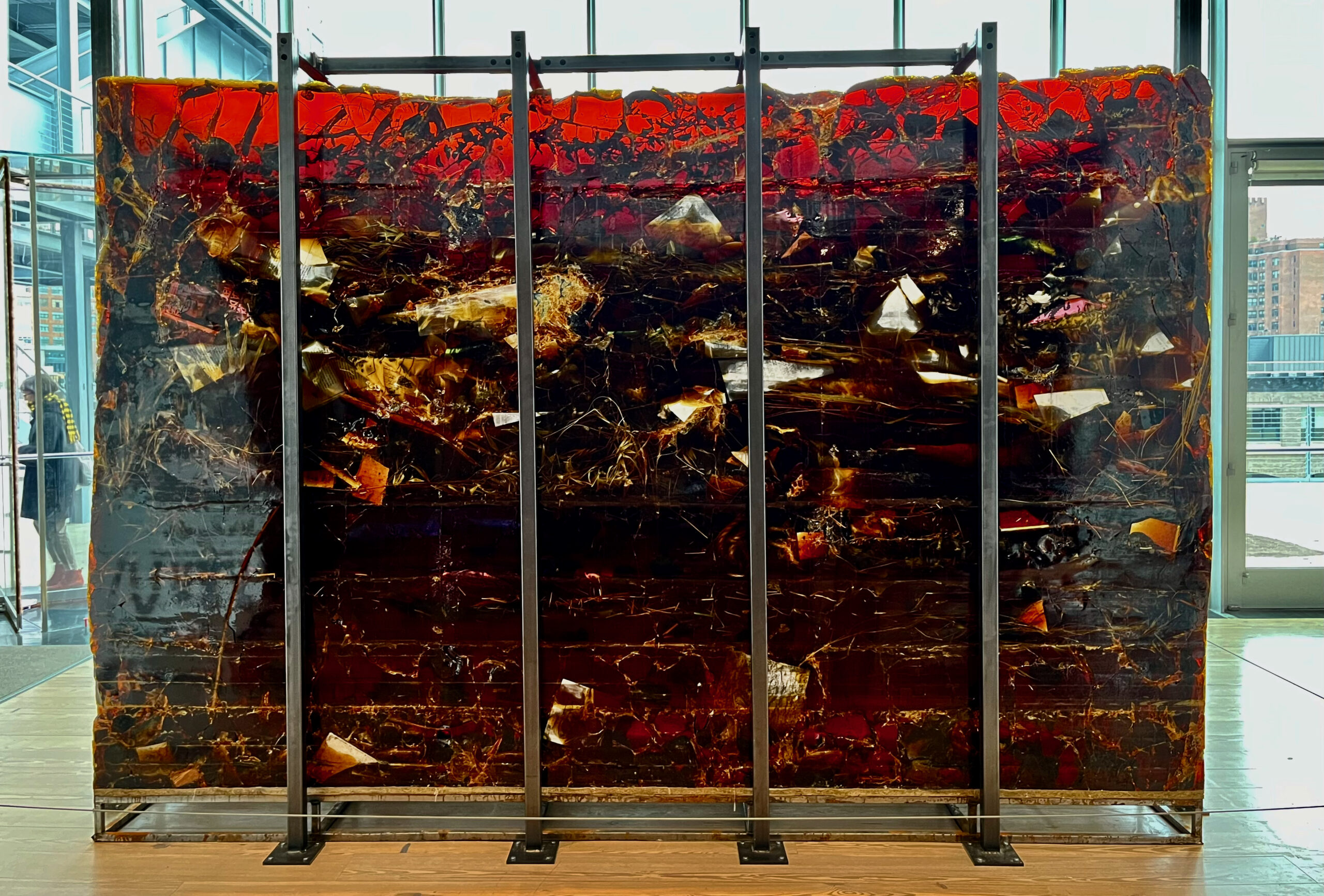 Eddie Rodolfo Aparicio. White Dove Let US Fly, 2024.
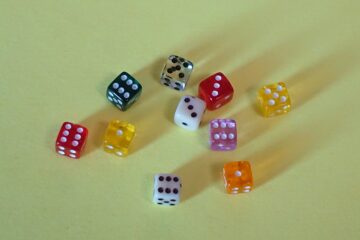 “You are aware”, I ask a pair of students celebrating their fourth successful die roll in a row, “that you are ruining this experiment?” They laugh obligingly. In four pairs, a small group of students is spending a few minutes rolling dice, awarding themselves 12 euros for every 5 or 6 and ‘losing’ 3 euros for every other outcome. I’m trying to set them up for the concept of expected value, first reminding them how to calculate their average winnings over several rounds, and then moving on to show how we calculate the expected average without recourse to experiment. It would be nice, of course, for their experimental average to be recognizably close to this number. Not least since this particular lesson is being observed by the Berlin board of education, and the outcome will determine whether or not I can get a teaching permit as a foreigner.

 Notational

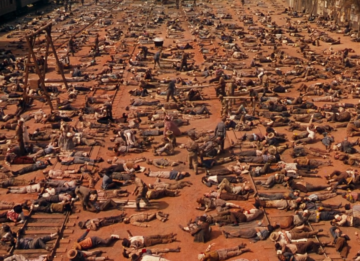 A cinematographer would recognize this as a crane shot, or its replacement, the drone shot. This crane or drone doesn’t move. It defines the POV (point of view) of the painter, and shows how far his perspective can reach and how much he can cram into the in-between, that 2D surface which expands vertically with every higher angle of his POV, as in this crane shot from Gone with the Wind.
 Like many of us, they assembled an inordinate number of puzzles during the COVID-19 restrictions. And like many puzzlers, they came to wonder: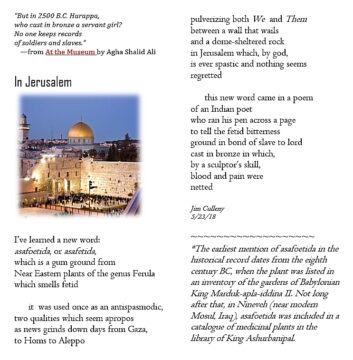
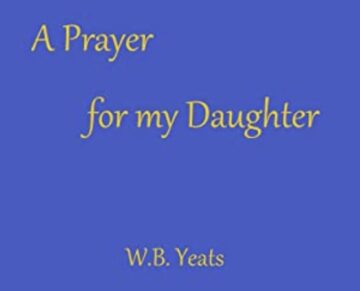 In the middle ’60s when I first was a new husband, a new teacher, and new father, I met my first indication of the changing consciousness of women in a freshman English class. I was teaching the Yeats poem “A Prayer for My Daughter.” I found it, and in many ways still do a marvelous poem and I spoke of it to my class with great enthusiasm saying that this is what I would wish for my daughter – that she would be “beautiful” but not “too beautiful” and “learned courtesy” for:
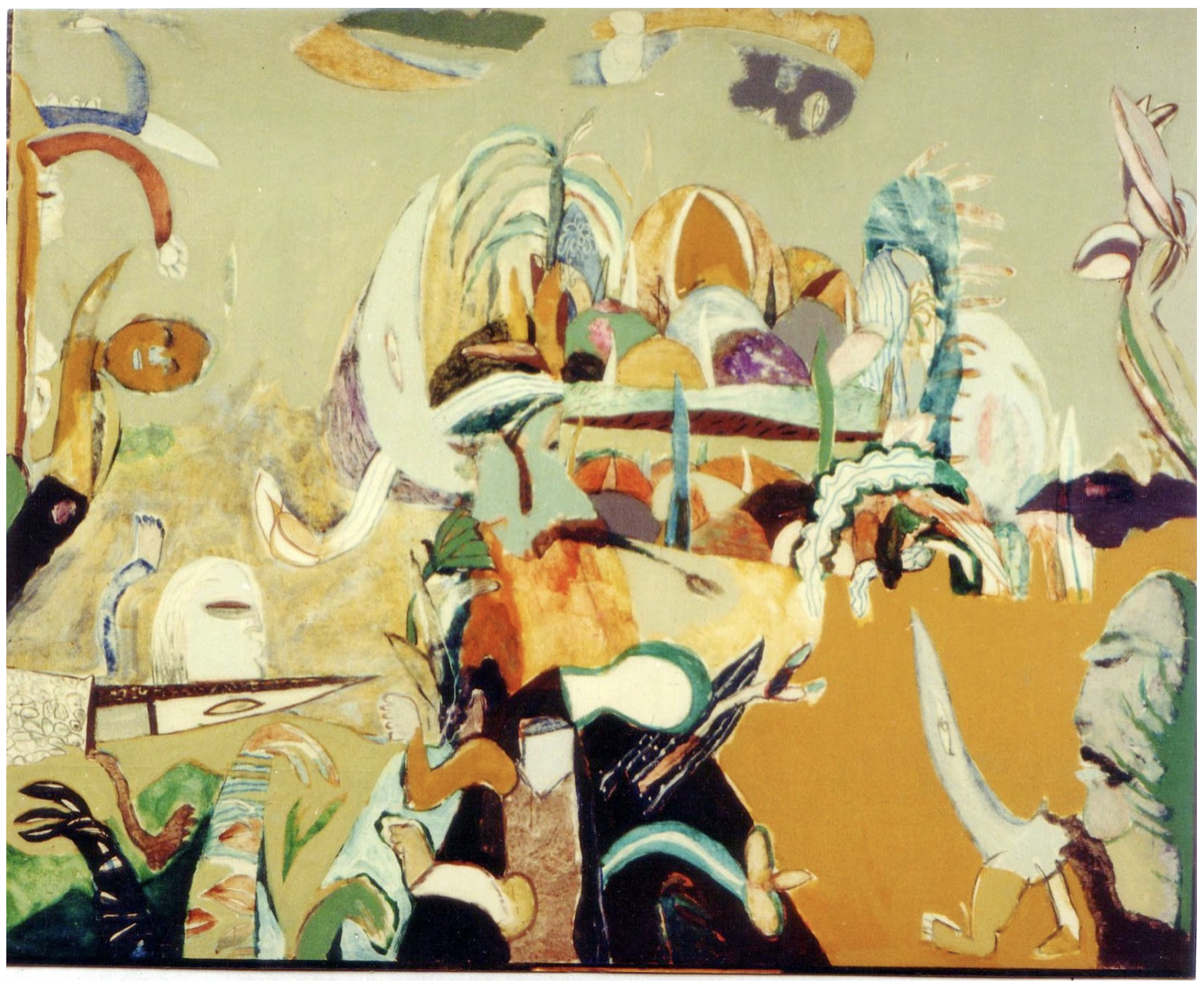 Dilara Begum Jolly. Untitled, ca 2014.