by Rafaël Newman
 At the end of each of the past twelve years I have written a long rhyming ballad, reviewing the period coming to a close, giving thanks for some events and lamenting others. I began in December 2013, while I was recovering from a lengthy illness; and I recited what would be the first of a series at a family New Year’s Eve party, among some of those whose support had been indispensable to the recrudescence of my health, and to whom I therefore wished to express my gratitude.
My poem began that year with these lines:
Let’s raise a glass this festive day,
On Saint-Sylvestre or Hogmanay,
And toast to all both far and near
Who graced the now departing year:
To cracksource Cook, who nearly gotcha,
To Edward Snowden in his dacha;
To Granta, Guardian and Gawker,
To David Denby, and Tom Scocca;
To Pauline Marois, our own Grand Mufti,
As well as Josh and Benny Safdie;
To Edie Windsor, Stephen Fry,
And Malala Yousafzai;
Barack Hussein—“Make Drones, Not War!”—
Dan Savage, and the myriad score
Who hailed with glee, or rising gorge,
The birth of Once and Future George.
This initial ode to a year gone by, following its “public” proem, then went on to become more private in substance—with cryptic tributes to the various attainments of my assembled kinfolk—for all that it borrowed its tone and humor from “Greetings, Friends!”, the Christmas poem written every year for many decades by Roger Angell and published annually in The New Yorker. Angell, better known as a baseball reporter, would compose his retrospectives as jokey commentaries on notable happenings in the public sphere; they featured sometimes quite ingenious (if often groan-worthy) rhymes on topical celebrity names, for which he evidently required increasing guidance from younger advisers as he grew more venerable (he died in 2022 at over a hundred) and less plugged in. Read more »
 Let’s grant, for the sake of argument, the relatively short-range ambition that organizes much of rhetoric about artificial intelligence. That ambition is called artificial general intelligence (AGI), understood as the point at which machines can perform most economically productive cognitive tasks better than most humans. The exact timeline when we will reach AGI is contested, and some serious researchers think AGI is improperly defined. But these debates are not all that relevant because we don’t need full-blown AGI for the social consequences to arrive. You need only technology that is good enough, cheap enough, and widely deployable across the activities we currently pay people to do.

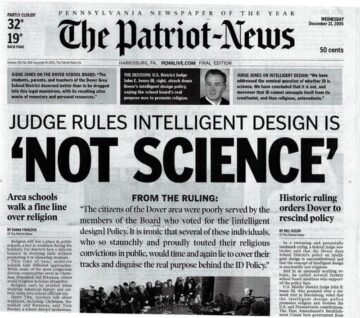 Last Saturday was the 20th anniversary of the day on which Judge John Jones III handed down

 If poets are to take Imlac’s advice – and I’m not necessarily sure they should – then the proper season for doing so must be winter. No streaks of the tulip to distract us, and the verdure of the forest has been restricted to a very limited palette. Then the snow comes, and the world becomes a suggestion of something hidden, accessible only to memory or anticipation, like a toy under wrapping. Perhaps “general properties and large appearances” are accessible to us only as we gradually delete the details of life; we certainly don’t seem to have much access to them directly. This is knowledge by negation; winter is the supreme season for apophatic thinking.
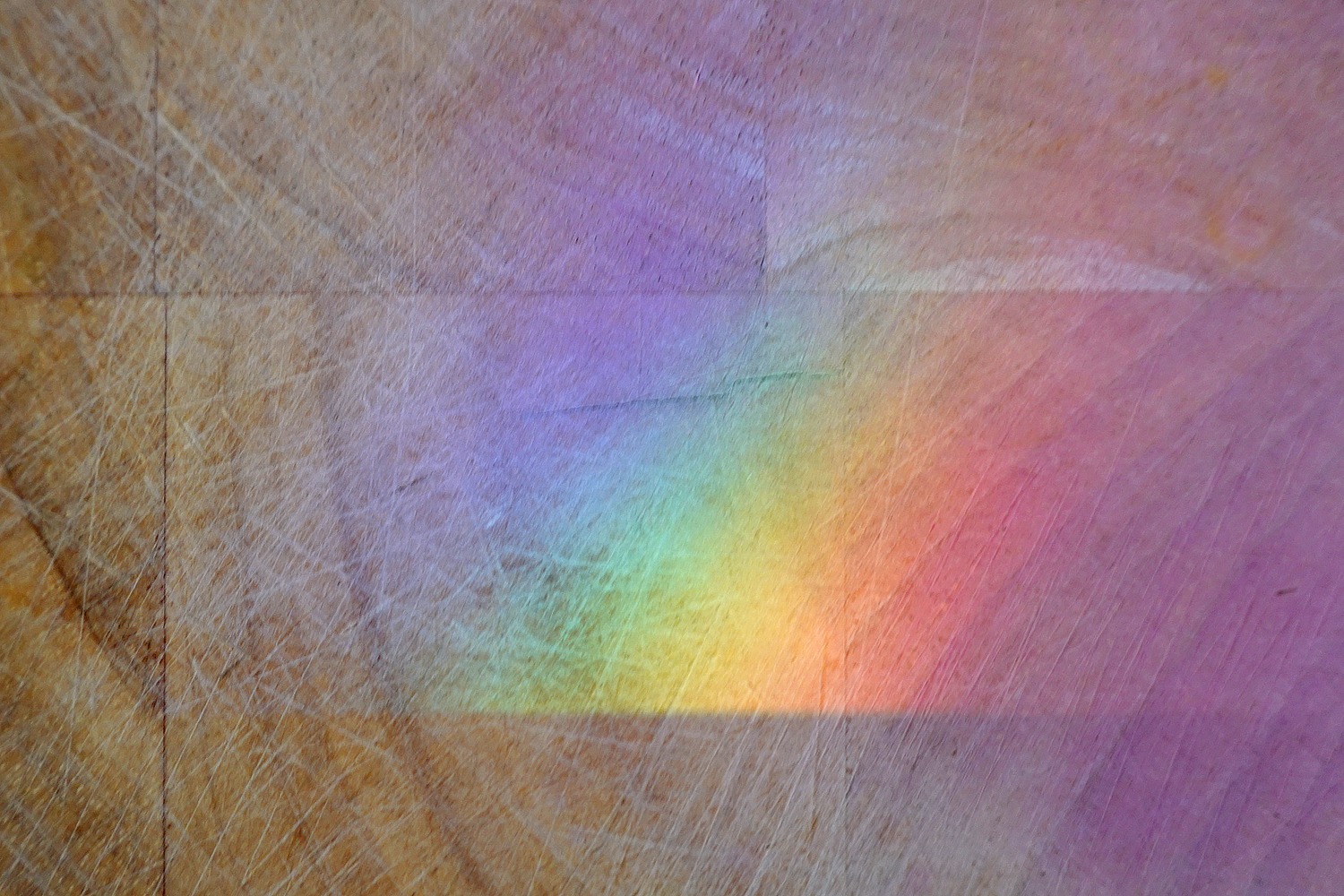
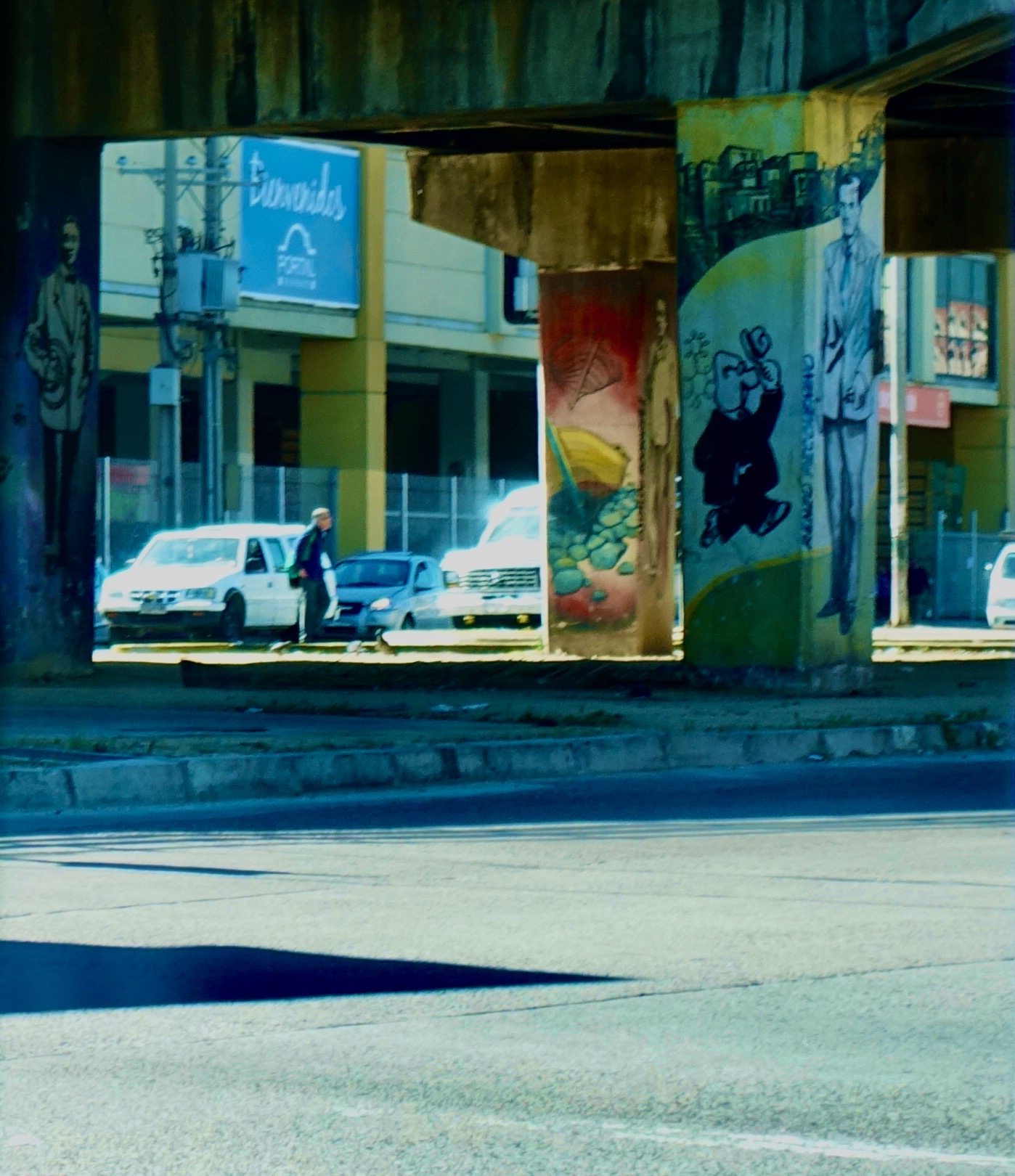 Sughra Raza. Underbelly Color and Shadows. Santiago, Chile, Nov, 2017.