by Azra Raza
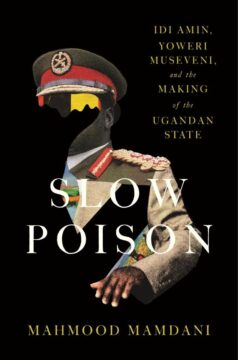 In June 1976, an Air France flight from Tel Aviv to Paris was hijacked by members of the Popular Front for the Liberation of Palestine along with two German radicals, diverted to Entebbe, Uganda, and received with open support from Idi Amin. There, the hijackers separated the passengers—releasing most non-Jewish travelers while holding Israelis and Jews hostage—and demanded the release of Palestinian prisoners. As the deadline approached, Israeli commandos flew secretly to Entebbe, drove toward the terminal in a motorcade disguised as Idi Amin’s own and stormed the building. In ninety minutes, all hijackers and several Ugandan soldiers were killed, 102 hostages were freed, and three died in the crossfire. The only Israeli soldier lost was the mission commander, Yoni Netanyahu.
Two years later, I traveled to Uganda myself to visit my parents, who were there while my father helped draft the nation’s new constitution for Idi Amin’s regime. I had no idea that this brief stop in Entebbe would return to haunt me decades later—when, in 2003, I was detained for over five hours at Ben Gurion Airport with my nine-year-old daughter, questioned endlessly about why I had ever set foot in Entebbe at all.
While in Uganda, my siblings and I fell instantly in love with the country—the sheer beauty of the land, the dark mystery of Bat Valley with tens of thousands of fruit bats rising in the evenings as a black cloud from the edge of the city near William Street, the riotous, ever-changing foliage that seemed to reinvent itself every few steps, and the magnificent wildlife we encountered in breathtaking abundance on our unforgettable safari. That trip remains one of the best trips of my life filled with the warmest memories of the country and the people.
Years later, as I began to understand Uganda beyond my youthful impressions, the work of Mahmood Mamdani offered me a far deeper, more sobering lens—revealing the political currents and historical wounds beneath the beauty we had so casually admired.
What makes Slow Poison instantly gripping is not merely Mamdani’s brilliance as a scholar, but the far rarer gift he brings to this book: the authority of one who lived the history he recounts. Read more »






 When I turned fifty, I went through the usual crisis of facing that my life was—so to speak—more than half drunk. After moping a while, one of the more productive things I started to do was to write letters to people living and dead, people known to me and unknown, sometimes people who simply caught my eye on the street, sometimes even animals or plants. Except in rare cases, I haven’t sent the letters or shown them to anyone.
 Sughra Raza. First Snow. Dec 14, 2025.
 One Monday in 1883 Southeast Asia woke to “the firing of heavy guns” heard from Batavia to Alice Springs to Singapore, and maybe as far as Mauritius, near Africa.