Perceptual Shifts Part II: The Hunter’s Interface

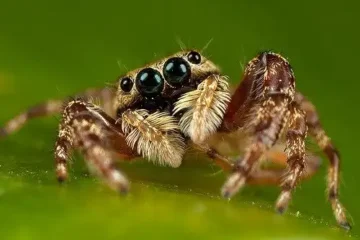
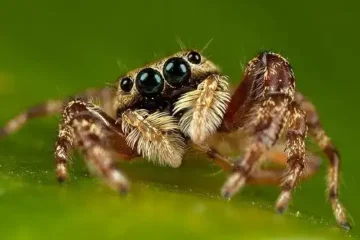
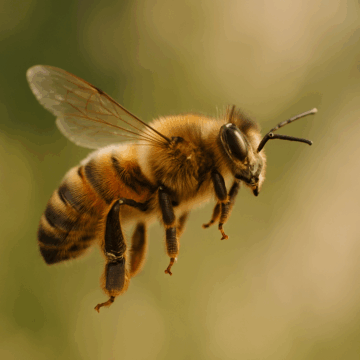
by Thomas Fernandes In Part I, we explored how bees navigate without depth perception, using optic flows to fly straight through tunnels, land smoothly, and estimate distance traveled. The visual system we examined works beautifully in providing simple navigation tools to solve complex tasks, leaving brain power for other activities such as pattern identification, nectar…

Perceptual Shifts Part I: Seeing Through Other Eyes

by Thomas Fernandes This series began with the desire to share a more diverse and lifelike account of biodiversity than the more mediatized utilitarian framing used in reporting, awareness campaigns, or pleas for conservation. This position is far from unique; the philosopher Arne Naess articulated the  deep ecology movement more than 30 years ago, in…

The Rules of The Hunt – Part II

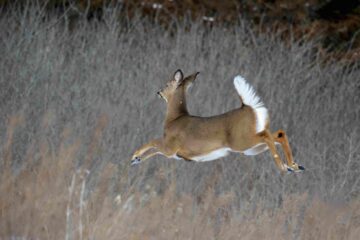
by Thomas Fernandes Like the Thomson’s gazelle of Part I, the white-tailed deer (Odocoileus virginianus) evolved an ability to communicate with predators. Not by stotting but by flagging the white underside of their tail. Why is this considered communication? Communication requires intention, distinguishing a cue from a signal. To a deer, a predator’s smell coming…

Our first loss

by Thomas Fernandes We might know more about biodiversity than ever before, yet we see it less. When life is talked about as “carbon sinks,” “pollinator services,” or “extinction curves,” it flattens into numbers: computable but unfeeling. But the loss we face isn’t just biological. It’s perceptual. We no longer notice life. Our first loss,…