
by Adele A.Wilby
 In his inaugural speech on 20 January 2025, Donald Trump jumped into the fray on the contentious issues of gender identity and sex when he announced that his administration would recognise “only two genders – male and female”. At this point there is no conceptual clarity on his understanding of the contested issues of ‘gender’ and ‘male and female’, but we do not have to wait too long before he clarifies his position. His executive order, ‘Defending Women from Gender Ideology Extremists and Restoring Biological Truth to Federal Government’ signed by him soon after the official formalities of his inauguration were completed, sets out the official working definitions to be implemented under his administration.
Trump issuing orders for ‘defending women’ would have undoubtedly raised the hackles of many and sniggers from even a greater number of women who are only too aware of his derogatory comments about women and his questionable and contested long history of relationships with them, but that is not the issue here. What is at issue is the clarification the executive order expounds on his conceptual understanding of sex when it says, “Sex’ shall refer to an individual’s immutable biological classification as either male or female. “Sex” is not a synonym for and does not include the concept of gender identity’. This delinking of sex and gender allows space for gender diversity, but that is a short-lived optimism. The executive order continues to elaborate the gender essentialist view that ‘women are biologically female, and men are biologically male’. In other words, he denies the fluidity of gender identity and the diversity of cultural constructions of ‘man’ and ‘woman’ and posits gender as inextricably linked to biology.
The gender concepts of ‘woman’ and ‘man’ remain unclarified in the text, but by grounding these identities in biology, the executive order, in one sweep, rejects the cultural constructions of gender and delegitimises the identity of transgender persons or any other gender identity an individual might feel and experience themselves to be. Read more »


 If you had to design the perfect neighbor to the United States, it would be hard to do better than Canada. Canadians speak the same language, subscribe to the ideals of democracy and human rights, have been good trading partners, and almost always support us on the international stage. Watching our foolish president try to destroy that relationship has been embarrassing and maddening. In case you’ve entirely tuned out the news—and I wouldn’t blame you if you have—Trump has threatened to make Canada the 51st state and took to calling Prime Minister Trudeau, Governor Trudeau.



 How are we to live, to work, when the house we live in is being dismantled? When, day by day, we learn that programs and initiatives, organizations and institutions that have defined and, in some cases, enriched our lives, or provided livelihoods to our communities, are being axed by the dozen? Can one, should one, sit at the desk and write while the beams of one’s home are crashing to the floor? Or more accurately: while the place is being plundered? There have been moments of late when I’ve feared that anything other than political power is frivolous, or worse, useless. In those moments, I myself feel frivolous and useless. And worse than that is the fear that art itself is useless. Not to mention the humanities, which right now in this country is everywhere holding its chin just above the water line to avoid death by drowning. It can take some time to remember that these things are worth our while, not because they’ll save us today, but because they’ll save us tomorrow.
 I love public transportation.
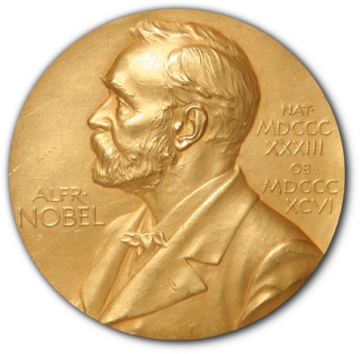 The list of Nobel laureates in physics, chemistry, and medicine includes men and women, Jews, Christians, Muslims, Hindus, Buddhists, and atheists, gay men, lesbians, and cis-scientists, people from Europe, Asia, Africa, North America, South America, and Australia. So, is the ultimate example of meritocracy also the epitome of Diversity, Equity, and Inclusion?