by David J. Lobina
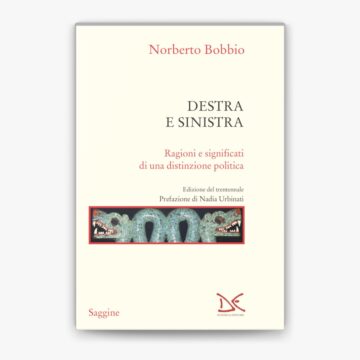
No, this column is not a retrospective of What’s Left? How Liberals Lost Their Way, a book by the British journalist Nick Cohen, even though the title of that forgettable volume is apposite here (I’ll come back to this below). Rather, my title is a reference to a conference that took place in Torino in 1992 under the title of What is Left?, though the post itself is meant as a revisit to Norberto Bobbio’s Destra e Sinistra (Left and Right, in its English edition), a short book from 1994 first thought up at the just-mentioned conference.
The more immediate background to Bobbio’s book, in fact, was the 1994 general election in Italy, when the post-fascist party Alleanza Nazionale (National Alliance) became part of the first Berlusconi Cabinet, the first time since the fall of Fascism that a party on the far right spectrum had entered an Italian government; this was also the background to Umberto Eco’s overtly influential (in the US) Ur-Fascism article from 1995, as discussed here and here, though this context is mostly ignored in American commentary. In a way, then, this piece is a 30-year retrospective of the 1994-95 period; a 2024-25 edition, if you like.
Bobbio’s main objective in the book, I should say, was to argue for the relevancy of distinguishing between left- and right-wing ideas at a time in Italy when many commentators did not think it meaningful any longer; this was partly due to the post-war political arrangement in the country, with the Constitution outlawing fascist parties, the centrist and conservative Christian Democrats (Democrazia Cristiana) dominating politics and society for 50 years, and the Communist Party barred from any of the many coalitions formed during that time, despite the wide support it boasted. Bobbio strove to revive the debate around left and right ideologies by approaching the dichotomy in terms of how proponents of either the left or the right position themselves towards the issue of equality (or, rather, inequality), and it is this argument that I would like to revisit here. Read more »




 How are we to live, to work, when the house we live in is being dismantled? When, day by day, we learn that programs and initiatives, organizations and institutions that have defined and, in some cases, enriched our lives, or provided livelihoods to our communities, are being axed by the dozen? Can one, should one, sit at the desk and write while the beams of one’s home are crashing to the floor? Or more accurately: while the place is being plundered? There have been moments of late when I’ve feared that anything other than political power is frivolous, or worse, useless. In those moments, I myself feel frivolous and useless. And worse than that is the fear that art itself is useless. Not to mention the humanities, which right now in this country is everywhere holding its chin just above the water line to avoid death by drowning. It can take some time to remember that these things are worth our while, not because they’ll save us today, but because they’ll save us tomorrow.
 I love public transportation.
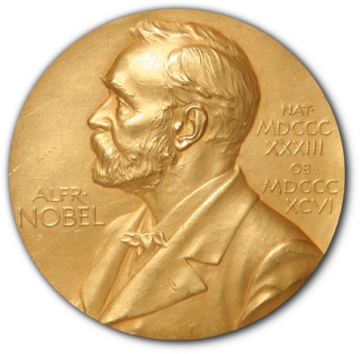 The list of Nobel laureates in physics, chemistry, and medicine includes men and women, Jews, Christians, Muslims, Hindus, Buddhists, and atheists, gay men, lesbians, and cis-scientists, people from Europe, Asia, Africa, North America, South America, and Australia. So, is the ultimate example of meritocracy also the epitome of Diversity, Equity, and Inclusion?

 Some weeks ago I made a note to myself on my phone: