by Peter Topolewski

Imagine you could you travel back in time with your phone. Imagine you presented your phone to the first stranger you encountered. Didn’t dilly dally at all but straightaway showed this lucky stranger the Google Home app. How far back in time would you have to travel to ensure the app didn’t make one bit of sense to the stranger?
The 1940s?
Doubtful. The TV screen, though not yet in wide use, existed and set a high bar in the imaginations of who saw or even heard of such a thing.
The 1840s? Most certainly. Sure, Google Home is mostly colored icons, but to a citizen of the world of 1840—where and when electric power is not yet present—a glass-faced notepad with moving, colored icons would look like magic.
For those not in the know, the colored icons of Google Home exist in service of “setting up, managing, and controlling compatible Google and third-party smart home devices.” Apple users undoubtedly roll their eyes at this point, but they have their own version, smartly called Home. It works with Apple and Apple-adjacent products.
The purpose of setting up this Google (or Apple) app is to create a home partially or fully stuffed with lights, thermostats, speakers, and cameras you control from anywhere, anytime. Using your phone.
If all goes well, the results will be magical, even to present-day folks, never mind those of the 1840s.
Too bad the app—and the entire enterprise of setting up, managing, and controlling devices connected to it—is awful. Read more »
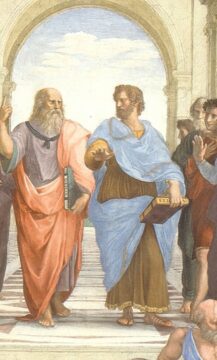

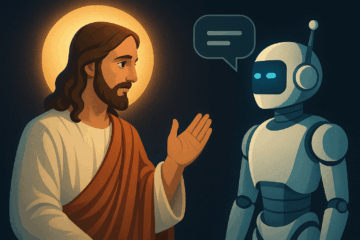 In recent years chatbots powered by large language models have been slowing moving to the pulpit. Tools like

 One of my New Year’s resolutions was to read one of the “classics of fiction” each month this year. I’m happy to report that I’m on pace to succeed.
 As AI insinuates itself into our world and our lives with unprecedented speed, it’s important to ask: What sort of thing are we creating, and is this the best way to create it? What we are trying to create, for the first time in human history, is nothing less than a new entity that is a peer – and, some fear, a replacement – for our species. But that is still in the future. What we have today are computational systems that can do many things that were, until very recently, the sole prerogative of the human mind. As these systems acquire more agency and begin to play a much more active role in our lives, it will be critically important that there is mutual comprehension and trust between humans and AI. I have
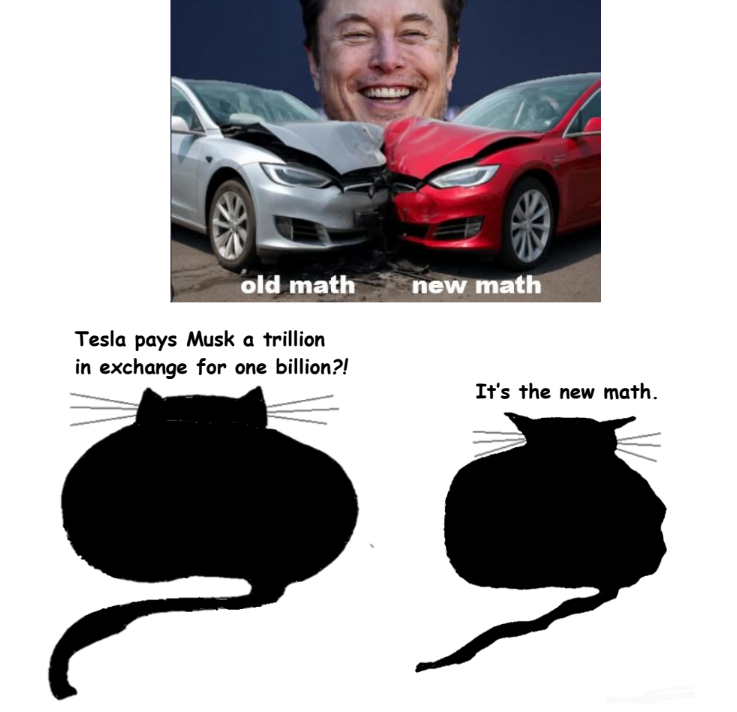

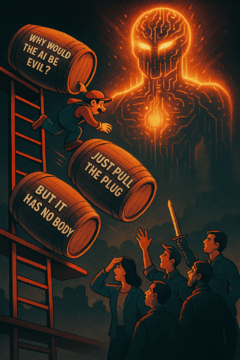 “A clearly written and compelling account of the existential risks that highly advanced AI could pose to humanity.” — Ben Bernanke


 Natalie Bakopoulos: Thank you so much, Philip, for starting this conversation, and for these wonderful observations and connections. You’re absolutely right, I was indeed playing with the idea of “beginnings.” “Here in Greece,” the narrator says, “the rivers rarely have a single source: They spring from the mountains at several places.” I also wanted to think about the arbitrariness of origin and a way of thinking about belonging that wasn’t necessarily about “roots”—but instead rhizomes, as Edouard Glissant, and others, might say.