by Carol A Westbrook
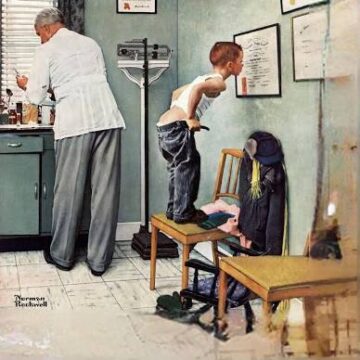
A few weeks ago, I was sitting in a downtown doctor’s office, interviewing a potential concierge physician to see if we were compatible. I had decided it was time to make some changes in my health care, and for good reason. I’m in my 70’s, I’m handicapped, and I’m a physician, specializing in internal medicine and medical oncology. But it’s been years since I had any professional training or kept up to date. The few times I’ve ended up in an emergency room I felt insecure, I couldn’t remember how to read an EKG or a chest X-Ray! It was time for me to get another set of eyes on my health care, and find someone I could trust to oversee it. I need a primary care physician, and I’d like her to be someone whose philosophy of medical practice was similar to mine.
I had my Uber drop me at 680 N Lake Shore Drive. It was an impressive building, part of the old Northwestern Medical School. There was a lovely set of granite stairs with bronze railings, and flanking these on either side were ramps. I unfolded my walker and headed up the handicapped ramps. It was a long walk, but I made it up to the front door.
“Back in the day,” as we like to say, we practiced primary care—that is to say, adult internal medicine—differently. During my residency training at the University of Chicago we looked upon our patients as people. We knew each one—and their family—individually. The charts were reviewed before a clinic visit, and updated at the end of the encounter. We spent as much or as little time as needed. If a new problem came up for one of my patients, all it took was a call to me to set the wheels in motion. Because of our familiarity with the clinical history, we were more prepared to deal with emergencies as they came up. If there was a problem outside of my area of expertise, I could easily arrange a referral or transfer to the appropriate speciality. In this way, lines of communication remained open and we provided the best of care to our patients, without having to assign them to another doctor or nurse specialist at the end of the shift.
This is the way Primary Care medicine should be practiced, but this model no longer exists, and the reason is straightforward—it is too expensive to provide this amount of time and individual attention for the number of patients that a primary care doctor is expected to see in the current medical climate. Read more »






 The Paradox
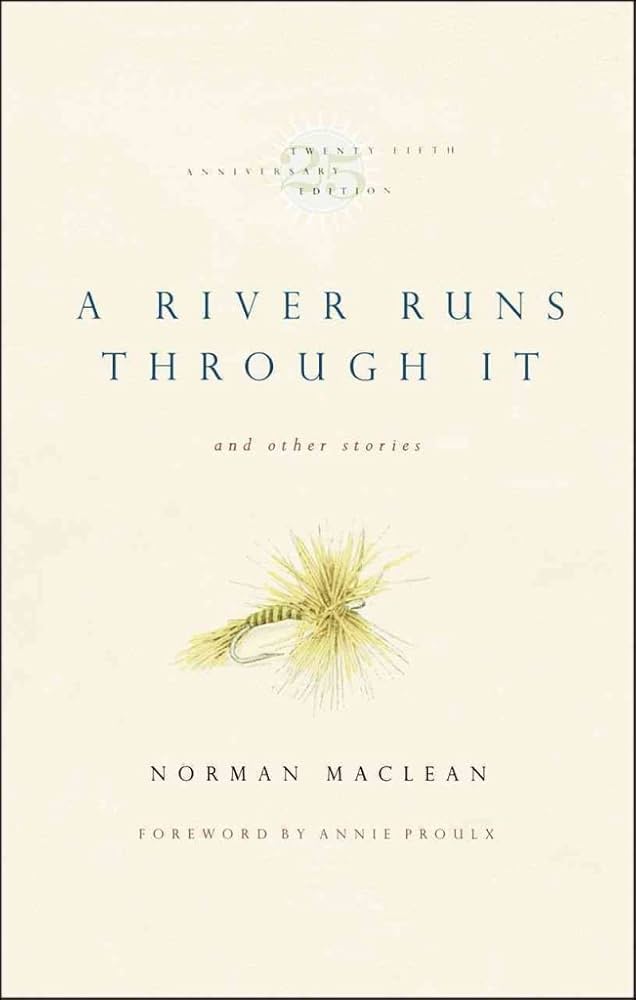 Three weeks later and I’m almost fully healed. My ribs still hurt when I lie down to sleep and when I rise in the morning, but sitting and walking are fine. In another week I’ll be able to return to the gym and attempt some light weightlifting, a welcome resumption of my weekly routine. There was, however, a silver lining to my accident. In the days immediately following it, I could do little else but read. Sitting down in a chair, I was stuck there. So it was that I took A River Runs Through It (1976) by Norman Maclean off the bookshelf in my father’s office and began to turn its pages.
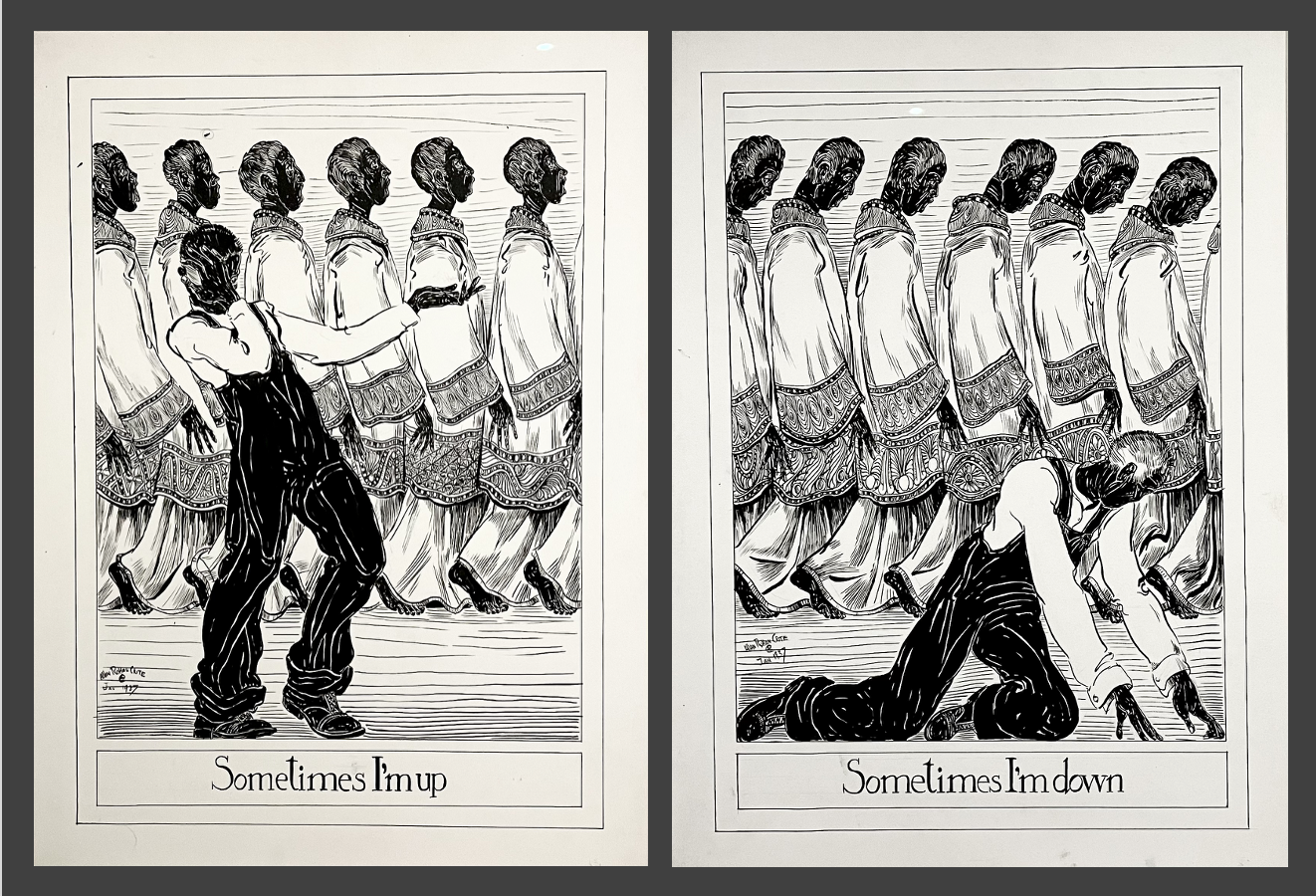 Allan Rohan Crite. Sometimes I’m Up, Sometimes I’m Down. Illustration for Three Spirituals from Earth to Heaven (Cambridge, Mass., 1948),” 1937.