by Robert Jensen

Wes Jackson’s career demonstrates that sometimes the race goes not to the swift but to the unconventional, that the battle can be won not only by the strong but by the stubborn. Straight-A students don’t always lead the way.
Jackson, one of the last half-century’s most innovative thinkers about regenerative agriculture, has won a MacArthur Fellowship, the so-called “genius grant.” He also received the Right Livelihood Award, often called the “alternative Nobel Prize,” in addition to dozens of other awards from various philanthropic, academic and agricultural organizations. Life Magazine tagged him one of the “100 Important Americans of the 20th Century.”
But mention any of those accolades to Jackson—who was one of the first people to use the term “sustainable agriculture” in print—and he likely will tell the story of almost getting a D in a botany course and describe himself as a misfit.
Not the top of his class
Jackson’s education started in a two-room school near his family’s farm in North Topeka, Kansas, where classes met for only eight months because students were needed for planting and harvest. He was an uneven student whose classroom performance varied depending on the quality of the teacher and his interests at the moment. He went to nearby Kansas Wesleyan University in Salina, focusing as much on football and track as on academics. “I wasn’t what you would call a top student,” Jackson said. “I had a lot of Cs and Bs, an A here and there, but also my share of Ds.” Read more »
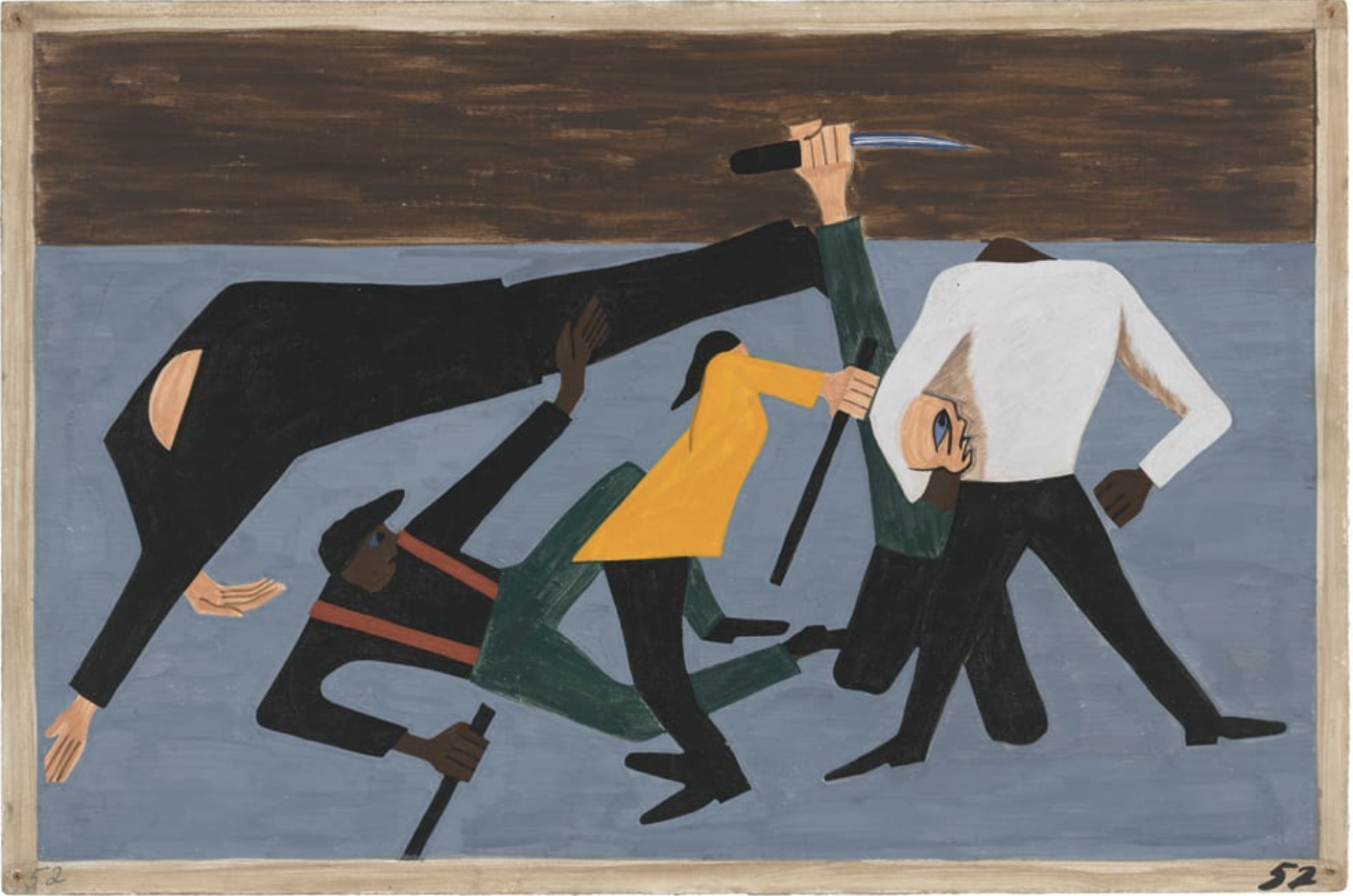 Jacob Lawrence. Migration Series (Panel 52).
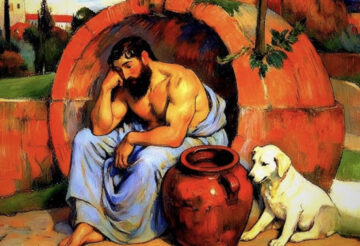 We do not need philosophers to tell us that human beings matter. Various versions of that conviction is already at work everywhere we look. A sense that people are worthwhile shapes our law, which punishes cruelty and demands equal treatment. It animates our medicine, which labors to preserve lives that might seem, by some external measure, not worth the cost. It structures our families, where we care for the very young and the very old without calculating returns. It haunts our politics, where arguments about justice presuppose that citizens possess a standing that power must respect. But what does it mean to say human beings are worthwhile? And why might it be worthwhile to ask what me mean when we say we matter?
 Not long ago I wrote for 3 Quarks Daily
  Anyway, I’ve been following





 An era of worldwide illiberal governance approaches. If the Trump administration has its way, future illiberal leaders will face fewer opponents. Aspiring autocrats will lose the constraint of the United States as a potential opponent. Autocracy will spread.
 Alia Farid. From the series “Elsewhere”. Produced by Chisenhale Gallery, London. Commissioned by Chisenhale Gallery; Passerelle Centre d’art contemporain, Brest.