
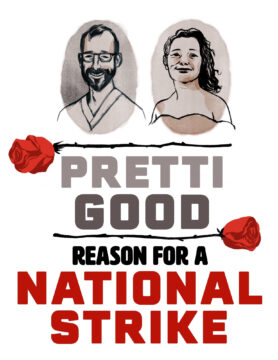
by Marie Snyder
I’ve had several conversations this week about how to be in a time like this when the U.S. government is so overtly corrupted. I’m just the upstairs neighbour in Canada, but we’re high on the list of countries to be overthrown. Even without being in that position, it’s hard to be aware of the world today and not be in a constant state of rage. I mean even more than before. I want to fast forward to the end when all the bad guys go to prison, but that will only happen with ongoing action from as many people as possible. However, that type of action doesn’t necessarily have to be heroic or extraordinary. This is just my two cents from a distance that’s looming closer.
INACTION AS COMPLICITY: What’s Enough?
Viewing newly accepted levels of violence in the U.S. is overwhelming and frightening. A few people have posted lists of things we can do to help, but I wonder if, for many people, it’s asking too much. This might be a controversial view at a time when it feels like we all need to get on board to shift the world back to a less selfish and violent place, but the perspective that we all are complicit if we don’t act might do more harm than good.
Martin Luther King Jr. expressed the sentiment in Stride Toward Freedom: “He who accepts evil without protesting against it is really cooperating with it.” However, the paragraph before gives that statement context: fighting evil includes “withdrawing our coöperation from an evil system” in the bus boycott. They didn’t just stop riding the bus, but people organized carpools, and cab drivers charged the price of bus fare to Black passengers, and others collected money. He also said: “Every man of humane convictions must decide on the protest that best suits his convictions, but we must all protest.” The type of work we do to help has to suit our capacity. Read more »