
by Barry Goldman
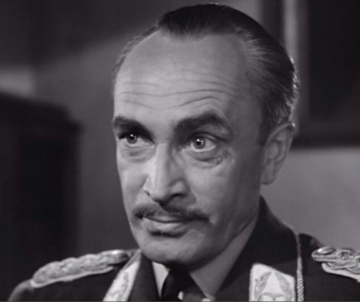
Everybody knows the scene in Casablanca when Captain Renault is “shocked, shocked” to find that gambling is going on in Rick’s Café. The phrase has become shorthand for all kinds of official hypocrisy. But I want to go back a few lines. Here is the clip.
Major Strasser says, “This café is to be closed at once.” Captain Renault says, “But I have no excuse to close it.” And Strasser says, “Find one.” The boss wants some official action taken, and he directs a subordinate to come up with a legal justification for it. He doesn’t say, “Would you please conduct a review of the statutes and judicial precedents in this area and determine whether or not I have the authority to take this action.” He says, “Find one.”
An exchange like that is likely to have taken place, directly or indirectly, between Secretary of Defense Pete Hegseth and Assistant Attorney General for the Office of Legal Counsel T. Elliot Gaiser. Hegseth said, “I want to blow up what the president has ‘determined’ are drug boats in the Caribbean and kill all the people aboard.” Gaiser said, “But you have no excuse for doing that.” And Hegseth said, “Find one.”
The outcome of that conversation was what I previously called The Murder Memos. As I write this, the murder memos have still not been made public, but they have been disclosed to select congress members, and there has been a fair amount of reporting about what they contain. One argument in the document, reported in the Wall Street Journal and elsewhere, follows a line of reasoning that goes like this: Armed attacks have been legally justified in the past when they were ordered in response to the use of chemical weapons by an adversary. Fentanyl is a chemical. And it kills a lot of Americans. So you could think of it as a weapon. Therefore, um, national security, protect our citizens. Something, something. Kill them all. Yeah, that’s the ticket!
I wish I were exaggerating.
Another, more recent example concerns the use of DHS Form I-205 in place of judicial warrants to permit forcible entry into people’s homes to arrest them. It appears that:
Although the U.S. Department of Homeland Security (DHS) has not historically relied on administrative warrants alone to arrest aliens subject to final orders of removal in their place of residence, the DHS Office of General Counsel has recently determined that the U.S. Constitution, the Immigration and Nationality Act, and the immigration regulations do not prohibit relying on administrative warrants for this purpose.
That is not what 250 years of 4th Amendment jurisprudence says about unreasonable search and seizure, but until May of 2025 we did not have the benefit of the DHS Office of General Counsel’s “determination.”
That determination, we may assume, was the result of a conversation similar to the one between Hegseth and Gaiser. Kristi Noem would like to be able to arrest people in their homes without the bother and inconvenience of securing a warrant from an independent judicial officer. She would prefer to have her department’s warrants signed by her own employees from inside her own department. So she contacted her lawyer, then DHS General Counsel Joseph N. Mazzara. He may have pointed out that the purpose of the 4th Amendment is to protect against precisely that kind of overreach, and that she had no legal excuse for it. Noem, we can assume, said, in words or substance, “Find one.”
Something is certainly wrong here. One criticism is that what these attorneys did was just poor lawyering. Their justifications for the boat strikes and for seizures without judicial warrants were defective. More skilled lawyers would have come up with more convincing ones. But, the argument goes, both lawyers were doing their job. A lawyer’s job is to advance his client’s interest.
This is a consequence of the mythology we teach law students. We tell them about John Adams courageously defending the British soldiers who committed the Boston Massacre. We tell them criminal defendants are entitled to effective assistance of counsel. We say a criminal defense attorney is doing his job if he makes the prosecution follow the rules. If a search was unlawful, the evidence seized in the search is inadmissible. If there was no “reasonable suspicion” or “probable cause” for a stop, then evidence recovered in a subsequent search is “fruit of the poisoned tree” and can’t be admitted. If the evidence can’t be admitted, the guy walks. And the body in the trunk? Well, that’s the price we pay.
This is good, the theory goes, because it keeps cops from harassing people. It is good policy for the same reason it’s good policy to exclude confessions extracted under torture.
Medical students learn something similar. The decision of whom to treat in an emergency room is supposed to depend only on medical necessity. If the EMS wheels in the shooter and the victim at the same time, the ER staff is supposed to decide between them based only on medical need. This is the principle behind the Red Cross and Doctors Without Borders. A doctor is a doctor. A patient who needs medical attention is a patient who needs medical attention. No other considerations apply.
This rule serves a practical purpose, of course. If they were not perceived as neutral, Red Cross and Doctor’s Without Borders couldn’t do their work at all. But there is something beyond practicality that makes the rule valuable, even inspirational. Something about the transcendent equal dignity of every individual. God’s image and all that.
Is a lawyer like that? Does it make sense to say, “I am a lawyer. If someone asks me for help with a legal matter, and I have the skill to help, then I have a professional duty to put aside my politics and whatever may be my personal feelings about this person and practice my craft to the best of my ability etc. etc.” Does that make any sense?
Let me ask the question a different way. I’m thinking here about Zygmunt J. B. Plater. He was the lawyer behind the snail darter case. Back in the 1970’s the Tennessee Valley Authority had a project to dam the Little Tennessee River. The Tellico Dam would create a large reservoir that could then be developed for recreational use. It would flood a large number of family farms and Cherokee archeological sites in order to create “retirement-oriented golf resort communities.” A group of farmers went to Plater and his environmental law students at University of Tennessee Law School and asked him for help stopping the dam. The project was mostly complete, at a cost on the order of $100 million. Plater and his students needed to find a legal tool to stop it. The snail darter was that tool.
Over the course of several years, Plater and his students managed to get the little fish listed under the Endangered Species Act. Since the dam could not be completed without destroying the last remaining habitat of an endangered species, it had to stop.
The dam, Plater argues, was a boondoggle. Stopping it was righteous. This is what lawyers are for. You hire a lawyer. The lawyer does research and, if he’s lucky, he finds a legal strategy to accomplish what you want to accomplish. And, for a while at least, the snail darter did stop the Tellico Dam. As it turned out, the powers that be were able to amend the Endangered Species Act, exempt the Tellico Dam, and complete the project. And, as it further turned out, the snail darter is actually the same fish as the stargazer darter and there are plenty of them. But for a while there Zyg Plater was a hero and the snail darter was a meme before there were memes.
But here is the question: What is the difference between Zyg Plater, T. Elliot Gaiser and Joseph N. Mazzara? Each of them had a desired policy outcome and each of them went looking for a legal justification.
If you ask me, Zyg Plater is a hero, and Gaiser and Mazzara are hacks. But I would say that, wouldn’t I? I’m a liberal Democrat. I assume conservative Republicans think Gaiser and Mazzara are patriots and Plater is a fish-hugging wackjob. But can’t we do any better than that?
I think we can. I think Justice Ruth Bader Ginsberg and Deuteronomy 16:20 had it right: “Justice, justice shalt thou pursue.”
If a client comes in your office and says, “We want to stop this dam from flooding our farms to build retirement golf resorts,” your job is to start looking around for an endangered fish or anything else you can find.
If a client comes in your office and says, “We want to blow up some boats in the Caribbean and kill the people in them” or “We want to be able to break into peoples’ homes and arrest them without a judicial warrant” your job is to say “No.”
Enjoying the content on 3QD? Help keep us going by donating now.