by Terese Svoboda
The Slavs inspired the word “slave.” Abductions in Eastern Europe began in the ninth century AD conducted by Spanish Muslims, and the area is still plagued by human trafficking (especially children), with a million more victims per year than in the Americas. [1] My surname means freedom in Ukrainian, Russian and Czech. My ancestors flaunted their liberty at a time when many others were being enslaved – or were they once enslaved and took on this patronymic after they escaped slavery, or were they freed? Many Blacks in the US took on the name Freedman or Freeman after the Civil War.[2]
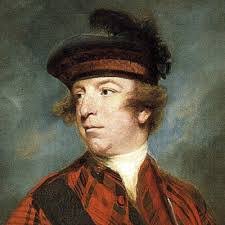
Few know that Blacks were freed twice before the end of the American Revolution. Eighty-seven years prior to the Emancipation Proclamation, in November, 1775, during the year before the Declaration of Independence, Dunmore’s Proclamation ordered the slaves freed in Virginia. Lord Dunmore, the royal governor of Virginia, was cornered by colonists on a ship in the Norfolk harbor with only 300 soldiers at the time. His proclamation did not stem from any moral or religious objections to slavery. As governor of Virginia, he had withheld his signature from a bill against the slave trade. He simply wanted help – to use Blacks to protect the Loyalists.
Only months before, Dunmore had been quite popular with all Virginians, Loyalists and patriots, as victor of the Battle of Point Pleasant. Marching alongside a thousand of his ragtag backwoodsmen, he routed the area’s Native Americans, opening up a huge area of West Virginia and Ohio for settlement and speculation. Although treaties had been in place for some time, Dunmore ignored them.[3] George Washington, head engineer of the frontier fort construction on the West Virginia/Ohio border, had purchased quite a bit of its acreage, and like the other developers in the area, wanted the Native Americans gone. No freedom for them. Forced to abandon hundreds of acres of corn and semi-permanent homes, the Native Americans were not counted as “brave and free people” that the Virginians declared themselves to be in their many Resolves published in response to Lord Dunmore’s Proclamation a year later. Read more »
 A little over a year ago I published
 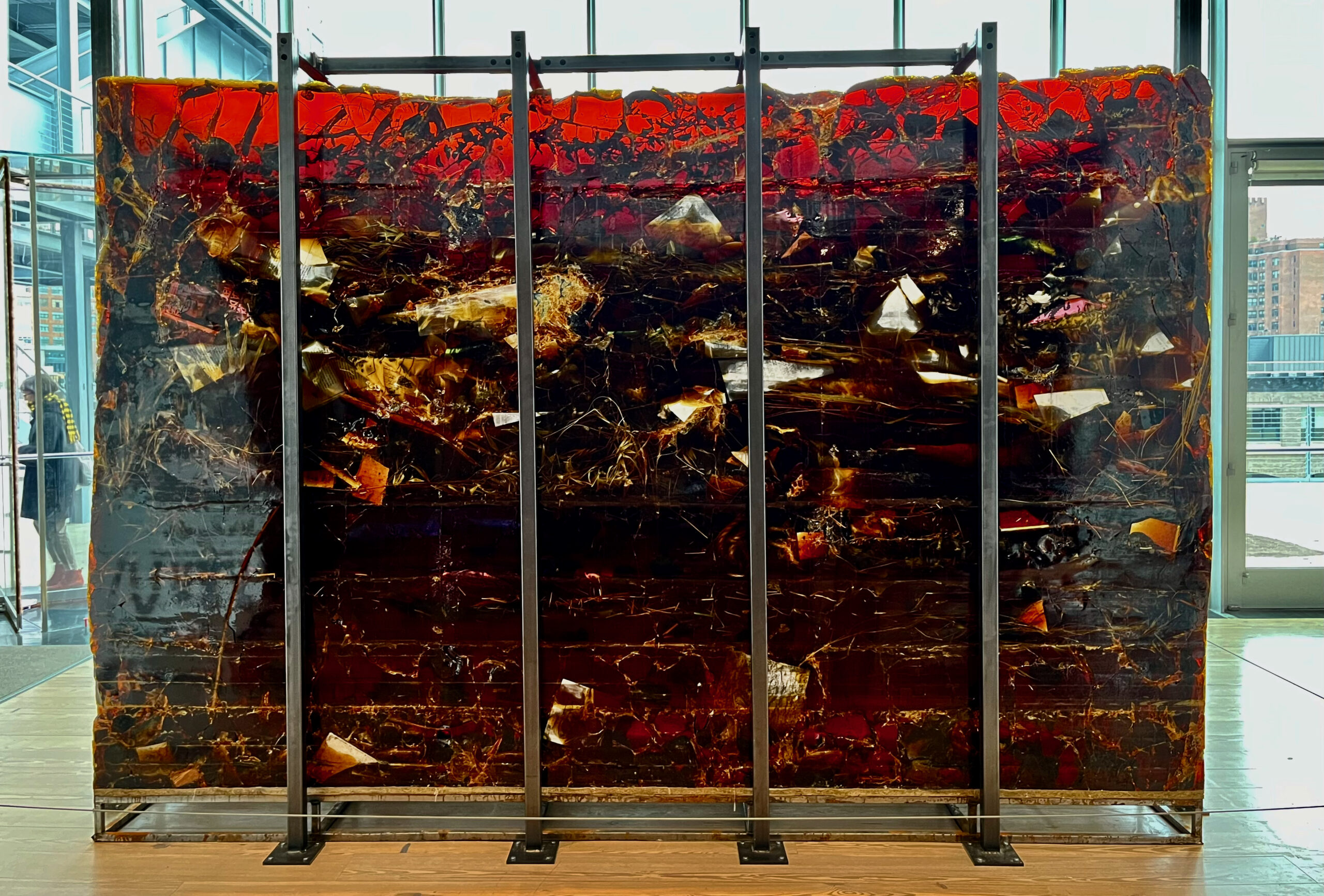 Eddie Rodolfo Aparicio. White Dove Let US Fly, 2024.
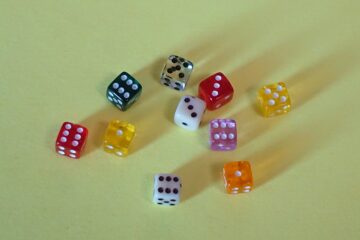 “You are aware”, I ask a pair of students celebrating their fourth successful die roll in a row, “that you are ruining this experiment?” They laugh obligingly. In four pairs, a small group of students is spending a few minutes rolling dice, awarding themselves 12 euros for every 5 or 6 and ‘losing’ 3 euros for every other outcome. I’m trying to set them up for the concept of expected value, first reminding them how to calculate their average winnings over several rounds, and then moving on to show how we calculate the expected average without recourse to experiment. It would be nice, of course, for their experimental average to be recognizably close to this number. Not least since this particular lesson is being observed by the Berlin board of education, and the outcome will determine whether or not I can get a teaching permit as a foreigner.

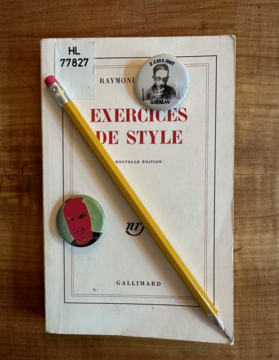 Notational

 A cinematographer would recognize this as a crane shot, or its replacement, the drone shot. This crane or drone doesn’t move. It defines the POV (point of view) of the painter, and shows how far his perspective can reach and how much he can cram into the in-between, that 2D surface which expands vertically with every higher angle of his POV, as in this crane shot from Gone with the Wind.
 Like many of us, they assembled an inordinate number of puzzles during the COVID-19 restrictions. And like many puzzlers, they came to wonder:
 In the middle ’60s when I first was a new husband, a new teacher, and new father, I met my first indication of the changing consciousness of women in a freshman English class. I was teaching the Yeats poem “A Prayer for My Daughter.” I found it, and in many ways still do a marvelous poem and I spoke of it to my class with great enthusiasm saying that this is what I would wish for my daughter – that she would be “beautiful” but not “too beautiful” and “learned courtesy” for: