by John Hartley
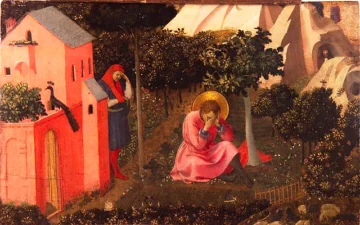
“To err is human,” observed the poet, Alexander Pope. Yet, why do we consciously choose to err from right action against our better judgement? Anyone who has tried to follow a diet or maintain a strict exercise regime will understand what can sometimes feel like an inner battle. Yet why do we stray from virtue, choosing paths we know will lead to inevitable suffering? Force of habit? Addiction? Weakness of will?
This crisis of moral choice lies at the heart of Western philosophy, as the Ancients crafted their doctrines to explain why individuals often fail to realize their good intentions. “For I have the desire to do what is good, but I cannot carry it out.” Observed St Paul, “For what I do is not the good I want to do; no, the evil I do not want to do–this I keep on doing.”
Akrasia in ancient thought
Homer’s Iliad paints a poignant portrait of humanity, ensnared in a cycle of necessity. This relentless loop can only be broken by wisdom and self-knowledge, encapsulated in the Delphic maxim “know thyself.” Socrates, however, argued that true knowledge of the good naturally precludes evil actions (If you really know what is right you will not do wrong!) He contends that misdeeds arise not from a willful defiance of the good but from flawed moral judgment—a tragic aberration, mistaking evil for good in the heat of the moment.
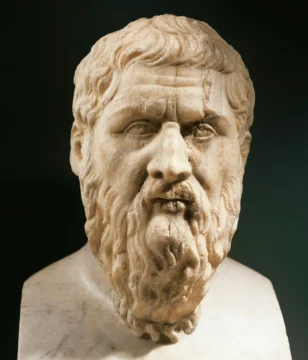
Plato linked wisdom and necessity to the duality of good and evil. He envisions self-realization and ordered integration as pathways to the good (inefficiency and unrealized potential signify malevolence). For Plato, good and evil are not external forces but internal currents: one flowing with love and altruism, the other emanating greed, envy, and malice.
The ascent to goodness, according to Plato, hinges on self-mastery and moral transformation, guiding one’s life towards the ideal form of goodness. Stoicism, of course, has experienced something of a resurgence of late, owing to Gen Z influences advocating extreme self discipline and heightened personal responsibility. Read more »
 In Discourse on the Method, philosopher René Descartes reflects on the nature of mind. He identifies what he takes to be a unique feature of human beings— in each case, the presence of a rational soul in union with a material body. In particular, he points to the human ability to think—a characteristic that sets the species apart from mere “automata, or moving machines fabricated by human industry.” Machines, he argues, can execute tasks with precision, but their motions do not come about as a result of intellect. Nearly four-hundred years before the rise of large language computational models, Descartes raised the question of how we should think of the distinction between human thought and behavior performed by machines. This is a question that continues to perplex people today, and as a species we rarely employ consistent standards when thinking about it.
 The human tendency to anthropomorphize AI may seem innocuous, but it has serious consequences for users and for society more generally. Many people are responding to the

 I’ve been surfing for about three years.
  Sughra Raza. After The Rain. Vermont, July 2024.


 Karl Ove Knausgaard went around for many years claiming that he was sick of fiction and couldn’t stand the idea of made-up characters and invented plots. People understood this to be an explanation of why he had decided to write six long books about his own life. There was some truth in this, but the simple contrast between fiction and reality was complicated by the fact that Knausgaard referred to his autobiographical books as novels. Were they real? Was the Karl Ove of the story the same as the author? It seemed like it, but then why call them novels? The problem lay with the word “fiction.” Like a German philosopher, Knausgaard had his own definitions for words that we thought we all agreed on.
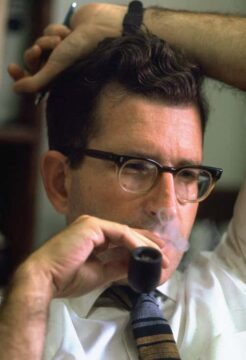 Noam Chomsky was rumoured to have left us almost a month ago, but he always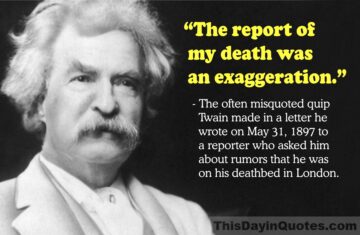


 There are only four U.S. states where white people are