by Adele A. Wilby
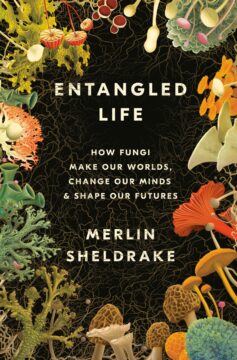
Recently I stepped into the underworld of fungi in Merlin Sheldrake’s Entangled Life: How Fungi Make our Worlds, Change our Minds and Shape our Futures. His book took me to an ancient world, tirelessly and inconspicuously working away and doing its vital job of literally interlacing the planet and holding it together to make life sustainable. The entry into this curious world was through the rather unassuming life form that most of us are more accustomed to eating than we are to learning about its existence: the mushroom.
Mushrooms are, for most of us, just another source of food, or indeed choose the wrong kind to consume and the adverse effects are likely to be more dangerous than delicious. They are though, fruiting bodies of fungi whose appearance on the surface is aimed at the reproductive role of dispersing millions of spores into the atmosphere to secure their existence.
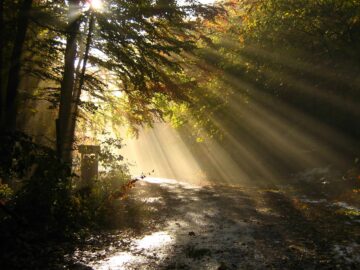
Colourful mushrooms of all sizes and shapes poking their heads up from the leafy undergrowth of a woodland or forming colonies of various architectural designs on dead trees, have never failed to draw my attention during my wanderings through wooded areas. Fascinated by these humble looking elegant protuberances that decorate the forests, on some occasions I have taken the time to count the varieties I have seen and found several different types on any one day. But as I learned from Sheldrake, my enthusiasm for the diversity of the mushrooms I observed was quite trivial in comparison with the numbers of fungi on the planet: there are, literally, millions of species throughout the world. Read more »

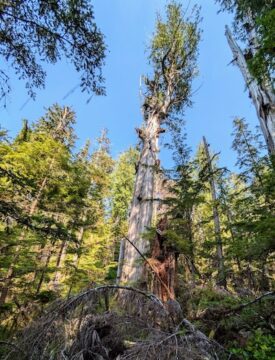 The tree was immense even by local standards: a western red cedar that might have been a thousand years old. A botanist would want to measure it; I only wanted to touch its wrinkled face, or kneel among the roots and capture a dramatic snapshot looking up along the trunk. But it was fifty paces away and I couldn’t get there.

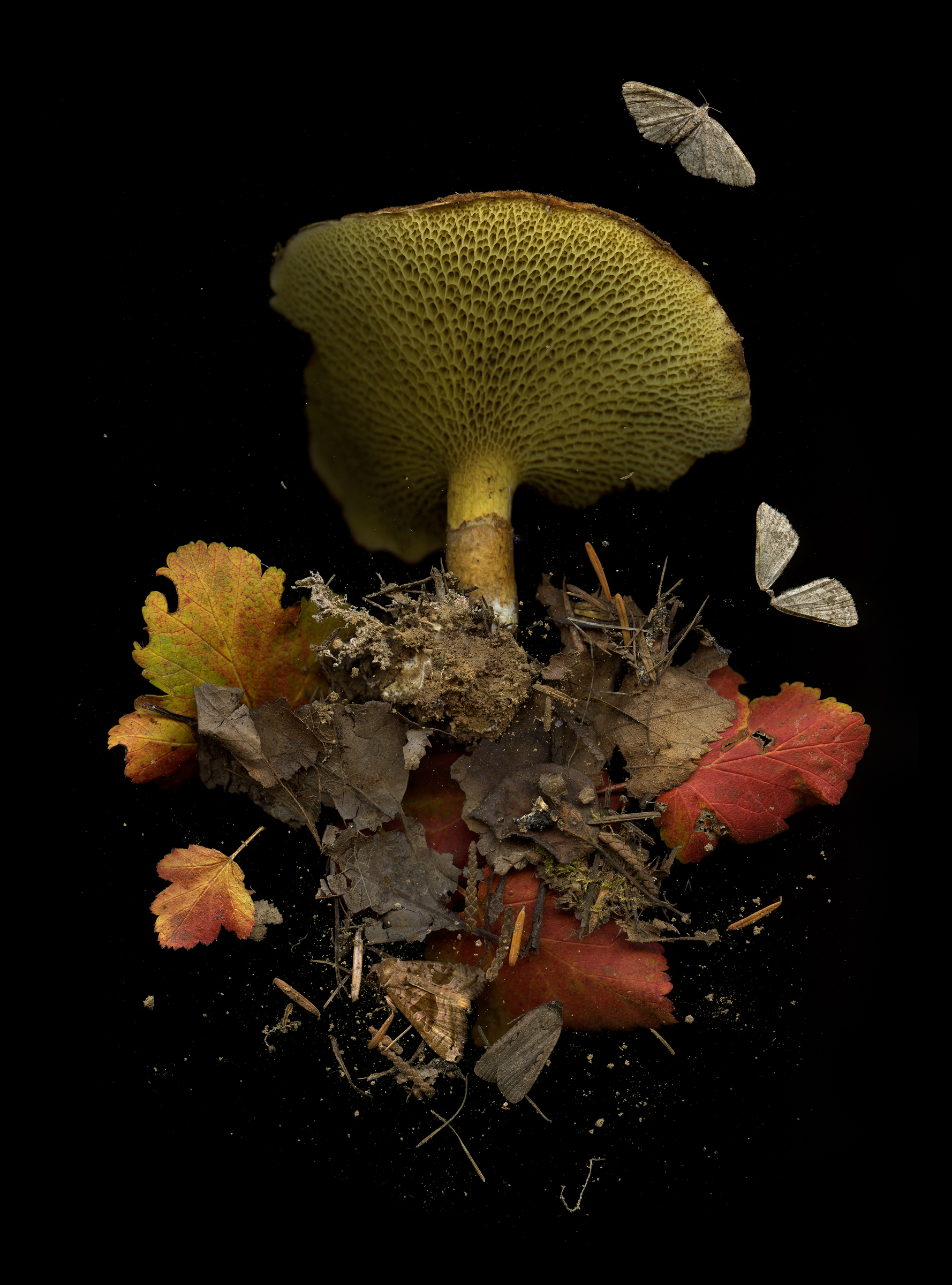 Julya Hajnoczky. Boletinellus Merulioides
 Maybe it’s defeat in a short, sharp war far from home. Maybe Russia captures Ukraine, or China attacks Taiwan. Maybe nothing happens yet, maybe it’s four or eight years away, but however the big change comes we’ll all agree the signs were there all along.
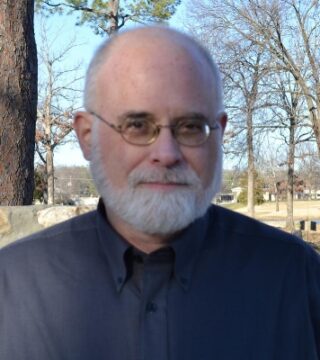 For over twenty years I have been in awe of David Jauss as a writer, as a colleague and teacher, and above all for his insight into the contradictory human heart. His short stories have been gathered together in two essential collections,