by Rachel Robison-Greene

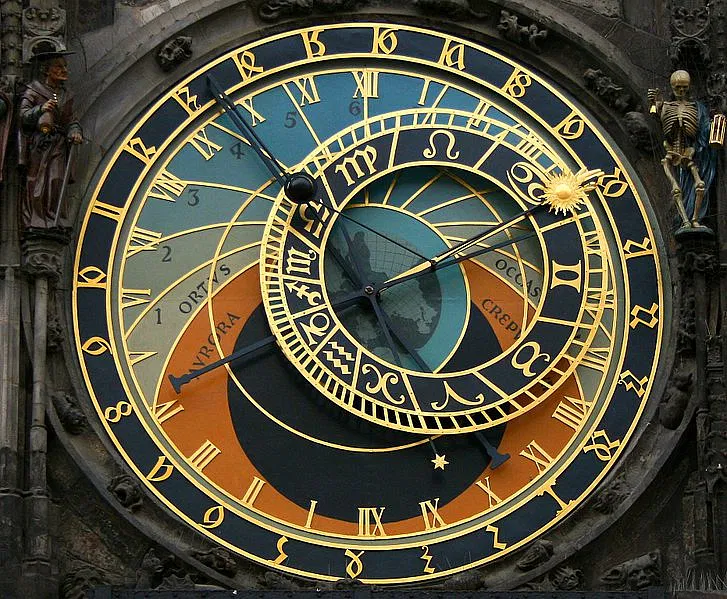
Earlier this month, “No Kings” protests set records for being among the most well attended political protests in recorded American history. The protests were overwhelmingly peaceful. On the same day, a politically motivated killer shot two Democratic politicians and their spouses in Minnesota, killing two and critically wounding the others. Despite the facts being presented regarding all of these events, conspiracy theories quickly spread. Reports circulated that cities in which protests were held were on fire. Politicians took to Twitter to spread conspiracy theories about the shootings. Before all the details were known, Utah’s senior senator Mike Lee took to Twitter to blame the violence on “Marxists.”
The tendency to believe what one hopes is true rather than what is supported by the evidence is far from a new trend in American politics. One might even think it has become its most distinguishing feature. In recent years, conspiracy theories have emerged about the pandemic, vaccines, climate change, and the security of the 2020 election, to name just a few. All of this flies in the face of our ordinary, idealistic attitudes about how people form beliefs. The idea that humans form beliefs and come to know truths through reviewing evidence and applying reliable reasoning practices is an enduring post-Enlightenment concept. Recent events demonstrate that it’s not that helpful for understanding how human beings actually think. Our everyday reasoning may be more grounded in social connectedness and personal insecurity than we ordinarily like to believe. Read more »
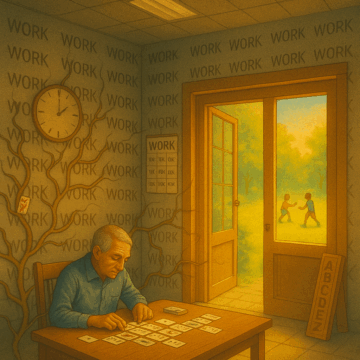 I have been thinking about artificial intelligence and its implications for most of my adult life. In the mid-1970s I conducted research in computational semantics which I used in
  At about 6:30 am, we pulled up to the Labor Ready office in the Central District. My friend – who for the sake of this column will be called Rick – and I were responding to a trespassing call: a woman who was asked to leave the day-labor agency office was refusing.
 Donald Trump is a con man. He was that for a very long time before he entered politics. Because he is a con man, it is tempting for critics to describe his presidential victories as successful cons. However, I think that interpretation does not hold up. Because while Trump at his essence may be little more than a sociopathic con man lacking a sophisticated and flexible inferiority, voters and citizens are not simply “marks.” The electorate, especially one as large as the United States’ (over 73 million registered voters), is maddeningly complex. It reflects a stunning amount of views, ideals, fears, and nuance. And the catch is that while the elected government can never hope to fully reflect this complexity, it can unduly influence it.

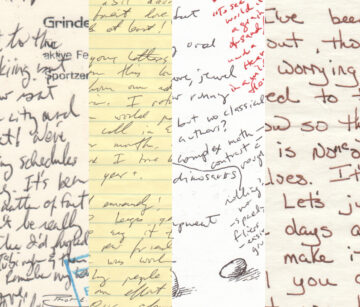 In February, after a month-long consideration, I set my New Year’s resolutions into a five-by-five grid. I made a BINGO card—twenty-four resolutions plus the FREE space. It was my attempt to gamify the whole tired resolution process that I’ve failed at so well. Surprisingly the trick seems to have worked, at least partially.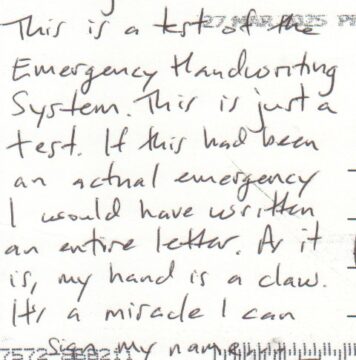
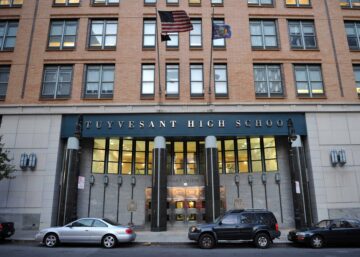 In the context of growing concern about educational equity, the persistent racial disparities associated with the Specialized High School Admissions Test in New York City continue to spark debate. As cities and school systems nationwide reconsider the role of standardized testing, the story of the origins of this test shed light on how deeply embedded policies can appear neutral while, in reality, reinforcing inequality.


 Nirmal Raja. Entangled / The Weight of Our Past, 2022.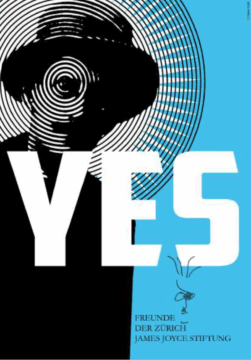
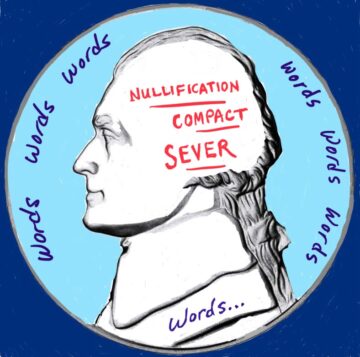 Words, so many words. Words that inspire “Ask Not,” and those that call upon our resolve “[A] date that will live in infamy.” Words that warn about the future “[W]e must guard against the acquisition of unwarranted influence, whether sought or unsought, by the military-industrial complex,” and those that express optimism about it “I’ve been to the mountaintop.” Words that deny their own importance “[T]he world will little note nor long remember what we say here,” while elevating themselves and the dead they honor to immortality.