by Anton Cebalo
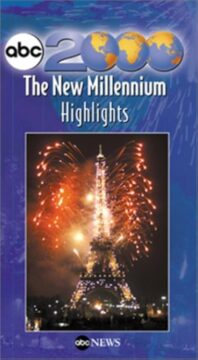
The film The Matrix famously froze its simulation in the year 1999. It was chosen as the alleged peak of human civilization. What unknowns might the new millennium bring? Many were understandably anxious. It was a psychologically-heavy turning point.
But celebrations abounded. ABC News ran a special program that covered the new millennium festivities around the world. A global consortium was formed to commemorate the occasion. 2000 Today was made up of a diverse set of national channels from Venezuela to Egypt to Poland. It even had its own soundtrack titled “A World Symphony for the New Millennium.” There had never been before such a successful effort to create a globalized world through media, with the exception of maybe the song “We Are the World” in 1985.
Three world powers—the United States, Russia, and China—each took a very different tone in addressing the momentous occasion.
For the United States, the new year was spoken of as if sitting atop the highest peak and gratitude from Americans was expected. At his 2000 State of the Union Address, President Bill Clinton tried to keep this optimism going with little room for acknowledging past tragedy. His opening statement was blunt in stating: “We are fortunate to be alive at this moment in history.” Never before had America enjoyed “so much prosperity and social progress with so little internal crisis and so few external threats.”
Russia, however, had an altogether different experience of the new millennium, one of shocking dysfunction. Read more »

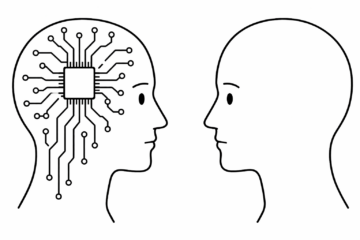 When did you first notice that you cell phone was finishing your sentences? Sure, spellcheck had been around for a while, however annoying it might be, but coming up with whole sentences that seemed to read your mind—“can I call you later?” “Can we meet tomorrow?” “Do you need groceries? These suggestions seem to come out of nowhere but can surprisingly express exactly what you want to say.
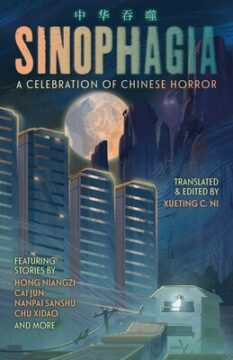 In Zhou Dedong’s short story “Have You Heard of ‘Ancient Glory’?” (Hereafter “Ancient Glory”),

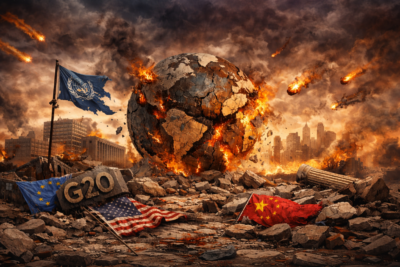 International order in the twentieth century was set by empires, then blocs engaged in ideological struggle, and finally by alliances based on common ideological and financial interests. Now even those alliances are dissolving. The Iran episode is the unmistakable break, and the United States is the agent of that break.
 Sughra Raza. Fungal Abstractions. March 2022, Vermont.