by Azadeh Amirsadri
I was an English as a Second Language teacher in a suburban high school in VA from 1997 to 2002. I taught levels 1 and 2, beginners and intermediate levels, and had a total of five classes each year. My students were from all over the world, and my five years with them were some of the best teaching experiences I have had. Every day of the week, we would gather as a family, joined by our otherness, and go through school and life together.
On the first day of school, I would go over their schedule and show them where their classes were, since they were usually grouped together in physical education or electives, and take them to their lockers so they could practice opening and locking them, an activity that would sometimes take the whole period. I would also take them to the cafeteria to show them about getting lunch, avoiding pork products for the Moslem kids, if they chose to, and get an alternative lunch. The county had little pink cards with the picture of a pig on them that were put next to the pork products, so that helped them. They had to memorize their student ID to pay for the food at the end of the line, and I‘d remind them that they didn’t have a lot of time for eating and cleaning up afterwards, 30 minutes from start to finish, and some lines were longer than others, so maybe bringing lunch from home could help them not rush as much. However, the sight of school pizza, fries, and chocolate milk was too much of a competition with lunch from home.
Students would sometimes arrive at any time in the middle of the school year after getting tested at a central registration center in the county, and slide right into any level they tested in. Everyone in class, except two kids, had someone who spoke their language in the school, and when they landed in my class, they had someone who could show them the ropes of an American high school.
There was a girl from Cameroon who didn’t have anyone else in class who spoke French, so I would speak to her when she needed help, and the others would tease her that she was my favorite. She was a bit older than the others, but not very mature, and would get into arguments with them. I was fascinated by how the students argued with their very limited English in level 1, using the profanities they had learned and knowing it wasn’t a nice thing to say, but not having any other words to convey their anger and their dislike of each other during fights. Read more »


 Today an electrician came to visit. He was tall and broad-shouldered and had arms like sausage links that were fairly covered in tattoos. One of the tattoos was a date: January something-or-other. I tried to read it as he walked through my front door, but he looked me in the eyes and so I glanced away quickly without having absorbed any of the details. He had come to inspect my attic wiring, for which he had to get on his hands and knees and crawl around the attic floorboards. It was a short but dirty job. When he came downstairs his palms were blackened and so he asked if he could wash up somewhere. I pointed him to my kitchen sink and to a small bar of soap on one side of it. While he was washing his hands (very thoroughly, I noted), he turned to me and starting cheerfully recounting how important it was to him to be clean. He had a pink, friendly face, sort of like a big baby. He had shaved blond hair that had grown out ever so slightly and a twinge of orange in his beard stubble. I told him I was accustomed to dirt, having two sons and a male dog, although upon saying that I realized I wasn’t sure whether my dog’s sex was much of a factor in how dirty or clean he tended to be. The electrician nodded when I spoke but seemed eager to get back to his own story. He went on to tell me that he had a child but that he was no longer together with the mother. It’s not like me to have a one-night stand though, he said, it’s not a hygienic thing to do. And anyway, he went on, I could never have stayed with her—she was a slob, an unbel-IEV-able slob. She couldn’t focus, couldn’t pay attention to me or anyone else, and certainly not her surroundings. Keep your eye on the ball, I told her, but she didn’t know what I meant. Believe me, he said, that girl and all her stuff was all over the place.
 The Hanle Dark Sky Reserve is a spectacular spot in Ladakh, in the north of India. It’s surrounded by snow-capped mountains, and at 14000 feet, it’s well above the treeline. So the mountains and the surroundings are utterly barren. Yet that barrenness seems only to enhance the beauty of the Reserve.
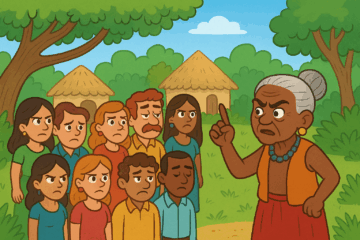 A bit of information is common knowledge among a group of people if all parties know it, know that the others know it, know that the others know they know it, and so on. It is much more than “mutual knowledge,” which requires only that the parties know a particular bit of information, not that they be aware of others’ knowledge of it. This distinction between mutual and common knowledge has a long philosophical history and has long been well-understood by gossips and inside traders. In modern times the notion of common knowledge has been formalized by David Lewis, Robert Aumann, and others in various ways and its relevance to everyday life has been explored, most recently by Steven Pinker in his book When Everyone Knows That Everyone Knows.
 Sughra Raza. Departure. December 2024.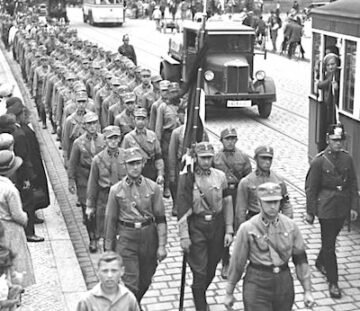



 In recent years chatbots powered by large language models have been slowing moving to the pulpit. Tools like