
by Alizah Holstein
 Today an electrician came to visit. He was tall and broad-shouldered and had arms like sausage links that were fairly covered in tattoos. One of the tattoos was a date: January something-or-other. I tried to read it as he walked through my front door, but he looked me in the eyes and so I glanced away quickly without having absorbed any of the details. He had come to inspect my attic wiring, for which he had to get on his hands and knees and crawl around the attic floorboards. It was a short but dirty job. When he came downstairs his palms were blackened and so he asked if he could wash up somewhere. I pointed him to my kitchen sink and to a small bar of soap on one side of it. While he was washing his hands (very thoroughly, I noted), he turned to me and starting cheerfully recounting how important it was to him to be clean. He had a pink, friendly face, sort of like a big baby. He had shaved blond hair that had grown out ever so slightly and a twinge of orange in his beard stubble. I told him I was accustomed to dirt, having two sons and a male dog, although upon saying that I realized I wasn’t sure whether my dog’s sex was much of a factor in how dirty or clean he tended to be. The electrician nodded when I spoke but seemed eager to get back to his own story. He went on to tell me that he had a child but that he was no longer together with the mother. It’s not like me to have a one-night stand though, he said, it’s not a hygienic thing to do. And anyway, he went on, I could never have stayed with her—she was a slob, an unbel-IEV-able slob. She couldn’t focus, couldn’t pay attention to me or anyone else, and certainly not her surroundings. Keep your eye on the ball, I told her, but she didn’t know what I meant. Believe me, he said, that girl and all her stuff was all over the place.
I was startled by the unanticipated intimacy of this conversation (his conversation, really, seeing as I said little) and I was perhaps a little aware of being alone in my home and of having tied my dog outside. But if my hackles were up it was only very slightly, and in their place curiosity had begun doing its work. Why was he telling me all about his private life? The writerly instinct had kicked in; the man had leaped cleanly from contractor to material.
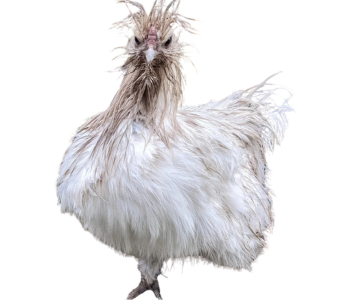
I started to think about where we get material. Sometimes, material is the byproduct of effort. But other times we run into it as if by chance. In the last few years, I have started taking notes on the way people talk. There’s a woman I knew who threw the expression “madder than a wet hen” into every conversation; and a man who repeated the same few sentences so many times that I wrote them down out of the sheer need to occupy myself as he spoke.
Not long ago, I gave myself one minute to create a list of the various types of research I did for my first book. It contained standard-fare research, like reading books, newspapers, academic articles, and popular media. Sensory research appeared, too, meaning using scent, sound and music, as well as tactile research—in my case, wearing old clothing and locating materials on eBay. I used visual research such as photos, and immersion research such as visiting museums and walking through a given environment. I read letters, journals and diaries. I consulted very old credit card statements and receipts of purchases and/or sale. I scoured Google maps to assess distance, to determine the time a trip should take, and for confirming the position of buildings, structures, or geographical features. I visited physical archives and clicked on digital ones. I connected clunky old hard drives, pulled up old emails, led in-person interviews, and watched and listened to recorded ones. I used databases, emailed people, organizations, and institutions with questions. I ordered school transcripts and worked to decipher old marginal notes (marginalia) in my books.
When the minute was over, I was surprised by the length of this list. I think many of us usually think of research as something narrow. Maybe we think of a magnifying glass or a pair of spectacles, a library, or at the very least, an open book or webpage. We think of research as something tight-lipped and unforgiving, someone with expectations we are likely to disappoint. But it turns out that research, like love, is a many-splendoured thing. At the root, to research is to investigate. More broadly, it is to search. And at its broadest, I suppose, it means paying attention. Dare I say (my kids will sneer) that paying attention is fun?
I’m aware that in this moment, talking about research is like describing a feast at the onset of a famine. Great, untold quantities of research, both new and ongoing, have been struck from our ledgers. We are awash in canceled projects, studies started but not completed, half constructed and then left to wash out to sea. The scope of this stoppage is hard to comprehend. Some of us are madder than a wet hen. Many of us want to keep our eye on the ball. I, above all, want to keep paying attention.
Enjoying the content on 3QD? Help keep us going by donating now.