
by Mark Harvey
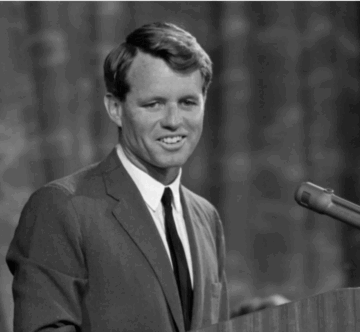
The late Robert F. Kennedy, who ran for President in 1968, could be considered a great man and even more commendably, a good man. It wasn’t always so. As a young ambitious lawyer he served under Joseph McCarthy during the hearings meant to weed out communists from American politics. Those hearings ruined many a life and are a stain on American history. He was an early supporter of the Vietnam War, perhaps our most ill-considered and violent venture overseas. In short, he was as misguided as a young man as his now seventy-one-year-old son RFK Jr is as an old man. The big difference is that the father evolved over the years from vast experience and from the terrible loss when his own brother was assassinated. He went from a cocky, overly ambitious lawyer to a compassionate man tempered by pain.
His son RFK Jr has traveled the opposite life arc. He began his career as a promising and effective environmental lawyer and in a story worthy of Greek tragedy, took on the arrogance of an Agamemnon or an Icarus. If you like the classics, you’ll recall that Agamemnon, the protagonist in a play written by Aeschylus, committed a great act of hubris. He sacrificed his own daughter Iphigenia to get favorable winds for his warships on their way to Troy.
RFK’s act of hubris is assuming he has the background and ability to manage something as massive and complicated as Health and Human Services, by far the biggest budgeted department in the US government, weighing in at $1.6 trillion. Its budget dwarfs the Department of Defense. Health and Human Services has 80,000 employees and oversees some of our most important agencies including The Center for Disease Control and Prevention (CDC), The Food and Drug Administration (FDA), and Medicare and Medicaid Services.
In many ways choosing that secretary should a be a president’s most important decision. The effectiveness of the CDC alone may well determine whether the next pandemic is stopped in its tracks or kills millions of people. The FDA works hand-in-hand with the CDC in determining which vaccines can and can’t be released, which medicines are ready for market, and how to keep our food supply safe. In other words, the person in charge of all this should be very good at managing money, tens of thousands of people from diverse professions, and have either a strong science background or at least the humility to defer to those who do.
A serious appointment for the position looks something like Bill Clinton’s choice of Donna Shalala, who the Washington Post called “one of the most successful government managers of modern times.” Shalala earned a PhD from the Maxwell School of Public Affairs, specializing in public finance and budgeting. Good start. She went on to become the president of Hunter College for eight years and then the chancellor of the University of Wisconsin. Those roles involved managing hundreds of millions of dollars, administering thousands of staff members, and negotiating dozens of major fields of studies. In some ways, her education and her prior employment were the perfect combination for her role as Secretary of Health and Human Services.
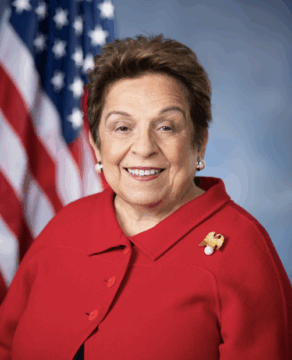
And after eight years in the Clinton administration, she was considered one of the most successful secretaries in the history of the agency. Among her accomplishments were the Children’s Health Insurance Program, which expanded coverage to millions of low-income kids, making the FDA more efficient, and, wait for it, increasing the rates of vaccinations for kids under three. Shalala and her team nearly doubled the number from 50% to 90%.
At a Johns Hopkins Health Forum in 2022, Shalala said, “I had an ability, because I had been in research universities, to conceptualize the management of strong personalities, and learn how to weave them together with both the policymaking process as well as the budget process. Teams are very important in leading complex institutions.”
RFK Jr entered the job as Secretary with much less practical preparation. The largest organization he led is called the Riverkeepers and it runs on about $5 million per year. He is a trained lawyer and as a young man, did genuinely good work as an environmental lawyer for the Natural Resources Defense Council, winning some important cases protecting rivers and waterways, landscapes, and the air itself. Had he stayed in that field and continued to work on his passion for the environment, we would be better off and much safer as a nation. But, alas, hubris.
In April of 1968, Robert Kennedy Sr. was in Indianapolis campaigning for President. On the night of April 4th, Martin Luther King was assassinated, the same night Kennedy was scheduled to speak at an urban park in a predominantly black neighborhood. His staff did not want him to carry forward with the speech, fearing for his safety after King’s death. But Kennedy insisted and gave an impromptu speech to a large audience from the back of a pickup truck. It was a short speech asking the crowd not to turn to hate and violence, but to love and compassion. Toward the end, he said, “My favorite poet is Aeschylus and he once wrote, ‘In our sleep, pain which cannot forget falls drop by drop upon the heart until, in our own despair, against our will, comes wisdom through the awful grace of God.’”
It’s a beautiful poem and is spoken by the chorus in the tragic play about Agamemnon. What I found interesting about the poem the first time I read it is the notion of wisdom coming “against our will” and through “the awful grace of God.” The Greeks used the term pathei mathos to describe the concept of learning through suffering.
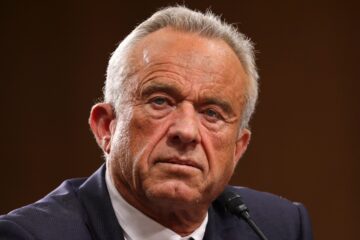
I fear that as a nation we may have a terrible learning-by-suffering ahead of us as Kennedy Jr. dismantles The Center for Disease Control, which has long been considered the center of the world’s best scientists fighting sickness, plagues, and infections. Kennedy subscribes to so many disproven theories about medicine, disease, and virology, that you have to wonder which corner of the Internet he pastures in. He’s perhaps most well-known for his claim that vaccines cause autism in children due to a mercury-based preservative called thimerosol. That claim has been soundly disproven by massive studies including one in 2014 that involved 1.4 million children. It was also disproven when autism rates continued to climb even after thimerosol was removed from vaccines in 2001. You don’t have to be an epidemiologist to reason that one out. Kennedy’s clinging to the autism-thimerosol theory is akin to saying that umbrellas cause rain. And then when umbrellas are outlawed and it continues to rain, he maintains his campaign against umbrellas. That’s the man running our CDC.
I have friends who live in the far corner of the Internet where bizarre theories about everything abound. They buy tin foil in bulk to fashion hats that protect themselves against mind-control-waves from outer space. They don’t believe that we ever landed on the moon and they don’t believe much of what our best scientists write. I don’t argue with them about any of this because it’s a lost cause. But when an heir of the storied Kennedy clan inhabits that same murky corner of the Internet and is carelessly appointed head of an organization that may be called upon to battle a viral plague, it’s time to worry.
If you run the department that controls the CDC, you better know something about the eradication of polio. While polio is not the greatest threat to children these days, understanding what a terrible disease it was worldwide, how its vaccine was developed, and how that vaccine has saved millions from either death or paralysis seems like required reading. RFK Jr. truly believes that the polio vaccine killed more people than it saved. His beliefs come from a long-ago debunked theory about the vaccine causing more cancer deaths than lives saved by the inoculation.
The world has suffered about four influenza pandemics per hundred years over the last two centuries. One of the worst was called the Spanish Flu, which killed somewhere around fifty million people worldwide, and close to 675,000 Americans—about one of every 150 people nationwide. We had no vaccination for it. In today’s numbers, that would be more than two million Americans.
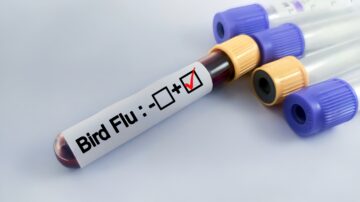
Virologists have little doubt that we’ll have more influenza pandemics this century. The influenza viruses that worry me the most are H5N1 and H7N9, both versions of what’s called Bird Flu. Like all viruses, they continue to mutate in their path to survival and have infected a number of our dairy cows and chickens. What’s worrisome is the transmission of the virus from farm animal to farm worker, something that’s already happening. And what could be still worse is if the virus gains the ability to quickly move from human to human through respiratory transmission.
I have a profound admiration for great scientists. Their ability to reason is obvious but sometimes overlooked is their ability to make leaps in progress with their imagination. Whether Darwin observing species worldwide on the voyage of the Beagle and consequently developing the Theory of Evolution or Einstein developing his Theory of Relativity through gedankenexperimente, (German for thought experiments), it’s the combination of reason and fluid imagination that has helped get us out of the stone age. Simply put, we need the finest scientists working at the CDC, not those subscribing to weak theories about disease and vaccinations.
I don’t know that you can put a date on the birth of modern epidemiology. Influenza got its name from medieval Italy when epidemics were called influenza di stelle, influence of the stars. In other words, people used to believe that epidemics were related to astrology and functions of planetary alignment.
We’ve come quite a distance from there to our current understanding of the spread of viruses and bacteria. You could say that modern epidemiology began with the case of John Snow and the 1854 cholera outbreak in London. Cholera was killing hundreds of people in London within a few blocks and it was assumed that miasma, bad air, was the cause. John Snow, a young physician, mapped the deaths and discovered a high density of mortality around a public pump on Broad street. He also noticed that a nearby workhouse with its own well had much lower rates of cholera. Through observation, reason, and imagination, he concluded that cholera was waterborne, not airborne and convinced the authorities to remove the pump handle. The death rates immediately dropped precipitously.

Snow’s style of work and thinking represents what we need in our epidemiologists: rigorous observation, inductive thinking, integration across fields, disciplined analysis, and case control studies. It is the antithesis of RFK Jr.’s shallow analysis of disease and disease vectors. He has advocated cod liver oil to treat and prevent measles, cast doubt on whether HIV causes AIDS, and has fired some of the nation’s best scientists including the head of the CDC, the Director of the National Center for Immunization and Respiratory Diseases, and the Director of the National Center for Emerging and Zoonotic Infectious Diseases.
Whether our next pandemic is influenza or of the corona virus style, we need the best of the best preparing this nation and the world to handle it. Through Kennedy’s arrogance and hubris, we’ve already lost a great deal of time and expertise. Saving lives when the next plague comes will certainly involve a vaccine. I can’t think of anything more frightening and disheartening than struggling through a virulent disease and being told by a man singularly ill-equipped for the job to take more cod liver oil and raw milk.
Life’s tragedies somehow humbled RFK Sr., making him more compassionate and understanding of the world. He turned to classic writers such as Aeschylus to help him through his grief and appeared to gain wisdom and humility with age. To watch his son seemingly become more arrogant by the day, willfully blind to the best science, is to witness a tragedy in the making. We will all pay for his hubris.