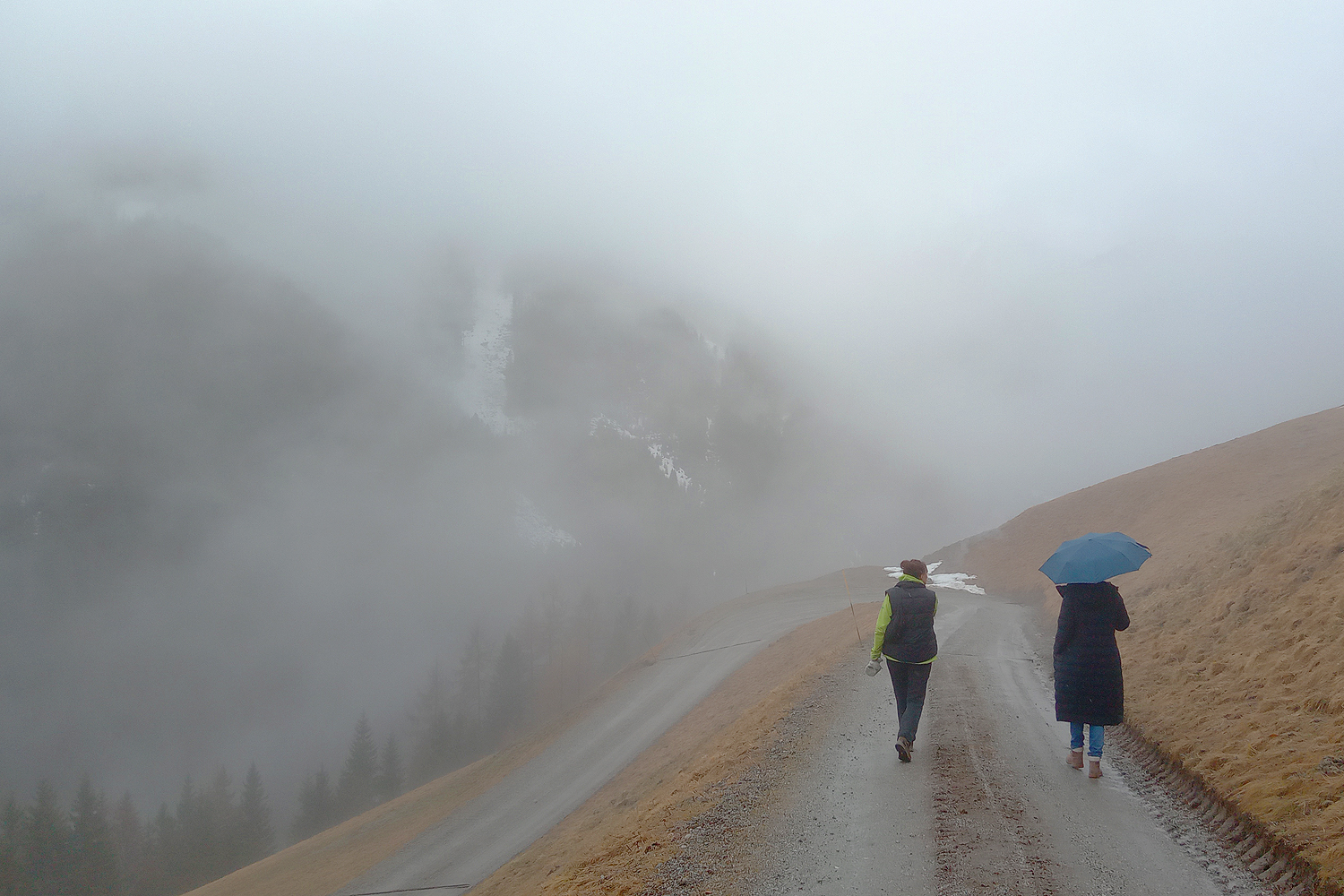
Walking above the village of Schalders in the South Tyrol on Saturday morning.

Walking above the village of Schalders in the South Tyrol on Saturday morning.
by Carol A Westbrook

The Supreme Court is poised to make another landmark decision this year, when it determines if it will uphold a Texas Federal court’s ruling that invalidates the FDA’s (U.S. Food and Drug Administration’s) updated labeling of the abortion pill mifepristone (pronounced mi-ˈfe-pri’-stōn) , brand name Mifeprex (Fig 1). Not only will this ruling have a significant impact on abortions in the US, it will also determine whether the Supreme Court (Fig 2) has the power to modify or nullify an FDA ruling. But before we delve any further into this debate, let’s review the action of this drug on the biology of the female reproductive system.

In the early part of a woman’s monthly cycle, her levels of the hormone progesterone rise, and this causes the lining of the uterus to thicken and increases its blood supply, converting it into a state that can support a fetus. After unprotected sex, sperm are deposited in the vagina, and they begin to travel up the fallopian tubes; at the same time, an egg is released from the ovary and travels down the fallopian tube. (Fig 3) When sperm and egg unite, conception occurs. Interestingly, the date of conception does not mark the start of the pregnancy; pregnancy is actually counted from the beginning of a woman’s monthly cycle, two weeks prior to conception. The total length of a pregnancy is usually 40 weeks, or 9 months. Read more »
by Barry Goldman
Reading about corporate greed and depredation over the past f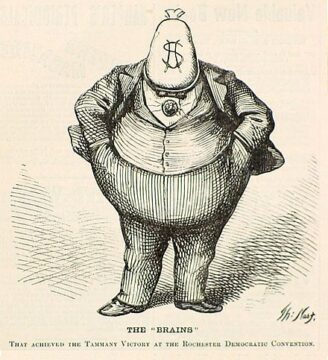 ew years, I keep getting stuck on the same question: Don’t these people have grandchildren? How can corporate decision-makers spend their days actively working to destroy the environment, pollute the water, kill off the animals, melt the glaciers, and incinerate the biosphere? Even if what they care about the most is making more money no matter how much money they already have, don’t they care at all about the world they’re leaving for their kids?
I’ve arrived at a theory. But first I need to back up a few steps.
Readers of 3QD may be familiar with the brain fungus that causes “zombie ants” to leave the safety of the forest floor and climb up the stalks of plants to die. Or the parasite that causes mice to lose their fear of cats. In both cases, the parasite has evolved to hijack the brain of the host and cause it to behave in ways that are suicidal to the host but beneficial to the parasite. The behaviors the parasite causes are often exquisitely complex and particular. It seems impossible that something as primitive as a fungus could be the explanation. But evolution has come up with lots of similar strategies. She is very clever. She doesn’t have a sense of fair play or sportsmanship. If a behavior increases the chances of getting the genes of one generation reproduced in the next, it succeeds. Nothing else matters. And she has lots and lots of time to experiment.
So that’s the first idea we need – the fungus that hijacks the brain of one species to improve the reproductive success of another.
Then we need the idea of cultural evolution. Human beings don’t have to wait for genetic evolution. We have evolved the ability to get information from one generation to the next without having to wait for it first to be encoded in the DNA. We don’t have to start from scratch with each generation, and we don’t have to proceed by trial and error. We have culture, language, and traditional practices. Read more »
by Martin Butler
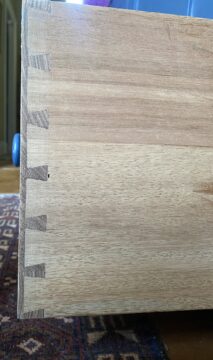
My favourite lesson in secondary school played no part in my future career but nevertheless enriched my life immeasurably. Despite being a sleepy rural school very low down the pecking order it had fully equipped woodwork and metalwork workshops. Woodwork was my favourite subject by far. This was in the days when there was a gender split – girls doing something called ‘domestic science’ while the boys did woodwork and metalwork. Woodwork lessons were very straightforward. The teacher – Mr Carpenter (can you believe!) – would demonstrate standard joints, starting with a simple halving joint, and then we would each go to our benches and have a go at producing something as near as possible to what he had produced. By the end of the first year we were making half-blind dovetails which require considerable care and precision. All done with hand tools alone. Once we had mastered the basic joints, we were free to make whatever we wanted. Along with art and sport it was one of the few subjects in which it was possible to excel without having to write anything down, which for me was a blessing. Of course, we would sketch out plans, but these were always very provisional and often bore little resemblance to the final product. You were judged on the product alone, not on your workings.
Mr Carpenter told us that in maths if you got 9 out of 10 it was pretty good, but in woodwork if 9 out of ten joints were good and the 10th bad, your creation was likely to fall to pieces. The laws of physics ruled. As with other crafts, woodwork requires patience and practice. Wood makes demands that have to be met if you are going to produce anything worthwhile, imposing a kind of natural discipline that comes not from some authority figure but from the physical world itself. The digital world is binary, you either know the right clicks to make, the right options to pick on a drop-down menu, or you don’t. In contrast, hand-crafts are essentially qualitative. Read more »
Blood for blood is in our bones,
the bass line of a ceaseless requiem.
Justice screams carpe diem,
but none of the dead are soothed
as the living gloat and hoot, or wail
Why did it have to be her, or him?
Satisfaction’s not been found
in the pages of our “Good Books”.
Why blood and honor have been spun
into semantical squalls of scriptures
torn by the cyclone of our double helix
to supersede love— why is anybody’s guess.
Why is left to be lived by those who simply believe
that death for death, or death for turf, or death for wealth
yields no more than a sprawl of cemeteries.
by Jim Culleny, 5/2/11
Rev: 3/9/22, Rev:2/4/24; ad infinitum
by Joseph Shieber
Suppose that you’re sitting at a pristine, white desk and are presented with the following scene (graciously rendered by Google Bard from a description by me):
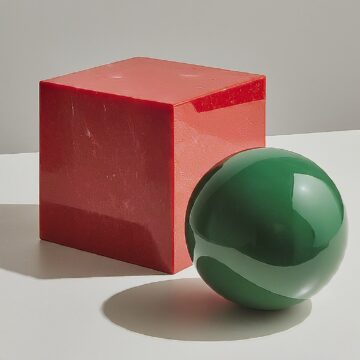
How would you describe what you see? Maybe something like, On the desk in front of me there’s a medium-sized, shiny green sphere in front of a large, matte red cube.
The process by which you see, however, doesn’t involve the wholesale transmission of information about discrete objects from the environment to your consciousness. Rather, that process involves the decomposition of information into constituent components. Very roughly, the rods and cones in your eyes encode light reflectances from surfaces in your immediate environment into biochemical signals and communicate them, by way of your optic nerve, to your visual cortex, where those signals undergo further processing. Some parts of this process involve distinguishing between light and dark, other parts involve the detection of edges, lines, and orientations, while still other parts involve encoding for color, motion, depth, and object-hood.
The way that this process occurs seems to present a problem. How is it that the discrete pieces of information — shiny, matte, red, green, sphere, cube, in front, behind, etc. — get put back together in the right way when that information eventually makes its way to your consciousness? Given the scene on your desk and the process by which your sense organs and brain process that visual information of the scene, why do you become aware of the right collection of properties – the green, shininess, and spherical shape belonging to the object in front, and the red, matte surface, and cubic shape belonging to the object behind? In fact, why are the properties even connected at all in your consciousness, rather than appearing as separate impressions of color, shape, surface, etc.?
This puzzle of how it is that the visual properties that we sense are “bound” together into experiences of objects is one version of the “binding problem” in neuroscience. Merely one version, because we can easily imagine others. To take just one further example, when you then reach out your hand to grasp the object in front on your desk, why do you register your tactile experiences as belonging to the same green, spherical object that you see?
Though the binding problem is still a live problem in 21st century neuroscience, it was actually anticipated more than 2000 years ago, in the Nyāya Sutras (Sutras 3.3.1-14). There, the author of the Sutras uses what is basically the binding problem to argue against the idea that the self might consist in nothing more than a collection of all of the component parts of the living human body. This latter, materialist, view was defended by the Cārvāka school, one of the rival schools of the Nyāya. Read more »
by Jochen Szangolies
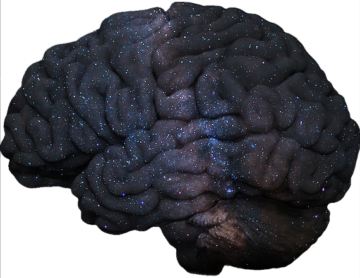 In the previous column, I took Philip Goff’s latest offering Why? The Purpose of the Universe as a jumping-off point to present some of my own rumination on life, the universe, and what it all means. While that prior installment was mainly concerned with looking outward, into the wider cosmos, here, I’ll turn my gaze inward, to riff on Goff’s case that the reality of conscious experience implies a larger purpose to, well, everything.
Goff’s ultimate conclusion should be attractive to many: rather than being thrown by mere random chance into the cold and uncaring void of the universe, to live out a brief, confused existence and then wink out into the nothingness whence we came, the existence of complex life in the world is due to a larger purpose, an overall arc that bends into the direction of greater objective value. Moreover, rather than going the traditional route and appealing to some omniscient, omnipotent, and omnibenevolent creator God that sees to it that everything unfolds according to His divine (and commonly, unfathomable) design, he proposes a way to reap those benefits without all the boring Sunday prayer sessions!
Thus, he breaks largely untrodden ground: proposing a middle way between a scientific, materialist, but ultimately uncaring cosmos, and a world unfolding according to a divine, but irreducibly mysterious, purpose. Just as evolution can give us design without a designer, he proposes meaning without a meaner. If this were a religion, I could well see myself signing up for it—but since it’s not, I don’t even have to do that! However, as also hinted at in the last column, the more alluring the conclusion, the more we have to critically examine the arguments leading up to it. Read more »
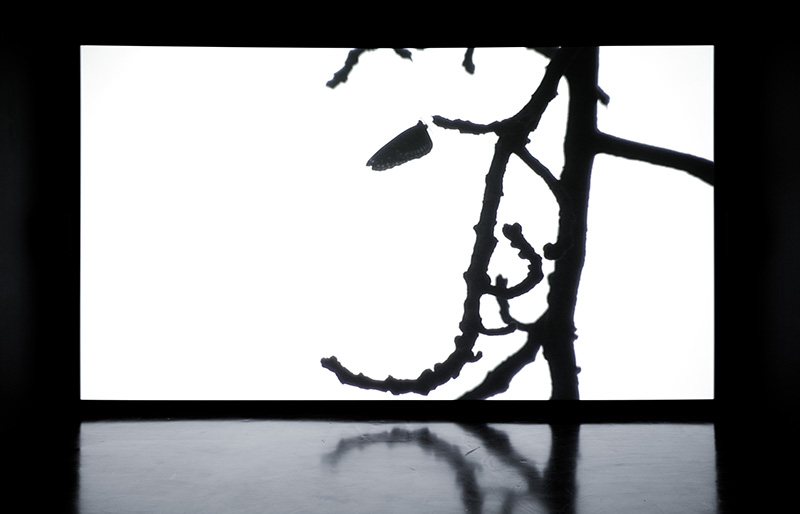 Amar Kanwar. The Sovereign Forest, 2011- …
“The Sovereign Forest is an ongoing multimedia installation that is a creative response to crime, politics, human rights, and ecological crisis. It evolved out of the political and environmental conflict in the resource-rich, and largely tribal Indian state of Odisha. Kanwar has been observing and documenting the industrial interventions that have irrevocably altered Odisha’s landscape for more than a decade.”
Current show here.
by Derek Neal

1.
Three men walk across a desolate landscape. They are dressed in robes, but they might as well be rags. One is barefoot, and the ground is muddy. Who are they? Where are they going?
“There must be lots of painters in Moscow,” the one called Daniil says.
“No matter, we’ll find some work,” the one called Kirill replies.
They are monks, they paint icons. It is 1400. We understand that they have been together many years. It begins to rain, and the one called Andrei, the youngest one and the most talented, seeks shelter under a tree.
“Come on,” the others say, we’ll be alright. They move on into the storm. From this point on, their unity will begin to break.
2.
Some years later Kirill wanders into a workshop. He thinks he is alone, but he comes across another man reclining on a bench. This man is called Theophanes the Greek. Outside, a heretic is being tortured; inside, all is cool and calm. Kirill begins to admire the paintings he sees, and Theophanes realizes he is in the presence of a man of a certain intelligence. Read more »
by Brooks Riley
by Tamuira Reid
 The last time I see Sam she’s sitting at the vanity in her bedroom, carefully examining her 16 year-old face in its lighted mirror.
Ugh, she sighs, wiping away the lip pencil I just watched her carefully apply for over the better part of an hour. This color, what is it? Hot-rod red? More like hotdog orange. Fuck you, MAC.
Grabbing a lighter shade from her stash of pencils, Sam regroups, starts over.
Music plays from an open laptop in the corner, haphazardly balanced on a milkcrate-turned-nightstand, The Weekend telling us to save our tears for another day. A beam of late afternoon sun finds its way through the cracked blinds, illuminating the side of Sam’s pale face.
You’d think I’d be better at this by now, she laughs, shaking her head, chestnut curls bobbing up and down at her shoulders.
The first lip pencil she used was stolen, straight out of mama’s make-up drawer, when Sam was just seven. She hurriedly ran into the bathroom and locked the door, giddy and nervous af. A small compact mirror in her lap. Cold tiled floor beneath her. There was a freedom in that moment for Sam, the kind of freedom that comes with spectacular acts of defiance. A girl doing girl things, because to the rest of the world, including her own family, Sam was very much a boy.
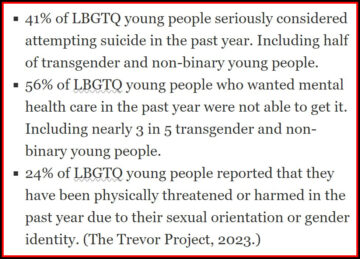
I was scared. Had a lot of shame back then. It was paralyzing. I knew my gender didn’t match my biological sex. I knew I was a girl. But I didn’t have the words to explain this to my mom and my brother. To anyone. It was a secret I held onto for a long time and it hurt. A lot. Read more »
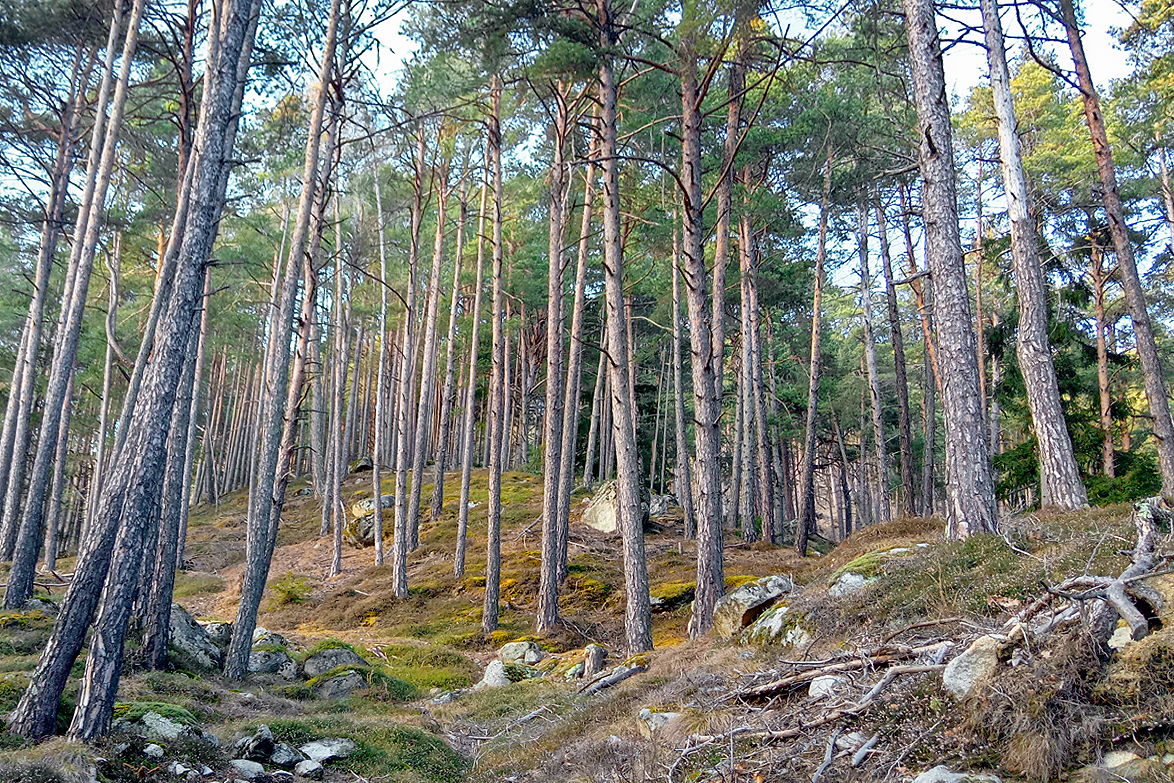
In the woods above the village of Aicha in the South Tyrol over the weekend.
by Mike O’Brien

We are fast approaching that special day midway through February, when we are called to reflect upon the joys and sorrows of sharing our lives with certain special others. An occasion for celebration by some, and for lamentation by others. I am, of course, referring to the second anniversary of Justin Trudeau’s invocation of the Emergencies Act to quell the “Freedom Convoy” that had seized downtown Ottawa as well as Canada’s three most important border crossings.
Last year’s anniversary was marked by the release of the Rouleau report, summarizing the results of a public inquiry into the Act’s use, such inquiry being automatically triggered whenever the Act in invoked. That report, finding that the government was justified in its decision and correct in its assessment of the situation to be addressed, angered people who already disagreed with the decision and pleased people who already agreed with it. A new review of the government’s invocation of the Act was released this January, finding that the government’s decision was not reasonable and violated the rights of people affected by the measures enacted pursuant to the declaration of emergency. This new finding (the Mosley decision, or more formally “2024 FC 42”), conversely angered people who already agreed with the decision and pleased people who already disagreed with it. There are two reasons why it elicited such reactions (neither being “people read it”). Firstly, the fact that it exists at all suggests that the wisdom of using the Emergencies Act, and the measures enabled thereby, was still an open question. And secondly, the fact that it (partially) faulted the government suggests that the convoy was not as dangerous or noxious as its detractors claimed it to be. But these suggestions are misleading. Read more »
by Barbara Fischkin
Part One
This story begins, as no great story ever has, with a dustbuster.
That’s right: A cordless, rechargeable handheld vacuum cleaner. If you don’t know, consider yourself lucky. It means you have had so much household help, that you never needed to recognize that dustbusters exist. Align yourself with George H.W. Bush, amazed, as he was, by a supermarket scanner.
A dustbuster once infiltrated my life and as much as I would like to make it the culprit of part one of this story, I blame two other operatives. For a dustbuster to be an actual culprit it would have to star in an anime film—or take on the alternative meanings assigned to it by the Urban Dictionary. (Don’t go there for this particular word, unless you want to read about raunch—or worse—ice hockey.)
As for the actual culprits, they are my husband Jim Mulvaney and his late mother, Eileen O’Keefe Mulvaney. My husband is an intrinsically good guy. But nobody is perfect. My mother-in-law—whom I loved deeply—had her own flaws. Super practical, but more about other people’s needs as opposed to her own. When we cleaned out her house, we found scores of nearly identical striped, button-down oxford shirts in their original packaging. I realized it was the shirt she wore on a daily basis. She was not a serious hoarder. She just hated going to the dry cleaners. Read more »
by Michael Liss
I have no purpose, directly or indirectly, to interfere with the institution of slavery in the States where it exists. I believe I have no lawful right to do so, and I have no inclination to do so. —Abraham Lincoln, First Inaugural Address, March 4, 1861
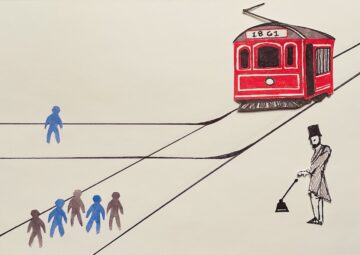 Did we need to have a Civil War? Couldn’t the two sides, geographically defined as they were, simply part before the shooting started? Did Lincoln intentionally choose war for any one of a variety of unworthy reasons that stopped short of necessity, including even something so mundane as a fear of losing face? Or was he faced with an intractable situation for which there was no simple, satisfactory answer—a type of political Trolley Problem?
These questions were suggested by the recent comments from a 3 Quarks Daily reader to a 2020 article by Thomas Wells. While I don’t agree with the premise of Lincoln’s “culpability,” it is an issue that has been continuously debated by historians and opinion writers almost from the moment South Carolina forces shelled Union soldiers led by Major Robert Anderson at Fort Sumter.
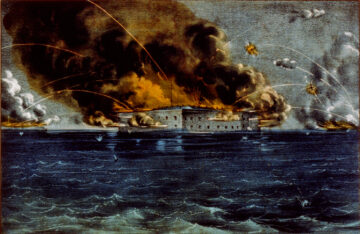
In fact, the debate raged both in public and behind closed doors even before the South Carolinians reduced the Fort on April 12-13, 1861. Depending on who does the telling, either Lincoln shrewdly baited the Confederates into firing on Fort Sumter, thus unifying much of the North for a shooting war, or belligerent South Carolina fired on Fort Sumter without good cause, thus unifying much of the North for a shooting war. If you are interested, I’d recommend James D. Randall’s discussion in his 1945 Lincoln The President, but, in either telling, at the end of the day, the war that followed Sumter was not inevitable, but the product of both sides’ choices. Read more »
by Jeroen Bouterse
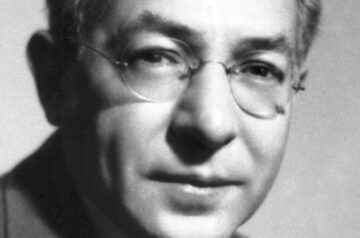
Several years before C.P. Snow gave his famous lecture on the two cultures, the American physicist I.I. Rabi wrote about the problem of the disunity between the sciences and the humanities. “How can we hope”, he asked, “to obtain wisdom, the wisdom which is meaningful in our own time? We certainly cannot attain it as long as the two great branches of human knowledge, the sciences and the humanities, remain separate and even warring disciplines.”[1]
Rabi had been interested in science since his teenage years, and grown up to be a Nobel-prize winning physicist. He had also been an important player in the Allied technological effort during World War II, as associate director of the ‘Rad Lab’: the radiation laboratory at MIT that developed radar technology. The success of Rad Lab, Rabi later reflected, had not been a result of a great amount of theoretical knowledge, but of the energy, vitality, and self-confidence of its participants.[2] In general, Rabi’s views on science and technology were somewhat Baconian: science should be open to the unexpected, rather than insisting on staying in the orbit of the familiar.[3]
‘A moralist instead of a physicist’
In Rabi’s accounts of his time leading Rad Lab, he would also emphasize the way in which he insisted on being let in on military information. “We are not your technicians”, he quoted himself, adding: “a military man who wants the help of scientists and tells them half a story is like a man who goes to a doctor and conceals half the symptoms.”[4] Indeed, the key to understanding Rabi’s worries about the two cultures – he would go on to embrace Snow’s term – is his view of the role science ought to play in public life. Scientists should not just be external consultants,[5] delivering inventions or discoveries on demand or listing the options available to the non-specialist.[6] In some stronger sense, they should be involved in directing policy decisions. Read more »
by Rafaël Newman
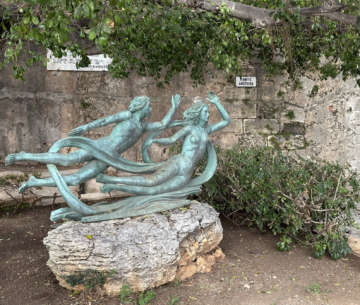
The initial syllable of the English word “island”—or rather, just its very first vowel—is descended from the Proto-Germanic *awjo, meaning “an area on the water.” The element “land” was subsequently added to differentiate the word from other inflections of the Proto-Indo-European root for water, *akwa-. Our “island” is thus cognate with its German counterpart Eiland, although these days German speakers probably prefer Insel, derived from the Latin insula, which refers less ambiguously to a land mass entirely surrounded by water and not, as Eiland can, to a territory simply suffused with water.
The “s” in our “island,” however, was inserted much later, by a process of classicizing back-formation, to associate it with its etymologically unrelated synonym “isle”: as if to establish a linguistic lineage, to give island’s humble Germanic form a noble Roman pedigree. To link it, as it were, with another, greater, more patrician history.
The desire to link islands up, to settle them down, to connect them with the mainland, is an old one. Our continents, after all, are thought to have derived from the drifting apart of an original, unitary Pangea, and perhaps we have been yearning ever since for a return to that felicitous Ur-conglomerate. “No man is an island” (or rather, “iland”), wrote John Donne in 1624. Fast forward to the Confederation Bridge, or “fixed link” that unites Prince Edward Island with New Brunswick, inaugurated in 1997, and you can trace the modern history of a venerable conviction. Read more »
by Angela Starita
New York magazine published a story about two sisters who decide to leave civilization and try surviving in the outdoors of Colorado. One has a 14-year-old son, and she brings him too. In fact, much of her motivation appears to be protecting him from dangers she perceives, existing ones and more she believes to be just on the horizon. The writer doesn’t know many of the specifics of those fears, but from text messages, she gleans that the mother, Rebecca Vance, believed that the world was on the verge of collapse and wanted to escape the ensuing survivalist brutality. Instead, the three died of malnutrition and hypothermia probably within two months of going “off grid.” In short, in trying to outrun anticipated violence, they instead faced a grueling, attenuated death.
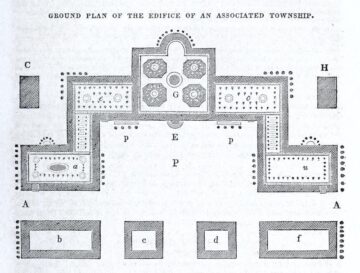
People quoted in the article attest to the sisters’ clear lack of familiarity with the backwoods camping let alone how to build a shelter, gather or grow sufficient food, generate heat, and all the other essentials to assure long-term survival. That aside, though, the sisters were acting out a typical response to their fear of the encroaching demands of the modern world. In their own panicked, inept way, the sisters were part of a long tradition of runaways looking to escape or reconfigure the rules of society as they understood them. It’s a familiar list—New Harmony, Oneida, the Shakers, even Jonestown—born of a familiar impulse: to start over and this time get it right. Read more »

 Ana Mendieta. Body Tracks, 1974.