
by Joseph Shieber
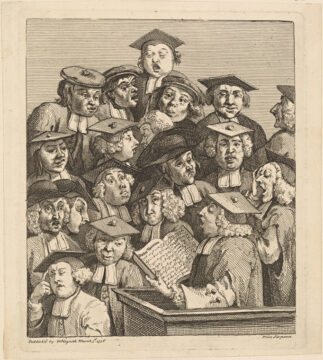
The humanities are once again in crisis, as they have been so many times before. What distinguishes this latest crisis from many of the crises preceding it, however, is the extent to which the current crisis in the humanities is exacerbated by the current political climate. Attacks on the humanities fit very well with the current right wing attack on higher education more generally; the Right moves seamlessly — one almost wants to say thoughtlessly — from attacks on one to attacks on the other.
Given this climate, it is not surprising that diagnoses of the current crisis in the humanities would focus on the politics of the humanities. Emblematic of such diagnoses is a widely discussed recent piece by Tyler Austin Harper in the Atlantic, “The Humanities Have Sown the Seeds of Their Own Destruction.” There, Harper suggests that the current crisis of the humanities is the result of political capture: the humanities disciplines are now hostage to left-wing political movements and, as a result, have become targets for critics from the center and right.
Underlying this diagnosis is Harper’s suggestion that the political capture of the humanities is the result of an attempt by representatives of those disciplines to respond to a perceived lack of practical benefit of the study of the humanities — a low return on investment (ROI) — by suggesting that the practical benefits of the humanities are not monetary, but social or political. “If the humanities have become more political over the past decade,” Harper argues, “it is largely in response to coercion from administrators and market forces that prompt disciplines to prove that they are ‘useful.’ In this sense, the growing identitarian drift of the humanities is rightly understood as a survival strategy: an attempt to stay afloat in a university landscape where departments compete for scarce resources, student attention, and prestige.” That is, the study of the humanities makes for better people and, in turn, better societies, rather than better workers. Read more »
 book that convulsed me with giggles. It was a collection of cartoons by Abner Dean called What Am I Doing Here? I couldn’t read, and I didn’t understand what was happening in the pictures, but the people in the cartoons were naked! You could see their tushies! It just cracked me up.

 January 1, 2024. Happy New Year! Just eleven months and five shopping days before Election 2024. Whether you find it comforting that 2024 also happens to contain an extra day might be the best marker of how Political Seasonal Affective Disorder has impacted you. Personally, I haven’t been sleeping particularly well.
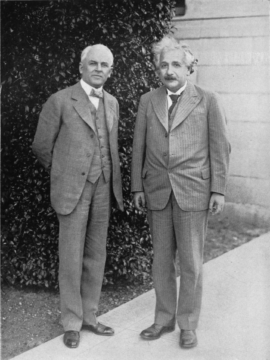 The photograph beside this text shows two men standing side by side, both scientific celebrities, both Nobel prizewinners, both of them well-known and well-loved by the American public in 1932, when



 Sughra Raza. Breaking Point.


 Two weeks after my wife died this past October, she briefly returned. Or so it seemed to me.
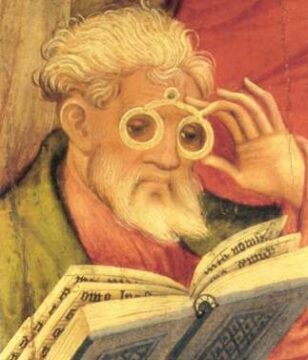 I’m haunted by the enormity of all of that which I’ll never read. This need not be a fear related to those things that nobody can ever read, the missing works of Aeschylus and Euripides, the lost poems of Homer; or, those works that were to have been written but which the author neglected to pen, such as Milton’s Arthurian epic. Nor am I even really referring to those titles which I’m expected to have read, but which I doubt I’ll ever get around to flipping through (In Search of Lost Time, Anna Karenina, etc.), and to which my lack of guilt induces more guilt than it does the real thing. No, my anxiety is born from the physical, material, fleshy, thingness of the actual books on my shelves, and my night-stand, and stacked up on the floor of my car’s backseat or wedged next to Trader Joe’s bags and empty pop bottles in my trunk. Like any irredeemable bibliophile, my house is filled with more books than I could ever credibly hope to read before I die (even assuming a relatively long life, which I’m not).