by William Benzon
 I read a great deal of Bertrand Russell when I was in my teens. I read various collections of essays, such as Why I Am Not A Christian, In Praise of Idleness and Other Essays, and Marriage and Morals, some of which my father had stored in a box in the basement, along with Orwell’s 1984, Huxley’s Brave New World, a book or two by this guy named Freud, though I forget which one, and some others. I also Russell’s – dare I say it? – magisterial A History of Western Philosophy And Its Connection with Political and Social Circumstances from the Earliest Times to the Present Day, which I purchase myself, a big thick paperback with a white cover. It was cited when he received the Nobel Prize for Literature in 1950.
It was from Russell more than anyone else that I got the idea that philosophy was a grand synthetic discipline, which I liked. Putting things together, seeing how all the parts interacted, that had immense appeal to me. And so I became a philosopher major when I enrolled in The Johns Hopkins University in 1965. I enjoyed an introductory course called, I believe, Types of Philosophy. Edward Lee’s course in Plato and the Pre-Socratics was wonderful as well; Lee was young, charismatic, and loved Mahler, as I did.
Then there was a two-semester sequence in the history of modern philosophy, from Descartes up through Kant. Maurice Mandelbaum taught the first semester, outlining each lecture on the board and then delivering on the outline. The lectures were so clear that you almost didn’t have to read the primary texts. The second semester was taught by a visitor from Chicago, Alan Gewirth. A different experience, like pulling teeth. Gewirth did the pulling and we students offered up our teeth. Ouch! But perhaps more pedagogically effective than Mandelbaum’s clarity, more Socratic, if you will.
By my junior year, however, I had come to realize that philosophy, as it is practiced in the academic world, is not what I had imagined it to be from reading Russell’s essay. It was another specialized discipline that had long ago abandoned any attempt at a broad synthesis. Fortunately, I had discovered literature, and Dr. Richard Macksey, whom I’ll discuss in more detail later. I’d always loved to read, and Macksey’s free-wheeling and broad ranging intellect appealed to me. I took four courses with him, plus an independent study on I forget what, and did a master’s thesis on “Kubla Khan” under his supervision. Literary criticism became the rubric under which I put things together. And why not? Literature expresses the world, and so couldn’t one study the world under the rubric of studying literature?
Well, no, if you must ask. By the time I’d figured that out – it didn’t take but a year or three – I was committed to an impossible intellectual project. I remain so committed. I will end this essay by arguing – it’s more of an earnest suggestion, really – that perhaps, if we do it right – of which there is no guarantee, and many signs that we’re botching it – we can harness these marvelous new machines to the job of synthesizing (human) knowledge. If we succeed, we’ll find ourselves in a whole new world, perhaps one where it is not at all obvious who is harnessed to what and to what end. I will, however, proceed indirectly. Read more »



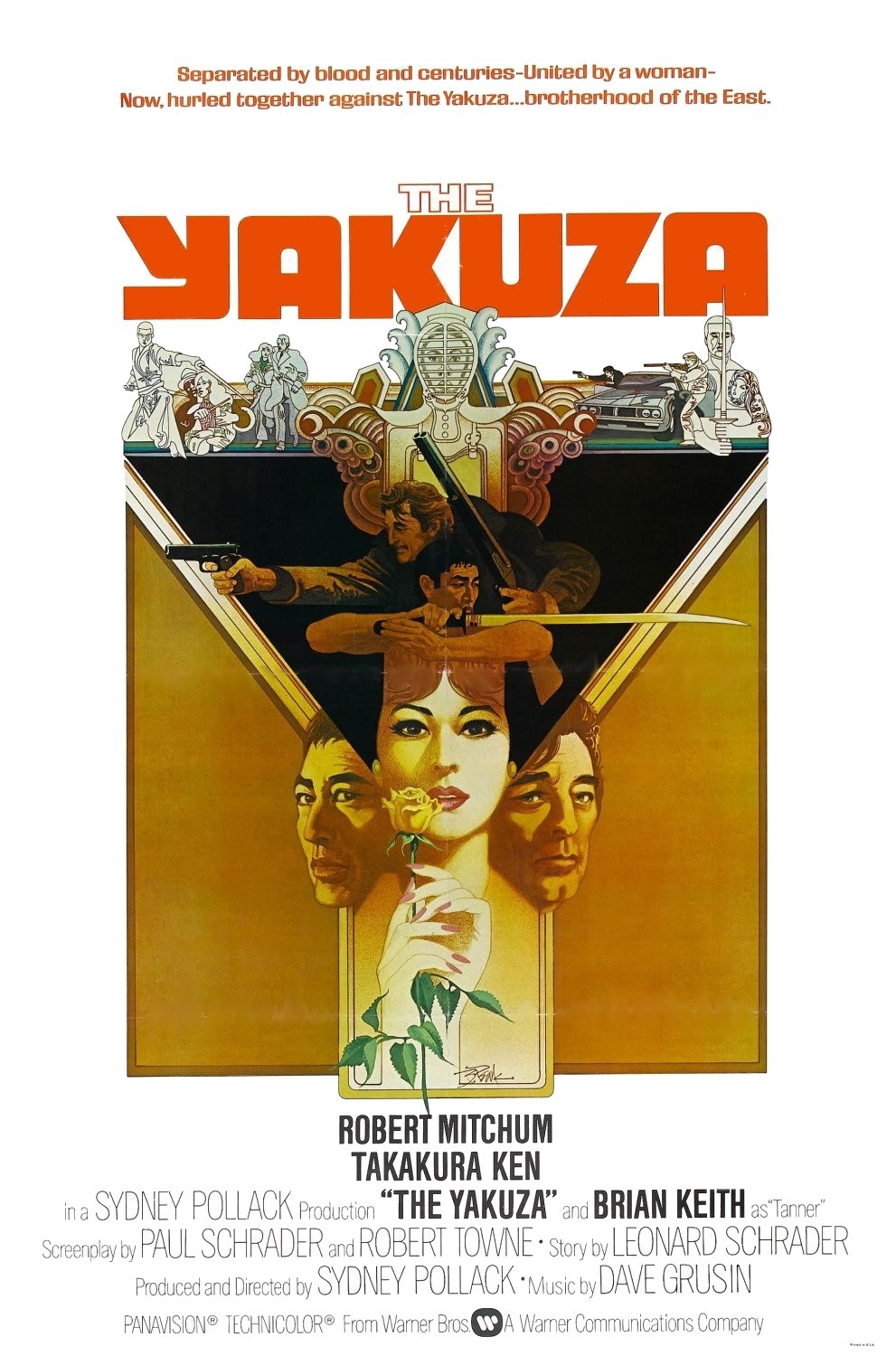 A few days ago I watched The Yakuza (1974), Paul Schrader’s screenwriting debut, and the following day I saw Andrei Tarkovsky’s Nostalghia (1983) at the cinema. These two films would never feature on a double bill together, and yet, due to having watched them within 24 hours of each other, they seem related in my mind, and I can’t help but interpret Nostalghia in light of The Yakuza.
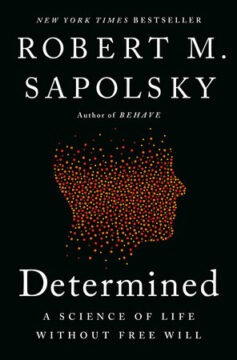 A few months ago, the Stanford biologist Robert Sapolsky released
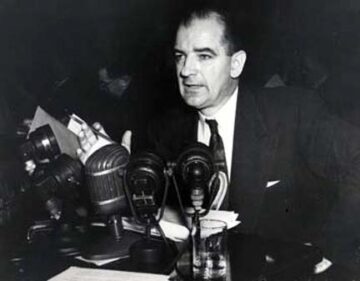

 Noah Davis. Isis, 2009.

 What do we know about vampires?

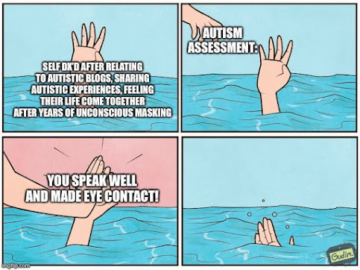 There are a few ideas I’ve seen floating around on social media about people with Autism Spectrum Disorder (ASD) having no empathy, no Theory of Mind, and being in need of
 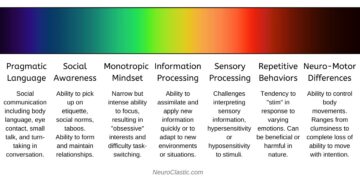 What is ASD? C.L. Lynch at