
by Jonathan Kalb
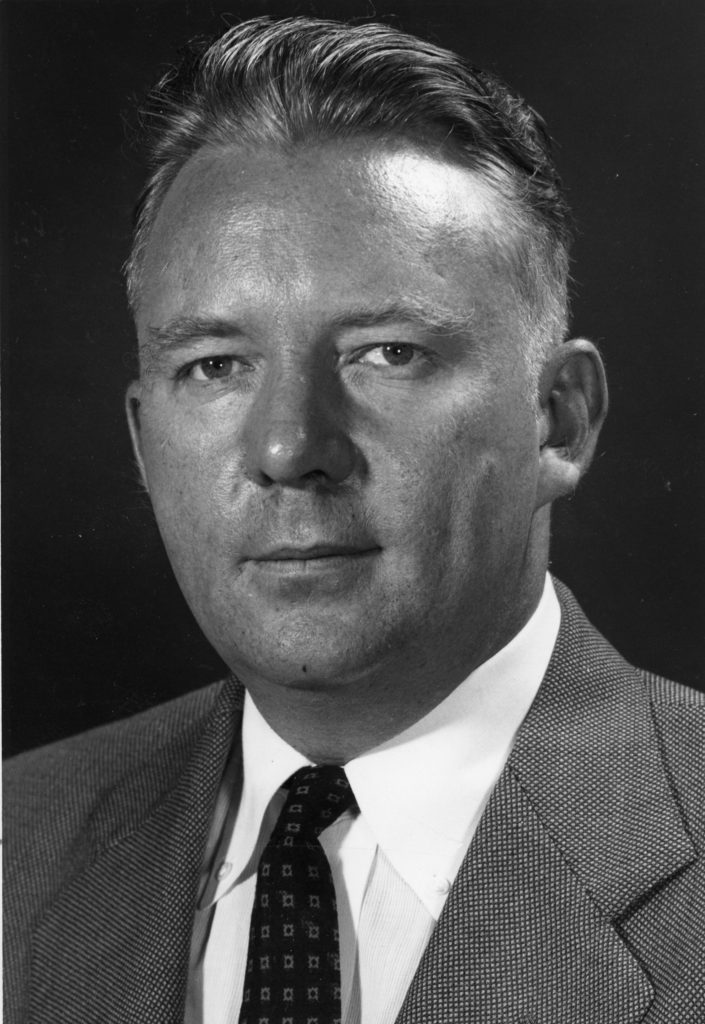
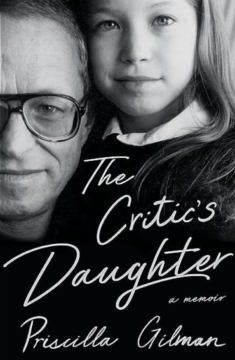 Richard Gilman (1923-2006)—a revered and feared American critic of theater, film and fiction in the mid-century patrician grain of Eric Bentley, Stanley Kauffmann and Robert Brustein—was a self-absorbed titan of insecurity and the best writing teacher I ever had. Negotiating the minefield of this man’s mercurial moodiness, beginning at age 22, was one of the main galvanizing experiences of my pre-professional life.
Gilman’s signal teaching talent was showing others how to read their own writing well, which he called an “indispensable skill.” His and Kauffmann’s “Crit Workshops” at the Yale School of Drama—required every semester for three years—were tiny, intensive seminars devoted to upping our games. We crit students venerated these men because we wanted what they had: perches at the increasingly rare prestigious intellectual weeklies (such as The Nation and The New Republic) that were surviving the withering assaults of the media age in the 1980s. Each three-hour Crit session focused on a single student paper. Dick (as he introduced himself) never bothered with written comments. In his classes, he’d read the paper aloud in its entirety, leaning back in his plastic chair, chain-smoking cigarillos, and channel the writer’s voice with his own inflections, like a Brechtian actor supplementing a role with his savvy persona. Thus he performed the model intellectual, articulating, in a stream of unsparing interruptions and digressions, the manner and temper of the “generally intelligent mind” we were told we should write for.
This was a thrilling and terrifying experience. Dick would stop to remark on any formulation, image, or thought that bothered him, not only flagging our dangling participles, flaccid metaphors, and baggy digressions but also speculating on the reasons for them. He’d ask tetchily about our intentions and then, with biting humor, pronounce Olympian verdicts on our evasions, confusions, pretentions, and oceanic ignorance. This painful, merciless crucible was everything I’d hoped for from that storied school. Read more »
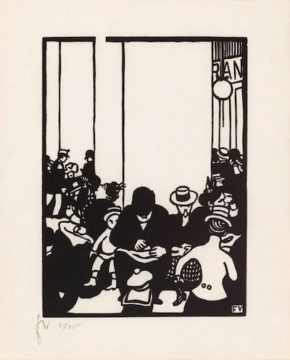 In the decade before World War I, the newspaper dominated life like it never would again. The radio was not yet fit for mass use, and neither was film or recording. It was then common for major cities to have a dozen or so morning papers competing for attention. Deceit, exaggeration, and gimmicks were typical, even expected, to boost readership. Rarely were reporters held to account.
 You don’t have to fuck me. Or give me any money. You don’t have to shave your head or adopt a peculiar diet or wear an ugly smock or come live in my compound among fellow cult members. You don’t even have to believe in anything.
 Sughra Raza. At Totem Farm, April 2021.




 Sughra Raza. Shredder Self-portrait, NYC, August 2023.