by Michael Liss
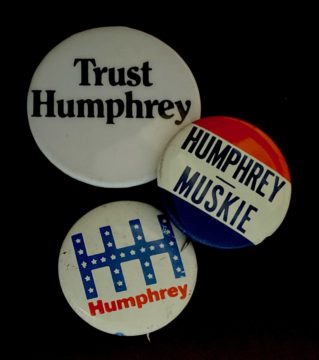 The broken-down jalopy that was Hubert Humphrey’s campaign wheezed its way out of Chicago and headed…anywhere but there. The Convention was an utter disaster. The only “bump” in the polls was a shove backwards, and Humphrey seemed to have nothing with which to shove back. He had no coherent message on the biggest issue of the day—Vietnam. He was working for an absolutely impossible boss, LBJ, who demanded complete loyalty and delighted in humiliating him. His campaign was broke…it literally didn’t have enough money to pay for orders of Humphrey buttons.
It didn’t end there. He was fighting the electoral realignment centrifuge that was ripping apart the New Deal Democratic coalition. The formerly Solid South was more than 20 years into its secession. The Party’s hold on the blue-collar family was being tested by the cultural appeal of George Wallace. Suburbanites were worried about the violence in big cities and wanted leadership to do something about it. In theory, they were moderates, supporters of the Civil Rights movement. In practice, many applied a NIMBY approach. The youth vote was inextricably connected to the anti-war vote; the war was inextricably connected to Johnson; and LBJ was inextricably connected to Humphrey. Read more »
 I teach at a large, public university in the mid-Atlantic region of the United States. For about a decade now, the upper administration has had a habit of sending “comforting” emails whenever there’s a major school shooting. Of course there are far too many school shootings in America to send a note for each one, so I suppose the administration tries to keep it “relevant,” for lack of a better word. These heartfelt missives arrive in my Inbox once or twice a year, typically after some lunatic shoots up a college campus. So far as I can tell, they go to everyone. To every faculty member, staff member, and student on campus. To 25,000 people or more.

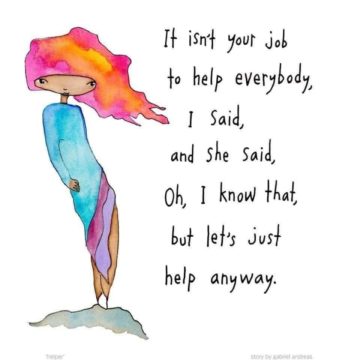 Will re-branding Covid help people start acting to protect themselves from it? Maybe we need an ad campaign to kick-start public health. Outside of judicial rulings and before marketing, we had religious leaders to remind us to the best ways to survive, and before that we had stories passed down for generations to help keep children safe from harm by altering their behaviour,



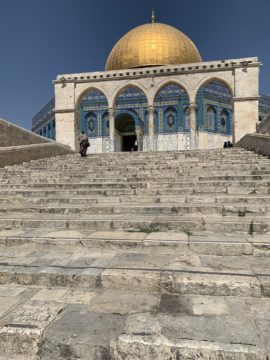 Masjid Al Aqsa, or The Far Mosque of Jerusalem, as the Quran calls it, is emblematic of the spirit of compassion and transcendence for Mevlana Rumi. “A heart sanctuary,” in the words of Rumi in his poem “The Far Mosque,” Al Aqsa represents a conquest over the egoistical desires of dominance, greed, vanity, violence and supremacy. It is held together by the sacred energy of merciful love, even “the carpet bows to the broom/the door knocker and the door swing together/like musicians.”
 In 2016,