
by David J. Lobina

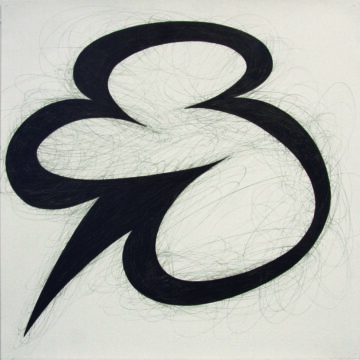
Imagine I place you in front of a computer screen, show you the image of two coloured shapes – e.g., a yellow triangle and a red circle – and then ask you if the sentence the triangle is yellow and the circle is red describes the image. You’ll very quickly answer that it does indeed, and then you’ll probably ask me what gives – was that a tricky question? (It wasn’t.) But what if I ask you whether the sentence the triangle is yellow OR the circle is red describes the same image? Don’t imagine it and don’t answer the question – I once ran this experiment, so go and read it! The short of it is that adults do accept the OR sentence as a description of an image of a yellow triangle and a red circle, though to a lesser extent than with the AND sentences. (A previous 3QD entry discusses some of this; here.)
What if I then tell you that young children, between the ages of 3 and 6, treat disjunction or and disjunctive sentences such as [the triangle is yellow] or [the circle is red] not as the disjunction of formal logic, which is the usual case in adults – namely, such sentences are true if one or both clauses are true (a clause is what appears within brackets) – but as if disjunction and disjunctive sentences were conjunction and and conjunctive sentences – that is, for young children disjunctive sentences are only true if both clauses are true (to wit, the triangle is yellow AND the circle is red) and not true if only one of the clauses is true.
This particular result has been obtained in a few experiments, and though it is regarded as a mistake – disjunction ought to allow for a situation when only one clause is true, otherwise why use disjunction instead of conjunction?! – it does seem to tell us something about how children acquire the logical connectives and and or (the usual story is that children’s semantic and pragmatic abilities do not develop paru passi).
I gave this sort of experimental undertaking a go recently by focusing on much younger children, the so-called “terrible twos” (around 24 month old), as the children from previous experiments tend to have an average age of 4 years, and by then children already manifest rather sophisticated linguistic abilities. And to that end we used the so-called intermodal preferential looking paradigm (the IPLP). The IPLP has been successfully used to study the acquisition of grammatical phenomena with children as young as 13-15 months and has been especially useful with children aged 18 months and above, so perfect to our purposes! Read more »
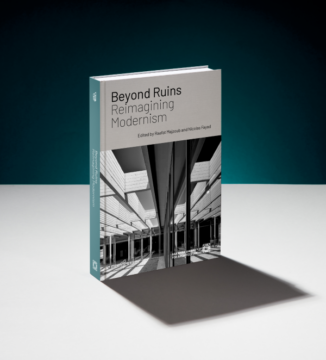 In this conversation—excerpted from the Aga Khan Award for Architecture’s upcoming volume, Beyond Ruins: Reimagining Modernism (ArchiTangle, 2024) set to be published this Fall, and focusing on the renovation of the Niemeyer Guest House by East Architecture Studio in Tripoli, Lebanon—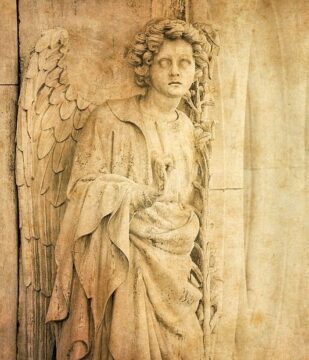
 Michael Wang. Holoflora, 2024
 In the game of chess, some of the greats will concede their most valuable pieces for a superior position on the board. In a 1994 game against the grandmaster Vladimir Kramnik, Gary Kasparov sacrificed his queen early in the game with a move that made no sense to a middling chess player like me. But a few moves later Kasparov won control of the center board and marched his pieces into an unstoppable array. Despite some desperate work to evade Kasparov’s scheme, Kramnik’s king was isolated and then trapped into checkmate by a rook and a knight.
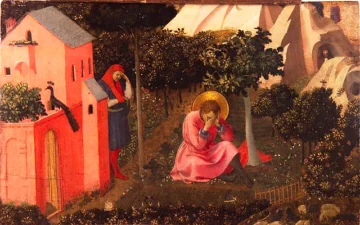
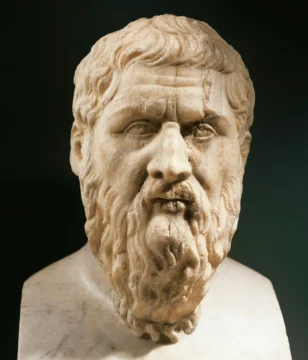
 In Discourse on the Method, philosopher René Descartes reflects on the nature of mind. He identifies what he takes to be a unique feature of human beings— in each case, the presence of a rational soul in union with a material body. In particular, he points to the human ability to think—a characteristic that sets the species apart from mere “automata, or moving machines fabricated by human industry.” Machines, he argues, can execute tasks with precision, but their motions do not come about as a result of intellect. Nearly four-hundred years before the rise of large language computational models, Descartes raised the question of how we should think of the distinction between human thought and behavior performed by machines. This is a question that continues to perplex people today, and as a species we rarely employ consistent standards when thinking about it.
 The human tendency to anthropomorphize AI may seem innocuous, but it has serious consequences for users and for society more generally. Many people are responding to the

 I’ve been surfing for about three years.
 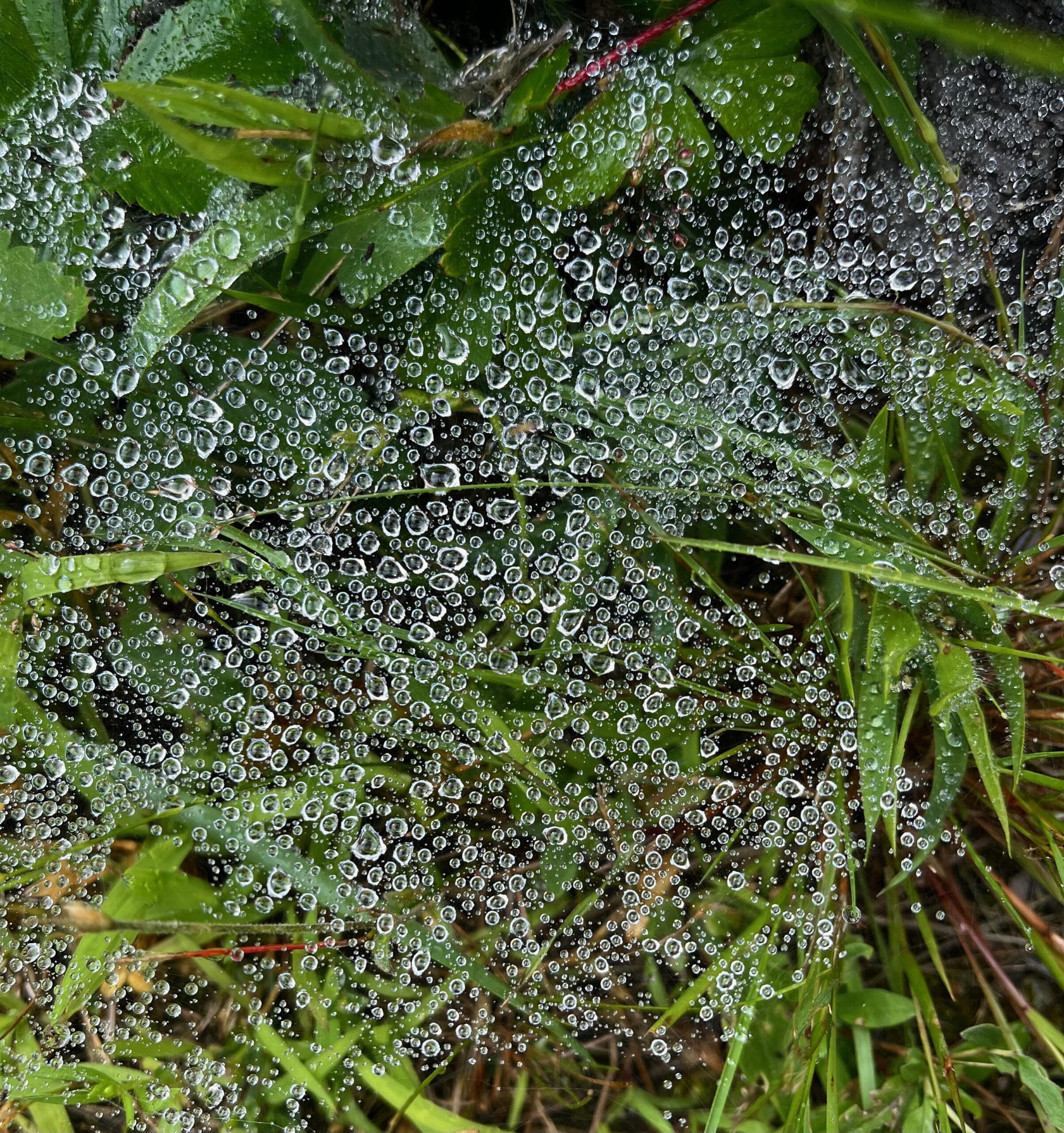 Sughra Raza. After The Rain. Vermont, July 2024.


 Karl Ove Knausgaard went around for many years claiming that he was sick of fiction and couldn’t stand the idea of made-up characters and invented plots. People understood this to be an explanation of why he had decided to write six long books about his own life. There was some truth in this, but the simple contrast between fiction and reality was complicated by the fact that Knausgaard referred to his autobiographical books as novels. Were they real? Was the Karl Ove of the story the same as the author? It seemed like it, but then why call them novels? The problem lay with the word “fiction.” Like a German philosopher, Knausgaard had his own definitions for words that we thought we all agreed on.