Expropriate Them All!

by David J. Lobina

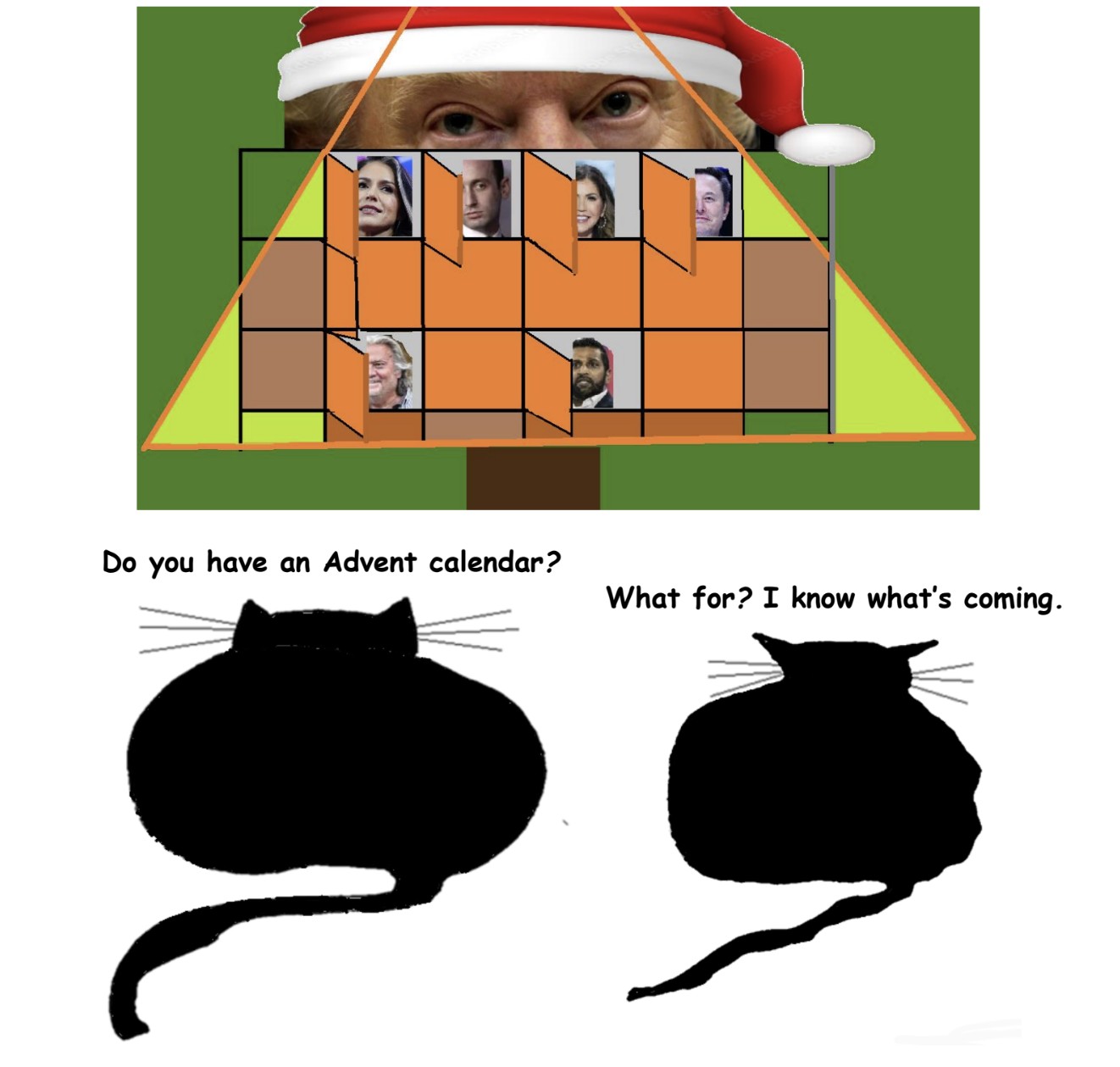
And by ‘them’, I mean, of course, the rich!

I think it is fair to say that such a rallying cry has always resonated with certain people, and perhaps even more so now in the US, with a forthcoming Trump 2 administration seemingly to be filled with billionaires. And I’m sure there is a perfectly reasonable argument in favour of stripping rich people of most of their wealth and assets in one way or another, Marxist or otherwise. A Marxist argument, you say? Is there such a thing?[i]

One such argument would have to say something about the distribution of income in society, either under some form of socialism – to all according to their work – or under some form of communism – to all according to their needs – as Marx argued in the Critique of the Gotha Programme (roughly, of course…); but, in any case, there would be little justification for anyone to be very rich under either society.[ii]

A more interesting argument, which I borrow from one Robert Paul Wolff (link below), has it that in modern capitalism there is a divorce between the legal ownership of large corporations and the de facto day-to-day running of the business. That is, in joint-stock limited liability companies, ownership is widely dispersed in the form of shares of stock, and as a result the managers and directors that run the company operate in a state of relative isolation, with the further result, and this is key, that the Board of Directors (and the like) are rather free to set what dividends and compensation are due. And this in turn results

in a regular, systematic, unquestioned process of theft, [as] a portion of the profits is directed away from the shareholders who are the owners of the corporation and into the pockets of the managers, who are paid vastly more than the going rate for managerial labor [sic].

Or to quote one of the greatest lines in political philosophy:

The simple fact remains that capitalism is a system of economic organization that regularly, quietly, unremarkably transfers a portion of the annual collective social product into the hands of a small segment of the society who have come to own the means of production. As each year goes by, the owners of capital expand their ownership and thereby reinforce their control of the workers whose labor [sic] creates what they take as profit.

Exploitation, in other words, though in modern capitalism such exploitation is relative, by which I mean, following an influential paper, that the modern accumulation process tends to obliterate social distinctions among workers, thereby producing an internal labour segmentation process – a fragmented workforce, that is – and with it unequal rates of exploitation but higher profits for the capitalist. Read more »
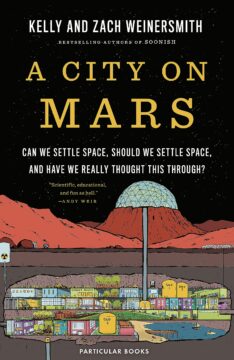
Space Settlement: The Nitty Gritty of it All

by Adele A Wilby

The images of a space shuttle lift-off and its propulsion into dark space with its astronauts strapped in, is an awesome site. Likewise, programmes such as Professor Brian Cox’s BBC series ‘Solar System’ that explores the Earth’s planetary neighbours for any signs of life and the potential for human habitability have a similar impact. But my interest in such events and programmes stems not from any idea I might entertain about a future in which human beings in their numbers will one day board space flights and head off to human settlements on Mars or the Moon or any other place that might support human life. Instead, it is the science that has enabled such developments, and the new knowledge to be gained from space exploration I find fascinating and exciting. I am not oblivious to  the environmental crisis that the Earth is struggling with and the idea that space settlement might one day be the only alternative to the survival of our species, nor do I view it as a possible escape from the human condition and an opportunity for homo sapiens to have another shot at creating a better world for human existence, nor am I devoid of the spirit of adventure or curiosity that is reputed to characterise being human.

Fundamentally however, my lack of enthusiasm concerning off planet human settlements arises from a real appreciation of life in all its forms on Earth and a preference to deal with the immediate and urgent phenomenal existential issues that humanity confronts daily and, to use a well-worn cliché, make the world a better place for all here, and preferably now. Nevertheless, I am far from averse to learning about the issues involved in space settlements and Kelly and Zach Weinersmiths’ book A City on Mars: Can We Settle Space, Should We Settle Space, and Have we Really thought this Through? provided me with an opportunity to do just that.

The husband-and-wife team, the Weinersmiths, won the 2024 Royal Society Trivedi Science Book Prize with this book, The City of Mars from amongst some stiff competition which included the 2009 Nobel Prize Winner for Chemistry, molecular biologist Venki Ramakrishnan’s Why We Die: The New Science of Ageing and the Quest for Immortality, a must go to book for those interested in the subject. And in a new and refreshing theme on biological sex differences, Cat Bohannon’s Eve: How the Female Body Drove 200 Million Years of Human Evolution, provides us with a comprehensible exposition of the science behind the development of the female sex and its contribution to evolution. To be chosen the winner of the 2024 Science Book Prize from amongst those two brilliant books alone suggests that the Weinersmiths’ book must have something special to offer, and it does. Read more »

Perceptions

Lorraine O’Grady. Art Is … , Float in the African-American Day Parade, Harlem, September 1983.

“Over the course of more than three decades, artist and cultural critic Lorraine O’Grady has won acclaim for her installations, performances and texts addressing the subjects of diaspora, hybridity and Black female subjectivity. Born in Boston in 1934 and trained at Wellesley College and the Iowa Writers’ Workshop as an economist, literary critic and fiction writer, O’Grady had careers as a U.S. government intelligence analyst, a translator and a rock music critic before turning her attention to the art world in 1980.

In her landmark performance Art Is…, O’Grady entered her own float in the September 1983 African-American Day Parade, riding up Harlem’s Adam Clayton Powell Jr. Boulevard (Seventh Avenue) with fifteen collaborators dressed in white. Displayed on top of the float was an enormous, ornate gilded frame, while the words “Art Is…” were emblazoned on the float’s decorative skirt. At various points along the route, O’Grady and her collaborators jumped off the float and held up empty, gilded picture frames, inviting people to pose in them. The joyful responses turned parade onlookers into participants, affirmed the readiness of Harlem’s residents to see themselves as works of art, and created an irreplaceable record of the people and places of Harlem some thirty years ago. These color slides were taken by various people who witnessed the performance, and were later collected by O’Grady to compose the series. The forty images on view capture the energy and spirit of the original performance.”

From the Studio Museum in Harlem.

More here, here, and here.

Enjoying the content on 3QD? Help keep us going by donating now.

Monday, December 16, 2024

Getting the Essay Back: Two Memories

by Richard Farr

Camus

I’m sixteen and a serious intellectual wannabe. Any lunch break, you can find me in the school corridors discoursing at length on a well-thumbed Hermann Hesse novel, or sharing with some lucky classmate the insights I’ve gleaned from half a dozen pages of Sartre. I’ve also acquired a taste for Gauloises Disque Bleu, wear my scarves just so, and plan to read Being and Nothingness one day. Though in truth I prefer Camus to Sartre — so much more dashing, so much more chic. It’s him I dream of being mistaken for as soon as I can get the right overcoat. 

Economics is taught by Mr. W, an eccentric man it’s easy to make fun of and one of the best teachers I’ll ever have. He has assigned an essay on the “Mishan-Beckerman debate.” (Beckerman thinks unrestrained economic growth is good because it creates stuff; Mishan thinks it’s bad because it destroys stuff.) Because I’m an incipient leftie — inevitably, given my plan to study philosophy while living in a garret on the Rive Gauche —  I think it obvious that there is really no debate to be had. A cursory reading shows that Mishan is merely articulating conclusions sensible people like me have already come to; Beckerman doesn’t know his arse from his elbow. 

Generally speaking I’m a not-bad student, accustomed to getting an A or an A- even from Mr. W, who is a notoriously hard grader. He’s also notorious for his habit of handing our essays back, with quiet but acid commentary, in front of the whole class: “Cooper: messy as always — your handwriting looks like something produced at high speed on horseback — but intellectually acceptable. Collins: messy in every way; I do recommend having a stab at answering the question at some point during the exercise. Davis: the first three pages are pointless blather that should have been omitted, but bravo for arriving in roughly the right neighborhood during the last couple of paragraphs. Dixon: ah, what a breath of fresh air; simplicity and clarity and excellence; well done. Farr: a lackadaisical effort but I confess grudgingly that most of the essentials are correct. Fisher, oh Fisher: …” (dramatic pause; paper held up with thumb and forefinger like a dead mouse; an almost imperceptible shake of the head as it is dropped onto the offending author’s desk) “no.” 

But he returns the Mishan-Beckermann essay privately — perhaps, I think afterwards, entirely to save my blushes. There is a table at the back of the classroom with a distracting view of the games fields. We sit on opposite sides and he slides my oeuvre across to me. A large red F sits in a circle in the top right hand corner near the title. His expression is intense, hawkish: irritation, or pity? Read more »

Chaos, Horseshoes, and Us

by John Allen Paulos

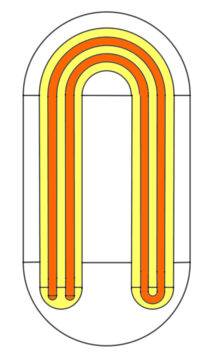
Smale’s chaotic horseshoe

When studying a technical field there is a strong temptation, especially among those without a scientific background, to apply its findings in areas where they may not make sense or are merely metaphors. (“Merely” is perhaps unnecessarily dismissive since much of our understanding of these fields is metaphorical.) Quantum mechanics and Godel’s theorems are often used (or abused) in this way. Precipitous changes are deemed “quantum jumps” or unusual statements are proclaimed “undecidable.” Not even set theory is immune. I once heard a commentator refer to some curtailment of the first amendment as being inconsistent with the mathematical axiom of choice. Having mocked these pseudoscientific references, I nevertheless, and with a bit of trepidation, would like to briefly explore a metaphorical aspect of chaos theory.

Chaos theory, roughly speaking, studies complex systems of one sort or another whose state or condition changes or evolves over time and are hence termed dynamical systems. The underlying equations or laws describing them are deterministic, but they often give rise to systems very sensitive to initial conditions. (Tiny variations cascading into huge differences.) The systems are also nonlinear, which means that the effects of changes are not directly proportional to their causes. And, trumpets sound here, an astonishing property of nonlinear dynamical systems is that they can exhibit quite unpredictable behaviors that might appear might random, even though subject to deterministic laws.

What might such systems tell us not only about weather systems or economic systems, but also about our own inability to predict or make sense of things? An obstacle to predictability is the utter complexity of the associations and linkages in the world and ultimately in our brain. They can be chaotic in both the everyday sense and in the mathematical sense, the description of which I’ll spare you. Regarding the latter sense, the so-called Horseshoe procedure devised by topologist Steve Smale to illustrate the evolution of systems from regularity to mathematical chaos, is most suggestive. Such procedures or mappings are, in fact, a distinguishing feature of chaos.

To understand the procedure, imagine a cubical piece of white clay with a very thin layer of bright red dye running through the middle of it and forming a sort of red dye sandwich. Read more »

A Poem by Jim Culleny

“This is conclusive, and if men are capable of any truth, this is it.”
…………………………………………………. —Blaise Pascal, on his wager 

Blaise’s Place

Blaise’s place is on a sunset stripa-die
paved razor-straight through desert air
many cul de sacs veer from its hot black path
squeezed in a pass between mountains there,
west, where the day goes down in a blazea-die

The road’s white line on the northern side
is lit with votive flame-tipped wax
while, southside, glass-tubed neon glows
glazing away in pink-lit veneer
as fountains spit casino-high
from cool pools and golden taps

The landscape reeks of myrrh & beer
on a highway set with brilliant traps:
a bet to which Blaise alludes,
but away from which
Blaise-skeptics steer

A crooner sings from a glittery stage
with background bells of dollar slots,
a mix in warp & weft on a nameless loom
with Gregorian chants wrung
into gambler’s knots

—priests & players in cassocks, albs,
sequined shirts, and denim pants
—Sketchers shuffling under slick, chic suits,
heads with miter-lids and baseball caps
—water & booze from an aspergillum
dipped in Byzantine plastic flask and flung,
dots ears and eyes and throbbing sternums
beating for life in which wisdom basks

But, as if in Solomon’s chair,
Blaise calls all bettors there,
throws loaded dice against a wall
that runs from floor
past stratosphere,
past moon, past sun,
past galaxies through warps of space
to end of time, but
always ends down here
where gamblers grumble
and losers grouse
that the odds (by grace)
are always with the house

by Jim Culleny, 1/29/17
JIm Culleny – Blaises Place – Clyp

Enjoying the content on 3QD? Help keep us going by donating now.

Sunday, December 15, 2024

The Societal Balancing Act for AI Regulation

by Malcolm Murray

The world does not lend itself well to steady states. Rather, there is always a constant balancing act between opposing forces. We see this now play out forcefully in AI.
To take a step back, the balancing act is present whether we look at the micro or the macro level. On the micro level, in our personal lives, we have seen how almost everything is good in moderation, but excess of anything can be fatal. When it comes to countries’ economic system, history has provided enough examples for us to be fairly certain that capitalism leads to prosperity and communism leads to stagnation. However, we have also seen how unconstrained capitalism leads to a race to the lowest common denominator and can lead to decrease in quality of life on non-GDP measures for the majority of people. When it comes to political system, we can admire China in the short term, in awe of how autocracies get more things done than democracies, but we have also seen how unchecked power inevitably leads to human rights degradations for the majority of people.

It is the same at the meso level, with new technologies. The two big technology trends of the 2010s followed this pattern. Social media started out being a force for freedom, overturning dictators and connecting old friends, but left unchecked and unregulated, it deteriorated into a click-baiting attention maximizer, driving children to suicide. The gig economy started as an environmentalist utopia, with “collaborative consumption” of idle resources, but quickly deteriorated into the creation of a new proletariat, living on below-subsistence earnings.

So it is no surprise that we now face the same challenge with AI. As a society, we need to balance the opportunities with the risks. We need some AI regulation, but at the same time, not too much so that it stifles innovation. We know that AI offers the promise of tremendous upside as well as downside. On the upside, we have seen recent examples such as the release of the new GenCast AI model from Google DeepMind for weather prediction. This could help foresee extreme weather events better than existing models, saving lives in the process. But on the flipside, we keep seeing examples of AI used indiscriminately leading to severely negative outcomes. The recent shooting of the UnitedHealthcare CEO seems to have been partly motivated by AI-driven processes, and Amazon recently reported a huge uptick in cyber threats due to AI.

The tricky part is that the needle is always moving. At any given point in time, we may be either under-controlling or over-controlling a given risk. This means either letting AI developers and deployers run rampant with the risks, or drowning them in red tape. Either allowing for too many adverse outcomes in society, or conversely, depriving society of large potential benefits. Read more »

Friday, December 13, 2024

The Case Against Bottle Deposits

by Thomas R. Wells

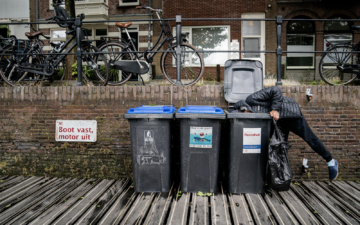
A common sight in Europe: poor person
searching bare-handed through garbage bins
in search of deposit bottles

Many environmentalists support the idea of charging deposits on drink bottles and cans in order to persuade people to bring them back for recycling. They believe this is a good and obvious way to reduce humans environmental impact.

They are mistaken.

While bottle deposit systems are superficially attractive they are a horrendously expensive way to do not much good, while also creating degrading and fundamentally worthless work for the poor. They are not the outcome of a real commitment to reducing humans’ environmental impact but of our flawed human psychology. The fundamental political attraction of bottle deposits is twofold. They appeal to voters’ underlying presumption that inflicting something mildly annoying on ourselves must be an effective means to address a problem, because the constant annoyance itself keeps in our mind that we really are doing something about it. (This resembles the folk-theory of medicine: If it tastes nasty it must be doing us good.) And bottle deposits appeal to governments’ preference for getting something for free, since all they have to do is pass a law requiring that lots of other people organise and carry out a lot of fiddly work. It’s a tax, but not one they have to justify and defend.

Read more »

Thursday, December 12, 2024

14 years, 4 months, and 14 days: Berlin – Syria

by Katrin Trüstedt

The sleet falls so incessantly this Sunday that the sky turned a dull gray and we don’t want to go anywhere, my child, his friend and me. We didn’t go to the theater or to the Brazilian Roda de Feijoada and we didn’t even bake cookies at the neighbors’ place, but instead are playing cars on the floor and cooking soup and painting the table blue when the news arrives.

3:07pm: Assad has been overthrown; 3:11pm: Assad had to leave the country (I hadn’t read the news yet so I’m hopelessly behind); 3:14pm: Celebration at Oranienplatz. The father of my son’s friend sends a photo from Rio-Reiser-Platz and at 3:17pm we’re suddenly in a hurry to get out. We put on our shoes and jackets on halfway down the stairs, and run without hats, scarves or gloves to Mariannenstraße, where police cars are waiting, individual Syrian flags are being waved and helicopters are circling overhead.

We take my son’s friend home and move on without clear direction, down Oranienstraße, past the honking parade of cars on the corner of Skalitzer Straße, Syrian flags hanging out of the windows, fluttering on hoods and being waved out of car windows, suddenly there are no more cars, and we are right in the middle of it.

“It’s a good day for us,” someone turns to me, between people singing, hugging each other, stretching long flags between them, drumming, jumping up and chanting something in Arabic that I don’t understand. “14 years, 4 months and 14 days,” he says. “Thank you for crying” – he sees that I have tears in my eyes. “You’re crying, but we’re happy.” “Germany has been good to us, we are grateful.” He says goodbye to me and Luca, “Bye little man”, and moves on. A young woman with short curly hair and a Palestinian scarf around her shoulders smiles at me. Read more »

Haiku, Naming Things and the Poetics of Reason

by Dick Edelstein

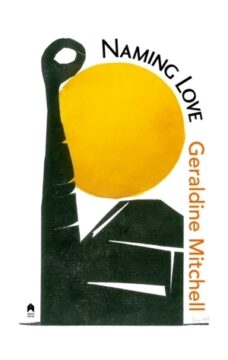
Irish poet Geraldine Mitchell begins her new collection as she means to go on, choosing as an epigraph an untitled, haiku-like poem in an exalted tone:

a blackbird knaps
the flint of my heart,
sparks fly

Written in a non-classical style, the epigraph is a signpost indicating the celebratory mood prevailing in this collection, her fifth in 15 years. The mini-poem is the first of several graceful haiku-like forms sprinkled throughout the volume like pixie dust. Formally diverse, mostly without titles, standing alone on a page, they resemble marginalia. Like a Greek chorus, they make meta-commentaries on the text as well as statements and observations.

seabirds
face into the wind

waves explode
like outraged snow


trees are open
cages where birds
in safety
sing their limits

Seeking new challenges, Mitchell experiments with form without becoming wedded to a formula, so each collection is a revelation. The haiku-like poem below has a title, a more formal syntax, and a discursive tone, and it manifests an element of surprise, giving readers a chance to consider how much the feeling of haiku is associated with a particular syllabic arrangement, as opposed to line breaks or thematic content.

FOLLY

I have fallen in love
with a tree.
At my age.
Imagine.

This collection is permeated by the notion of age, of longevity and mortality, something inquieting and hard to ignore. Read more »

Wednesday, December 11, 2024

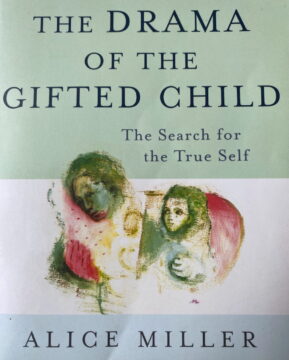
Of True and False Selves: Donald Winnicott’s View

by Gary Borjesson

The power and peril of seeing, and being seen, has been with us from the beginning. Almost the first thing Adam and Eve do is seek to hide from being seen by God. (Good luck with that!) Much later, Hegel showed how, in contrast, the desire to be seen—the desire for recognition—is a motive force of human history. Later still, we are learning how critical being seen is to a child’s development.

The negative effects of not being seen are a core theme of Alice Miller’s Drama of the Gifted Child. This book made a deep impression when I first read it years ago, long before I became a psychotherapist. At the risk of triggering those (including myself) with an allergy to therapeutic speak—I felt seen. I wasn’t alone. Since its publication in 1979, the book has sold well over a million copies worldwide.

Miller explores how some children use their “gift” of sensitivity to adapt to inadequate parenting. In particular, she describes how a “false self” develops from the “true self.” This distinction comes from the British pediatrician and psychoanalyst D.W. Winnicott, who observed and thought deeply the relation of parents and children. (Many people besides biological parents can play the role of caregiver; I will use the words “parent” and “mother” to preserve the archetypal resonances.) I expect many readers will recognize aspects of their experience in Winnicott’s influential account of how we can come to feel lost to our true selves.

We all make use of a ‘false’ self. As Winnicott notes, “Each person has a polite or socialized self, and also a personal private self that is not available except for intimacy.” (Home Is Where We Start From: Essays by a Psychoanalyst, Norton & Co, 1990. All quotes are from this book.) Someone gives you a heartfelt gift that you don’t like. But you say you like it because you see there is nothing to be gained by saying how you really feel. The social world depends on having this polite self capable of getting along by masking our true thoughts and feelings. Read more »

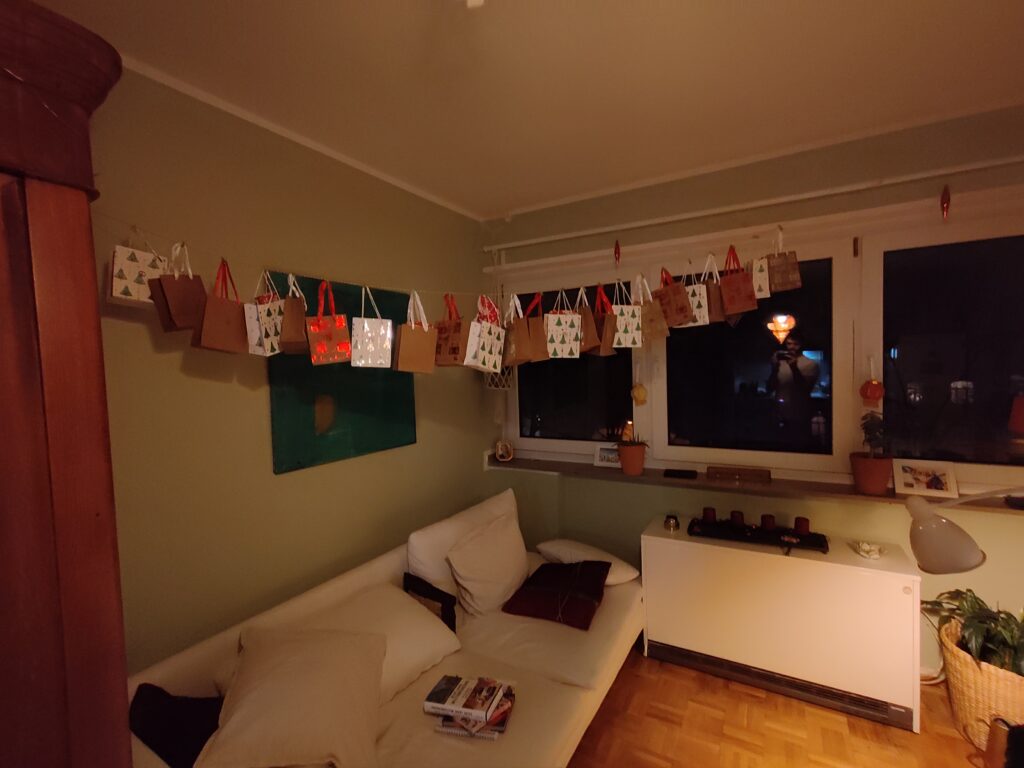
10 Rules For Making An Advent Calendar

by Eric Schenck

A quick definition of “Advent calendar” in case you have no idea what I’m talking about: a special calendar used to count down the days of December before Christmas.

If you celebrate Christmas (and even if you don’t), you should make somebody an Advent calendar at least once in your life.

Truly, an Advent calendar is the most under-celebrated joy of Christmas. If presents under the tree on Christmas morning are the rich and highly accomplished lawyer of the family, an Advent calendar is his far less successful (but way cooler) little brother.

You can buy one, sure: but the ones you make on your own will always be the best.

With that in mind, here’s your guide to creating an Advent calendar that’s guaranteed to delight.

10 Rules For Making An Advent Calendar

1) Make sure your person has fun with it

We start with the Golden Rule. It does you no good to create something so beautiful, so thoughtful, if the person receiving it isn’t going to enjoy it. So make sure you do your homework. Excitement looks different for everybody, so the best Advent calendars will be unique.

What you create, for example, is highly dependent on the age of the recipient. If you’re making one for your grandma, a little more sophistication might be called for. You four-year-old nephew? You can likely get away with a simple one. 

That’s certainly how it was with my first Advent calendar. This was the version many of us are familiar with: the rings. Every night before bed I’d grab scissors and lop off another one. As a kindergartener, that in itself was an accomplishment. Here I was, unable to think about anything but Christmas, and I was able to accept just one day at a time.

My imagination ran wild with these rings. Each one I cut was one more day of North Pole preparations. What was Santa doing? What were his elves up to? Was my gift already prepared and packed up?

2) Avoid being sentimental at all costs

An Advent calendar is more about the experience, and less about the message. Making one as an adult puts you back in middle school. You have to play it cool. Your friends, your family, that secret crush at work –under no circumstances can they know just how much you like them. Make it, give it to them, and let the dice fall where they may. 

And if you’re giving one to a kid? Now is not the time to tell them how much you love them. Your kids already know that. What they’re after is the sugar.  Which brings me to my next point… Read more »

Tuesday, December 10, 2024

What the Law Supposes

by Barry Goldman

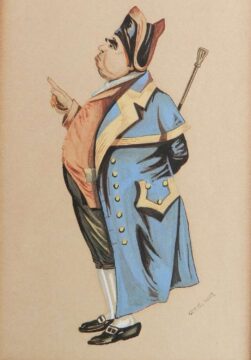
“You were present on the occasion of the destruction of these trinkets, and, indeed, are the more guilty of the two, in the eye of the law; for the law supposes that your wife acts under your direction.”
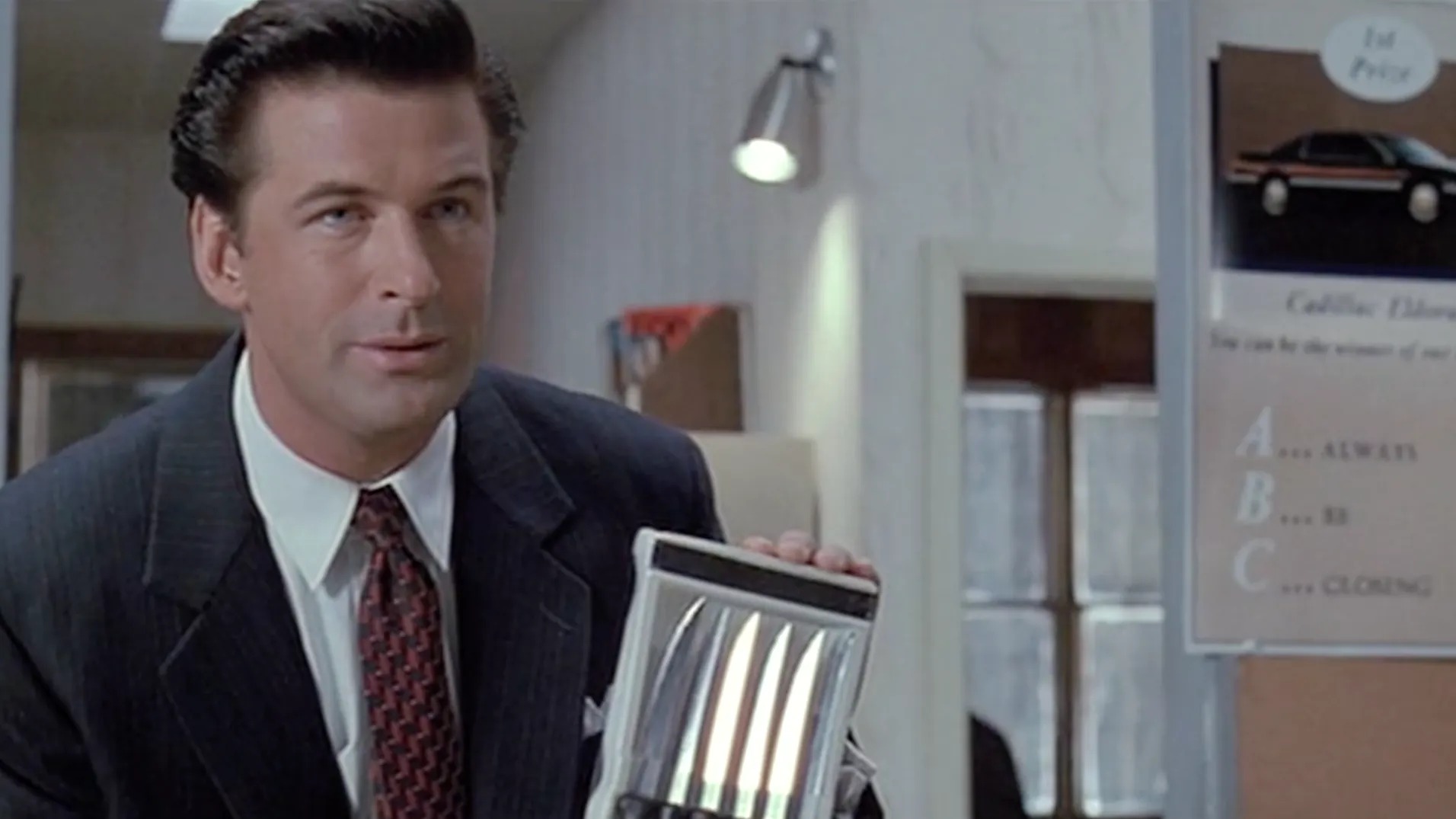
“If the law supposes that,” said Mr. Bumble, squeezing his hat emphatically in both hands, “the law is a ass — an idiot.”

Charles Dickens, Oliver Twist

I am an arbitrator. I serve mostly in cases between labor unions and employers, but I also serve for the Financial Industry Regulatory Authority (FINRA) in cases between customers and brokerage firms. I am not a judge, but the principles that apply to judicial and arbitral decision making are essentially the same.

Unions and employers come to arbitrators with disputes about the meaning of terms in their collective bargaining agreements. The agreement might say, for example, “Employees assigned to this work shall receive premium pay until the task is complete.” Everyone agrees on what the contract says. But what does it mean? What is “the task?” And when is it “complete?”

The union says the task is the whole project. The employer says the task is the particular assignment within the project. How is the arbitrator to decide?

There are rules for this sort of thing. Some of them are very old and have Latin names. One of the rules says a term in a contract has the same meaning whenever it appears. So, if we don’t know the meaning of the term “task” in Article 7, we can look at the rest of the contract and see if the word appears somewhere that we do know the meaning. Then we just apply the rule. It means in Article 7 what it means in Article 12.

There is a corollary to this rule. Arbitrators assume if the same term is used the same meaning is intended, and we assume if a different term is used, a different meaning is intended.

There are many other rules like this. We suppose, for example, that everything in a contract is there for a reason. Collective bargaining agreements contain “no mere surplusage.” We also assume the contract, read as a whole, makes sense. If there are two possible readings of a provision, one of which conflicts with another provision elsewhere in the contract and one which does not, we construe the contract according to the internally consistent meaning.

There is a fiction at work here. The law supposes the drafters of the contract combed through it painstakingly, searched out all the inconsistent usages, ambiguities, vaguenesses and infelicities, and rooted them out. The drafters, we assume, knew precisely what they were doing, and went about it with scrupulous care. Anything that remains is intentional.

No one who has ever been in the room where a labor negotiation was taking place believes a word of this. Read more »

All In Against Efficiency

by Derek Neal

I was recently subjected to an hour of the “All In” Podcast while on a long car ride. This podcast is not the sort I normally listen to. I prefer sports podcasts—primarily European soccer—and that’s about the extent of my consumption. I like my podcasts to be background noise and idle chatter, something to listen to while I do the dishes or sweep the floor, just something to fill the void of silence. On the way to work this morning I had sports talk radio on—the pre-podcast way to fill silence—and they were discussing the physical differences between two football wide receivers—Calvin Johnson and DK Metcalfe—before switching to two running backs—Derrick Henry and Mark Ingram.
You think DK Metcalfe is big, one host said, but then you see Calvin Johnson and you’re like, whoa, this guy is massive! How does a human get that big? Yeah, another host said, and then you see Derrick Henry next to Mark Ingram, and you’re like, how do these guys even play the same position? Ingram is tiny next to Henry! It doesn’t make sense! After this exchange, the first host remarked sarcastically that this was great radio—just naming some guys and talking about their physical stature. Yes, I nodded my head, this is great radio, this is what I want on a frigid December morning, the first morning I’ve had to sweep the snow off my car and let it idle in the driveway to warm up. The silence is deeper in winter, and I remembered padding down the stairs of my childhood home before the sun had risen, 15 or 16 years old, hearing Mike & Mike on ESPN Radio blaring out of the living room speakers as I quickly ate cereal before rushing off to school, wondering why in the hell my dad was blasting this stupid sports talk radio at six in the morning. But now I know. When you get older, sometimes the silence is too much, and the only remedy is the sweet nothings of sports talk radio.

The All In Podcast also had a lot of chatter, but the topic was finance and politics rather than sports. The hosts, who were all venture capital millionaires/billionaires in the tech industry, cracked jokes and were occasionally self-deprecating, but I was left with the disconcerting feeling that the four hosts believed in their own importance. These guys think they have something important to say, I realized, and even worse, this is the sort of podcast people listen to to learn something. Reader, I have a general suspicion of people who claim to have something important to say, especially those who claim to be able to teach me something. The only people I immediately trust are the ones who foreground their own stupidity and failures, like the journalists on my rotation of European soccer podcasts. Read more »

Monday, December 9, 2024

Art Or Artifice: Agency And AI Alignment

by Jochen Szangolies

The leader of the Luddites, the (possibly apocryphal) weaver Ned Ludd who is said to have broken two knitting frames in a ‘fit of rage’. Image Credit: Public Domain.

When the Luddites smashed automatic looms in protest, what they saw threatened was their livelihoods: work that had required the attention of a seasoned artisan could now be performed by much lower-skilled workers, making them more easily replaceable and thus without leverage to push back against deteriorating working conditions. Today, many employees find themselves worrying about the prospect of being replaced by AI ‘agents’ capable of both producing and ingesting large volumes of textual data in negligible time.

But the threat of AI is not ‘merely’ that of cheap labor. As depicted in cautionary tales such as The Terminator or Matrix, many perceive the true risk of AI to be that of rising up against its creators to dominate or enslave them. While there might be a bit of transference going on here, certainly there is ample reason for caution in contemplating the creation of an intelligence equal to or greater than our own—especially if it at the same time might lack many of our weaknesses, such as requiring a physical body or being tied to a single location.

Besides these two, there is another, less often remarked upon, threat to what singer-songwriter Nick Cave has called ‘the soul of the world’: art as a means to take human strife and from it craft meaning, focusing instead on the finished end product as commodity. Art is born in the artist’s struggle with the world, and this struggle gives it meaning; the ‘promise’ of generative AI is to leapfrog all of the troublesome uncertainty and strife, leaving us only with the husk of the finished product.

I believe these two issues are deeply connected: to put it bluntly, we will not solve the problem of AI alignment without giving it a soul. The ‘soul’ I am referring to here is not an ethereal substance or animating power, but simply the ability to take creative action in the world, to originate something genuinely creatively novel—true agency, which is something all current AI lacks. Meaningful choice is a precondition to both originating novel works of art and to becoming an authentic moral subject. AI alignment can’t be solved by a fixed code of moral axioms, simply because action is not determined by rational deduction, but is compelled by the affect of actually experiencing a given situation. Let’s try to unpack this. Read more »

Why Summer Camp Matters, Even In Winter, Part One—The Memoir Continues

Photo from https://wel-metcamps.com/

by Barbara Fischkin

People who have never been to sleepaway camp, don’t get it. They tease me when I speak about memories that are decades old, as if I am recalling a past life that never happened. They find it strange that I view my many years at camp as not merely summer vacations but as forces that helped to make me who I am. These camp memories visit me more deeply when the winter sky sets early, fooling me into believing that 4:30 pm is really past midnight. If I am roaming, I wonder if it is already time to go home. I linger. Yes, my summer camp taught me to roam physically—and in my imagination. It was free and free-range.

I’ll tarry briefly where many good tales begin. In the middle: My teenage years, as a camp clerk and then as babysitter for a camp director and finally, as a counselor. These summer jobs were woefully underpaid. But the fringe benefits were great: Opportunities to break rules that were often not enforced, anyway.

I smoked my first joint, out in the open, sitting with friends on a large rock by the lake, right after a late summer sunset. If caught by a camp director, we would have been fired. I don’t think they wanted to catch us. They were somewhere else, smoking their own joints. Romance, along with pot, seemed to be part of the plan for young employees, particularly in regard to the kitchen boys over whom we swooned. My camp, socialist at its core and run by lefty social workers, did not believe in waiters. To check out a kitchen boy, campers and staff had to go to one of several pantries to pick up or deliver food, plates and utensils. A chore made joyful.

 In regard to specific romance, I remember the night I spent with a slightly older male counselor, sleeping with him in his tent—and not doing much more than sleeping. (Maybe it was the pot). Before dawn I shoved him awake and said: “I have to go, I will get into trouble.” He laughed a sleepy laugh, perhaps a stoner laugh and said: “Barbara,  this is Wel-Met. Nobody gets in trouble for sleeping with someone.” Read more »

Poem by Jim Culleny

Fun In Space

Call me nomad.
Rootlessness is my routine.

From where I stand
space seems to beg for exploration
not occupation. Occupation of space
requires a military state of mind,
armies train for it. But individuals
grow dull and lethargic just occupying space

~~

There’s no substitute for dynamism
when facing space.

When I stumble upon a new chunk
I like to engage it many times over
laying out alternate trajectories,
bisecting circles,
flying off on tangents,
or just nosing around looking for
shortcuts.

If the wind’s right you might catch me
boogalooing along an hypotenuse
or oscillating between the foci of an ellipse.
I go at it from all angles by any means.

For instance, I’ve found a trampoline’s
a great way to explore space:
up, down, up, down.
Along similar lines (if you have the bucks)
a space shuttle’s good too:
up, down, up, down.

~~

There are various ways to approach space:
We can grid it off and tackle it one little block at a time
or go at it whole, working it as Jackson Pollock would a canvas.
Our choice depends upon our depth of indoctrination,
or personality disorder.

Whatever our milieu, space can be an exhilarating place
–or is it places?

In fact, space is full of surprises
(moving beyond bland Euclidean space that is,
the plainest of all geometries). Still,
you gotta hand it to the guy.
Euclid’s space may be old hat,
but it’s a space that’s served us well over the years,
try getting from here to there without it.

~~

But what really psyches me
are novel topologies of space.
There’s nothing more exhilarating
then space that pushes the envelope.

Consider the tasty appeal of a torus
(the deep-fried, sugary cuisine of cops),
the intriguing infinity of a Möbius strip,
or the warm and cozy feel of a
conversation-laced pub.

Those are boundary-pushing spaces all,
but they’re nothing up against the
reality-bending possibilities of warped space
as given by Einstein, or the mystically tangled
theory of strings.

Just the thought of Einsteinian space
trumps any sense of metaphysical claustrophobia
left over from grade-school catechism
under hard nuns.

~~

Now?

I never miss the chance to savor space.
With seven billion of us on the planet,
at our present rate of consumption,
you never know when
we might run out.

Jim Culleny
June 2007

Enjoying the content on 3QD? Help keep us going by donating now.