by Jonathan Kujawa
Four years ago was peak COVID-19. I was thinking about moving furniture, which led to this essay here at 3QD. The topic was the problem of moving a sofa down a hallway with a 90° corner:
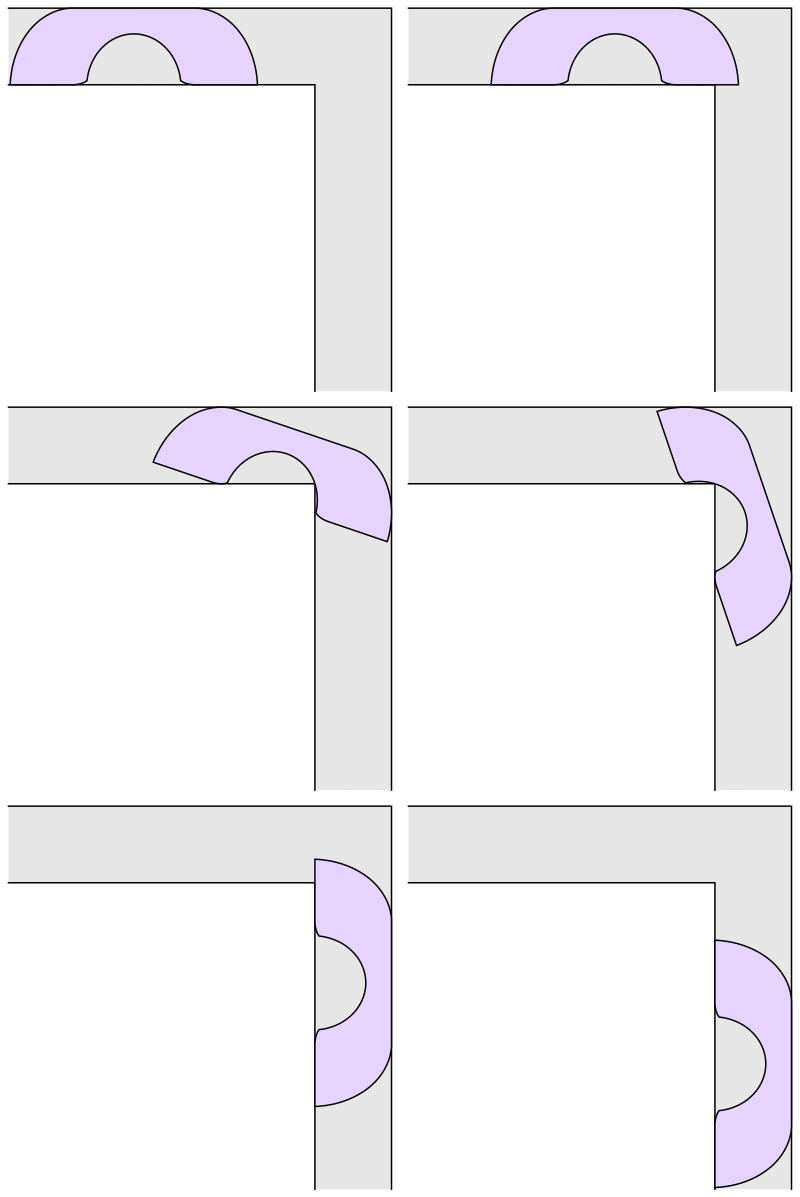
The problem is to find the “couch” of largest possible area that could be smoothly pushed down the hallway, around the corner, and then onwards. Leo Moser first asked this question in 1966 [1]. The image above is the couch found by Joseph Gerver in 1992. Gerver’s couch has an area of approximately 2.2195 square meters (where the hallway is exactly 1 meter wide).
As we talked about in that essay four years ago, Gerver used some clever math to find the shape of his couch. If you look very closely, you’ll notice that the corners are clipped off, and the inner semi-circle isn’t exactly a semi-circle. Without those tweaks, you have Hammersley’s couch from 1968, which has an area of π/2 + 2/π ≈ 2.2074 square meters. Several decades of time and Gerver’s hard work got us a whopping 0.0121 square meters.
 Of course there was no guarantee that Gerver’s couch was the biggest possible. Dr. Gerver’s approach made no promises that it gave the best possible, after all. A little more convincing is the fact that in 30 years we haven’t been able to do any better. But mathematics is a game of centuries and millennia — a few decades is small potatoes. In 2018, Yoav Kallus and Dan Romik proved that the couch could be no larger than 2.37 square meters. But the gap in size between Gerver’s couch and the Kallus-Romik upper bound is an order of magnitude larger than that between the couches of Gerver and Hammersley.
I’m not an expert in this area, but if you asked me a month ago, I would have said it could be many years before we’d resolve Moser’s couch question. Indeed, this could easily be out of reach forever. Many easy-to-state math questions are practically unsolvable. One could make infinitely many tweaks to Gerver’s couch as possible improvements. Or, you could do some entirely different shape, maybe something fractally and totally unexpected.
Part of the problem is that there is no single formula that gives you the area of all possible couches. If you had such a formula, you could try to maximize its output like you learned to do in your Calculus class. But if different shapes have different area formulas, there is no effective way to tackle them all at once.
This is no doubt my own human biases, but I find it a big bummer that Hammersley’s couch with an area given by a beautiful formula using pi is not the maximum. Once you show me that tweaks can give you bigger couches with ugly areas like Gerver’s, my hope for a definitive answer pretty quickly disappears.
So I was gobsmacked to see two interesting papers about Moser’s couch problem in the last few weeks. Read more »





 Someone else who understands the power of a single note is pianist Yunchan Lim, winner of the 2022 Van Cliburn competition at age 18, who electrified the classical music community with his performances of Rachmaninoff’s Concerto No. 3 and Liszt’s Transcendental Études and has since sold out concerts around the world. His reputation for virtuoso barrages of perfect notes at dizzying speeds belies a deep engagement in the sound he can extract from the piano with a single note—a process he demonstrated in
 Sughra Raza. Cambridge In The Charles, December, 2024.
 I will be in Strasbourg, France during Christmas this year, spending time with my 96 year old father who talks about his mother, my mother, and his cousins, all gone now, but seemingly alive to him.


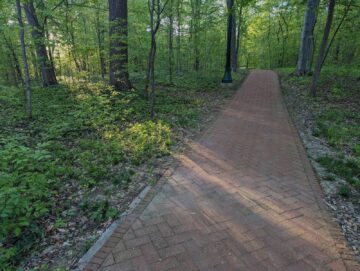 It sounds like a parlor trick or gimmick, to walk 2,024 miles in 2024—trivial but harmless. It’s not like hiking the Appalachian or Pacific Crest Trail or climbing the highest peak on each continent, or running a marathon. But it is similar to a marathon in that the number involved is an arbitrary product of history that can somehow be useful for guiding a person’s efforts.