by Adele A. Wilby
 In a recent article, ‘What are Microplastics Doing to Our Bodies’, Nina Agrawal reveals how researchers in a leading laboratory in New Mexico are studying the accumulation of anthropogenic microplastics in our bodies. Although present in many organs in the body, microplastic levels are, according to the research, increasing, especially in our brains. As crucially important as the research findings and the consequences for human health might be, a serious spinoff from the research is the source of the plastic samples used by the researchers, items such as toothbrushes, chunks of fishing nets and a Pokémon card. But these plastic specimens were not from the laboratory waste bags but derived from the trash collected during a cleaning up of a beach in Hawaii. Clearly these plastic items had either washed ashore from rubbish dumped into the ocean or perhaps some illegal fly tipping close to the beach. Either way, it was trash inadequately disposed of.
As we are all aware, waste on the beach is not a new phenomenon, but it is symptomatic of a much larger and wider issue that is, or should be, a cause of real concern to everyone: the disposal of the astronomical levels of trash produced by industry and the consumer society. Alexander Clapp addresses this crucial issue in his book Waste Wars: Dirty Deals, International Rivalries and the Scandalous Afterlife of Rubbish.
Clapp’s exposé is not a bearer of good news for humanity or the planet. He effectively creates in the reader’s imagination a dystopian planetary landscape of mountains of rubbish, polluted seas, of play fields of ash and roads of colourful microplastics as he narrates how human beings are far better at creating waste than our ability to dispose of it effectively. To gauge some idea of the enormity of the problem of waste disposal facing humanity, Clapp draws on a 2020 Nature publication. To quote him, ‘the total mass of the world’s human-made objects … equal the entire biomass of the planet itself. That is to say, the weight of everything created by our hands – skyscrapers, automobiles, iPads, plastic straws – was on the verge of exceeding that of all the trees and all the plants, all animals and all humans, indeed the mass of all living things put together’. For sure, a serious issue to reflect on and one that is difficult to imagine improving in the foreseeable future. Read more »




 Even if Ronald Reagan’s actual governance gave you fits, his invocation of that shining city on a hill stood daunting and immutable, so high, so mighty, so permanent. And yet our American decay has been so


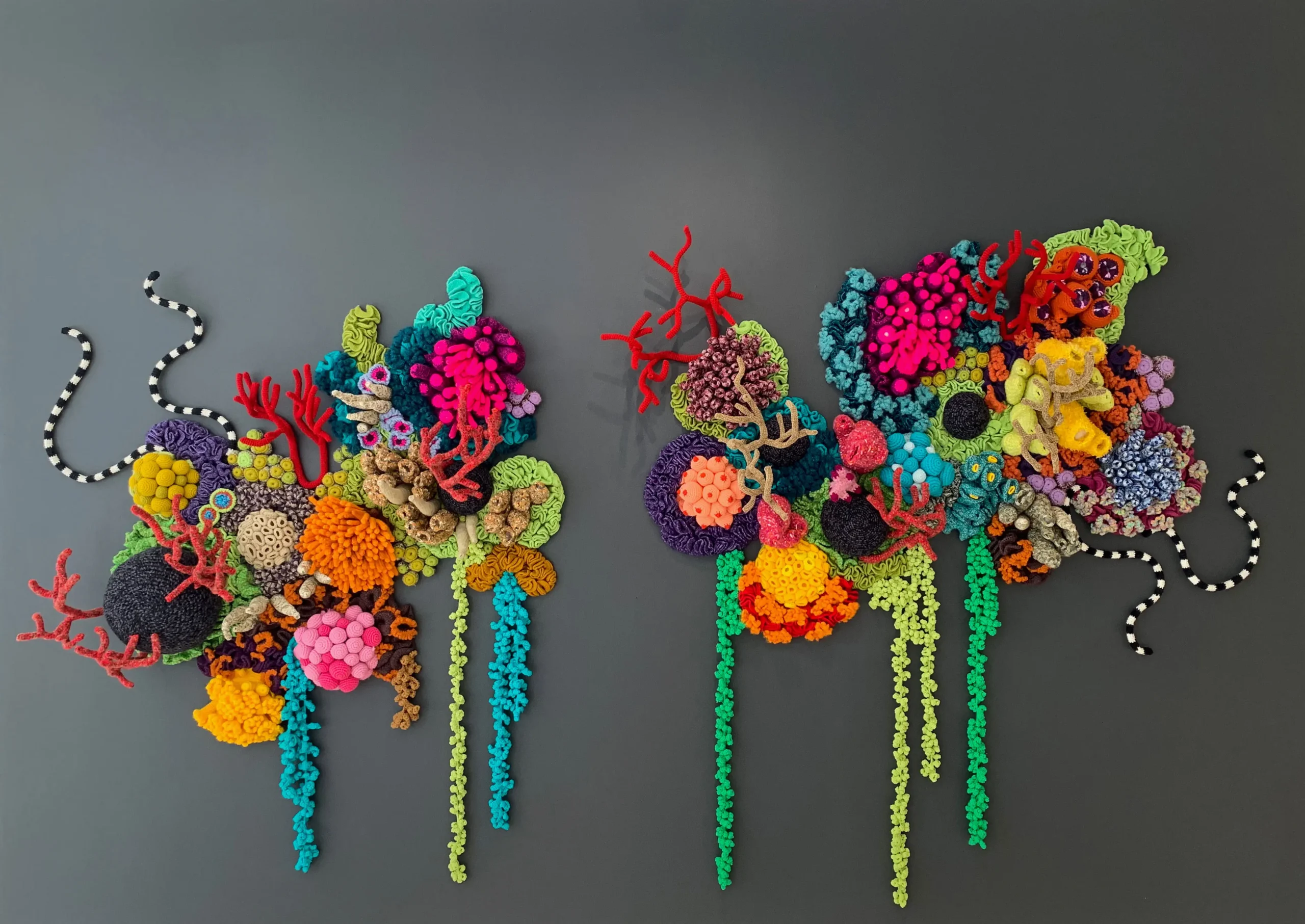 Mulyana Effendi. Harmony Bright, in Jumping The Shadow, 2019.

 I take a long time read things. Especially books, which often have far too many pages. I recently finished an anthology of works by Soren Kierkegaard which I had been picking away at for the last two or three years. That’s not so long by my standards. But it had been sitting on various bookshelves of mine since the early 2000s, being purchased for an undergrad Existentialism class, and now I feel the deep relief of finally doing my assigned homework, twenty-odd years late. I think my comprehension of Kierkegaard’s work is better for having waited so long, as I doubt the subtler points of his thought would have had penetrated my younger brain. My older brain is softer, and less hurried.