
by Dwight Furrow
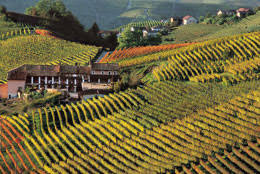 Discussions of the factors that go into wine production tend to circulate around two poles. In recent years, the focus has been on grapes and their growing conditions—weather, climate, and soil—as the main inputs to wine quality. The reigning ideology of artisanal wine production has winemakers copping to only a modest role as caretaker of the grapes, making sure they don’t do anything in the winery to screw up what nature has worked so hard to achieve. To a degree, this is a misleading ideology. After all, those healthy, vibrant grapes with distinctive flavors and aromas have to be grown. A “hands off” approach in the winey just transfers the action to the vineyard where care must be taken to preserve vineyard conditions, adjust to changes in weather, plant and prune effectively and strategically, adjust the canopy and trellising methods when necessary, watch for disease, and pick at the right time.
Such modesty about winery interventions has not always been the norm. For a brief moment in time, beginning in the 1970’s and continuing into the first decade of the 21st century, the winemaker as auteur, a wizard at winery tricks, was ascendant. During this time, new winemaking technologies, viticultural methods, and remarkable advances in wine science were introduced into a formerly artisan practice. Only the wealthy, educated, and connected had access to these advances so the flying winemaker, a globetrotting consultant who made his knowledge and expertise available to the wider community, was common. Grapes were a blank slate upon which the winemaker’s vision could be implemented. This too was misleading; despite new technologies you cannot make good wine from bad grapes. Read more »
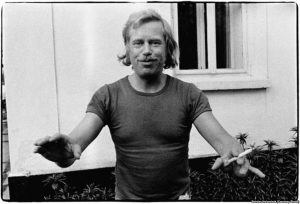 On the morning of August 20, 1968, the Czech playwright Vaclav Havel had a serious hangover. He was at his country home in Liberec after a night of boozing it up with his actor friend
  by Leanne Ogasawara
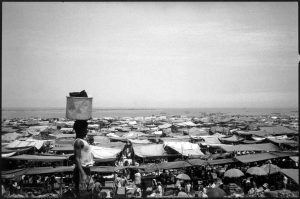
 My wife and I took a peek into the interior of Papua New Guinea twenty years ago.

 “I’m on a roadside perch,” writes Ghalib in a letter, “lounging on a takht, enjoying the sunshine, writing this letter. The weather is cold…,” he continues, as he does in most letters, with a ticklish observation or a humble admission ending on a philosophical note, a comment tinged with great sadness or a remark of wild irreverence fastened to a mystic moment. These are fragments recognized in Urdu as literary gems because they were penned by a genius, but to those of us hungry for the short-lived world that shaped classical Urdu, those distanced from that world in time and place, Ghalib’s letters chronicle what is arguably the height of Urdu’s efflorescence as well as its most critical transitions as an elite culture that found itself wedged between empires (the Mughal and the British), and eventually, many decades after Ghalib’s death, between two countries (Pakistan and India).
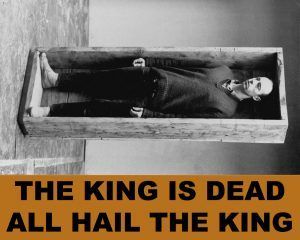 Robert Morris died last month on November 28th at the ripe old age of 87. Very ripe indeed. If he was a fig he’d have been all jammy inside, dribbling the honeyed sugars of maturation. But he’s dead, and I’m glad he’s dead. Let me step back before explaining why – this isn’t an exposition, this is an obituary; I’m grieving; this is diffused ramblings at a podium. I went to Hunter College for undergraduate philosophy and flirted with the art department quite a bit. Morris’ legacy loomed large and hard over the department as he had both attended grad school and taught there. Any course in the art department was bound to encounter his work or his writings. I must have been assigned “Notes on Sculpture” a dozen times. Morris was, and still is, a great artist. His was a scholarly brand of art; neither annoying like Joseph Kosuth, nor dehydrated like Hans Haacke. No, Morris was a genuine student of art and thought. He studied its history, wrote about it emphatically, and contributed to its heritage. It is not difficult to view him as one of the several pillars that contemporary art stands upon today, and feel indebted to his legacy. One of his first well regarded artworks was Box for Standing, which was a handmade wooden box roughly the size of a coffin that fit Morris neatly. How fitting then, that his exit from this life should perhaps be in a box bespoke for his corpse, roughly the same size as his original Box? His expiration has a funny effect on that work, Box for Standing, where his actual death gives the work one last veneer of meaning to stack upon all the other layers. One might have seen similarity between the Box for Standing and funerary vessels before Morris died, but afterward it would be reckless not to see it. The work goes from being a sparse theatrical gesture contained in minimal sculpture, to something like a pragmatic Quaker coffin, verging on bleak humor.