by Adele A Wilby
Britain’s large country houses are original and distinctive, and they can be seen gracing the landscape from prime positions in the countryside. They are admired for their many features: their elegant architecture, the artistic treasures they house, the curatorial opportunities they offer, their landscaped gardens and grounds, and their representation of British genteel living. However, despite the obvious elegance of these houses, my response to them has usually been to view them in terms of, at worst, expressions of the British class system, and gross inequalities of wealth, power and privilege, and at best, as monuments to the skills of the tradesmen responsible for the construction of those houses. But Martin Belam’s article ‘Glasgow University to Make Amends Over Slavery Profits of the Past’ (Guardian Sept 17, 2018) was to change all that. It sent me on a reading journey that ended in me rethinking the representation of those iconic features of Britain’s countryside.
Belam’s article is a commentary on the ‘Slavery, Abolition and the University of Glasgow’ report (Mullen Newman 2018). The report acknowledges the University’s pride in its history of opposition to the transatlantic slave trade, the institution of slavery, and the involvement of many of its alumni in the abolitionist movement. However, the report concluded that ‘although the University of Glasgow never owned enslaved people or traded in goods they produced, it is nonetheless clear that the University received significant gifts and support from people who derived some or occasionally much of their wealth from slavery’, particularly in the West Indies during the 18thand 19thcenturies. The value of the financial endowments and prizes to the University runs into tens of millions of pounds, depending on how the amount is calculated in the present-day. The findings have prompted the University to commit to the implementation of a ‘Programme of reparative justice’.
The Glasgow University’s willingness to engage with the darker side of its history is admirable, and it is to be hoped that more institutions will follow suit and make known the origins of the financial contributions received during that period of British history, and embark on their own strategies of reparative justice should they need to do so. The findings in the report have also added to our existing knowledge of the relationship between wealth created from the enslavement of peoples and the establishment of institutions in Britain. Read more »
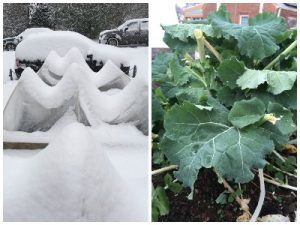
 In 2018, Earth picked up about 40,000 metric tons of interplanetary material, mostly dust, much of it from comets. Earth lost around 96,250 metric tons of hydrogen and helium, the lightest elements, which escaped to outer space. Roughly 505,000 cubic kilometers of water fell on Earth’s surface as rain, snow, or other types of precipitation. Bristlecone pines, which can live for millennia, each gained perhaps a hundredth of an inch in diameter. Countless mayflies came and went. As of this writing, more than one hundred thirty-six million people were born in 2018, and more than fifty-seven million died.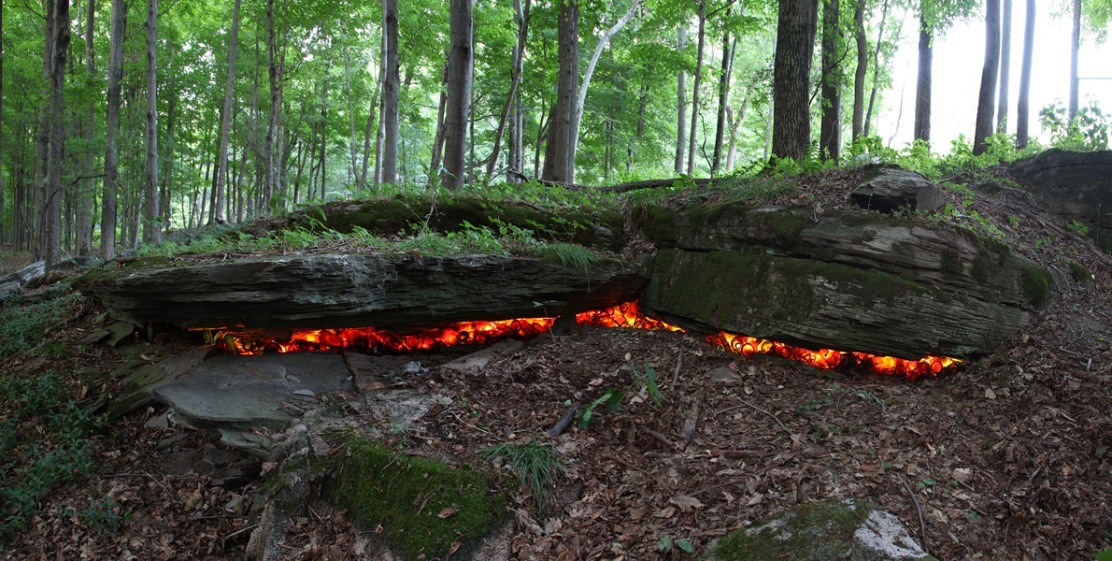

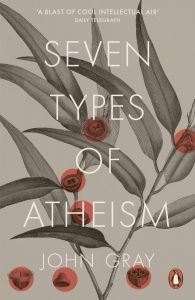 It is simultaneously awkward and exciting to read about your own consciously and responsibly adopted beliefs as something to be anatomized. It is also something atheists are not always much disposed to. On the contrary, perhaps: many forms of atheism present themselves as a consequence of free thought, of emancipation from tradition. The internal logic of their arguments prescribes that while religious beliefs, being non-rational, are in need of cultural or psychological explanation, atheism is really just what you will gravitate towards once you finally start thinking. One question here will be whether this is necessarily the case.
 Certain phrases choke us with their ubiquity at some point:
 As we approach the end of the year, it’s that time again. Not to flip the page to the next month, but to buy a new calendar. (Who am I kidding? It’s probably only me and your grandmother who still uses paper wall calendars…) And also to reflect.
  Guinea and Redhead were part of a large food chain. Beyond campus’ freshly-baked sidewalks, a Cowboy Mafia ferried contraband from the south. They landed small prop planes on ranch land outside of town, cut powder with dental anesthetics and broke up the bales. Their wares clumped on our cafeteria trays and glinted in tiny screw-top bottles. The capo, a local big-hat business man,who ran a palatial kicker-dance hall and owned the ranch. That legit business and his crew’s discipline kept them out of jail. Maybe a hat full of cash in the bargain.
 Philosophers are supposed to ask Big Questions. The Big Questions is the title of a popular introduction to philosophy and of a long-running BBC programme in which people discuss their ethical and religious perspectives. But since we philosophers, following in the footsteps of Socrates, claim to practice critical thinking, it behooves us to ask whether Big Questions are a good idea.
 In his Critique of Pure Reason (1781) Kant claimed that in denying knowledge he was “making room for faith.” Inevitably, though, faith in God, the soul and the afterlife has declined dramatically since Kant’s time, especially among intellectuals. There are virtually no articles published in philosophy journals today that treat the existence of God or the immortality of the soul as live issues. Science does not explicitly teach us that there is no God and no heaven, any more than it teaches us that there are no fairies or vampires. But the default attitude of most professional philosophers today is that in such matters the absence of evidence amounts to evidence of absence.