by Richard Farr

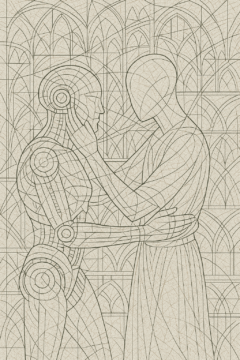
My sister and I live five thousand miles apart, but since we both reside in the early twenty-first century it’s easy to stay in touch. Of the many channels available to us we use WhatsApp messages mostly, with a call once a week or so. You might wonder then why we have chosen to revive the old old habit of writing letters to one another. The answer is not far to seek — it’s inefficient.
Fifty-some years ago, growing up in rural England, our parents had a black GPO 700-series telephone that weighed as much as an iron kettle. A settled part of the Christmas ritual was to book a call in advance with the International Operator, gather around at the appointed hour, and spend not a second more than three minutes very expensively exchanging the season’s greetings with our cousins in Ottawa.
Nobody wants to go back to that, but in leaving it behind we lost something. As we have learned from the instant availability of all music, freedom from constraint has costs. We anticipated those special moments of communication, viewed them from various angles, and discussed them in advance. So it is with writing: we used to think about it. Now we drop texts and emails by the bushel, like overloaded September trees. Our devices have made it easy for us to “communicate” almost literally without a thought.
People who write for a living, and therefore need to write with care, often report that their work is frustrating, irksome, paralysingly difficult, and at the same time comforting, exhilarating, and as optional as oxygen. Somerset Maugham: “We do not write because we want to. We write because we have to.” Red Smith: “There’s nothing to writing. All you do is sit sown at the typewriter and open a vein.” George Orwell: “Writing a book is a horrible, exhausting struggle, like a long bout of some painful illness. One would never undertake such a thing if one were not driven on by some demon whom one can neither resist nor understand.”
Orwell is only half correct about my demon. I can’t resist it, but I understand it pretty well. Many aspects of the world and my place in it are puzzling to me; itching for enlightenment, I’m forever attempting to think about them. But I’m bad at thinking: trying to think is a recipe for staring out of the window. The subject could be what’s happening in the Middle East, whether we have free will, or why Chapter Fifteen of the novel I’m working on has become so truculent and unbiddable. In each case, it’s only when I put my head down and write (and write, and delete, and rewrite) that actual thinking occurs. On a good day, careful, intricate writing allows me to approach careful, intricate thinking. Not often. As the historian David McCullough put it, “Writing is thinking. To write well is to think clearly. That’s why it’s so hard.”
Good writing can be casual, though, and the written personal letter is a gloriously special form because of the opportunity it offers us — unlike the two years on a novel or the two minutes on an email — to find a line between casualness and care. Read more »

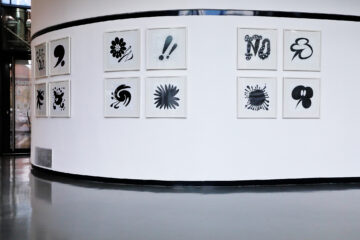

 Watching Israel and Iran lob bombs at each other these last few weeks makes me tired. Just when the world seemed completely destabilized and clinically looney, two countries who both trace their religions back to Abraham or Ibrahim decide to make things worse. I know you’re supposed to reach for the most recent issue of Foreign Affairs or parse treaties on nuclear non-proliferation to make sense of this missile orgy, but this latest war might make you reach for your earplugs and blindfold instead.


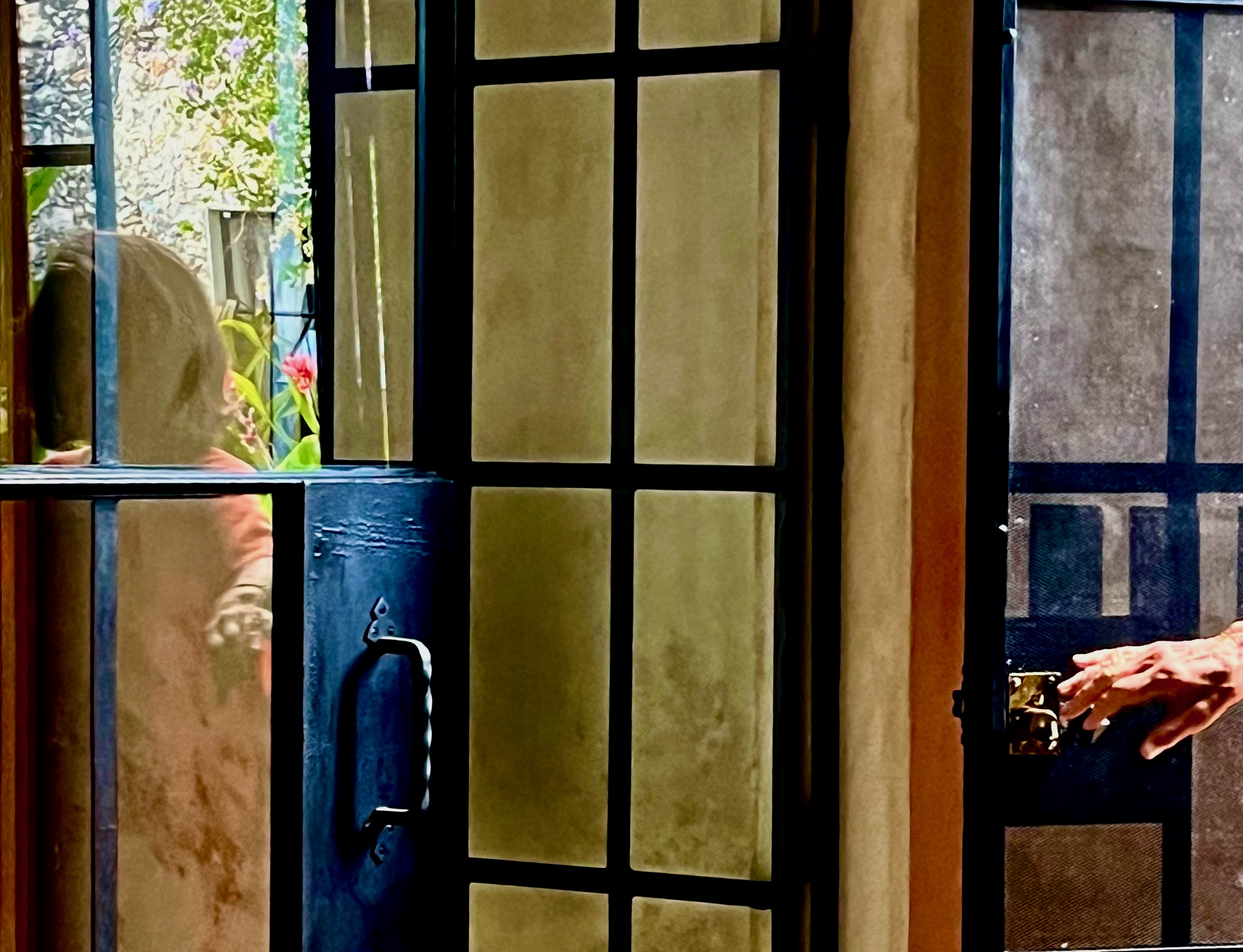 Sughra Raza. The Visitor. Mexico, March 2025.

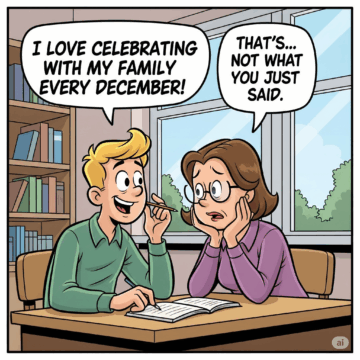 At a Christmas market in Germany, I told my German girlfriend’s mother that I masturbate with my family every December.
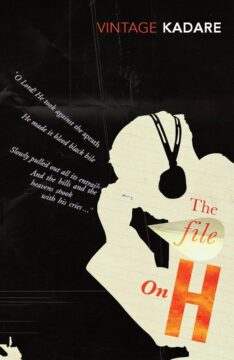 The File on H is a novel written in 1981 by the Albanian author Ismail Kadare. When a reader finishes the Vintage Classics edition, they turn the page to find a “Translator’s Note” mentioning a five-minute meeting between Kadare and Albert Lord, the researcher and scholar responsible, along with Milman Parry, for settling “The Homeric Question” and proving that The Iliad and The Odyssey are oral poems rather than textual creations. As The File on H retells a fictionalized version of Parry and Lord’s trips to the Balkans to record oral poets in the 1930’s, this meeting from 1979 is characterized as the genesis of the novel, the spark of inspiration that led Kadare to reimagine their journey, replacing primarily Serbo-Croatian singing poets in Yugoslavia with Albanian bards in the mountains of Albania.