by Muhammad Aurangzeb Ahmad
Source: Wikipedia
In an earlier piece about teaching machines to predict death, I opened with the old idea that a person often meets their destiny on the road they take to avoid it. Stories around this themes are often read as parables of trying to evade prophecy where the effort to escape a fate becomes the mechanism that delivers it. Lately, I’ve been thinking that there’s another way to read these stories and parables. Each of them is, before it is anything else, a prophecy made about someone who has not yet been born, or has only just arrived, and cannot yet speak on his own behalf. In the story of Krishna, Kamsa is told that the eighth child of his sister will be his undoing. He starts killing her children as they come. The seventh is miraculously transferred to another womb, and the eighth is Krishna. In the story of Oedipus, Laius hears what his son will do and drives a pin through the infant’s feet and leaves him on a mountainside. The common theme here is that the prophecy comes first and the child arrives into a world that has already decided what he is.
I have spent the better part of a decade on problems and converns around end of life. This essay, and the one that will follow it, are about the mirror image of those concern: They are about the beginning of life, which I have realized are an equally interesting case. Consider this, at the end of life, we may entertain the possibility of an algorithm being able to speak for a person who once had a voice. We can at least ask whether it gets that person right. We can even ask whether the preferences it reconstructs are ones the patient would have recognized. At the beginning of life, the algorithm speaks about a person who has never had a voice at all. And in a growing number of clinics it does more than speak about that person. It helps decide whether that person will exist or not! Consider what already happens in a fertility clinic. A cycle of in vitro fertilization typically produces more embryos than a family will use, and someone has to decide which one to transfer first. For decades that decision rested on an embryologist looking through a microscope and grading each embryo by its shape and its rate of division, a practice that is skilled, subjective, and inconsistent between one laboratory and the next. Into that gap has come a class of deep learning systems that watch time-lapse footage of a developing embryo and return a single number meant to express its chance of implanting. One such system is iDAScore which produces a score between 1.0 and 9.9 which moves an embryo toward the front of the queue. Read more »
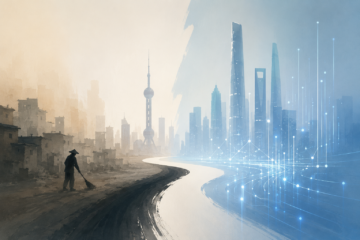 Just came back from a trip to China, my first in a decade and my first focused specifically on AI risk. Covering Beijing as well as Shanghai, conferences as well as university events, this was a highly illuminating trip from several perspectives. China has continued to develop extremely quickly since my last visit and has grown even more fascinatingly different from Western countries.
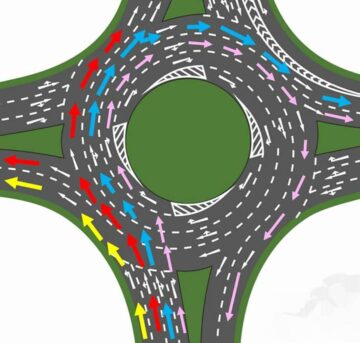 About thirty years ago my wife and I rented a car in London. The experience is seared into my memory forever. The steering wheel was on the wrong side of the car, and I was expected to drive on the wrong side of the road. It took all my concentration, but I was able to manage, more or less, until we came to a roundabout. I had never seen a roundabout before. Didn’t know what it was.
 I was going to write about a recent study [1] on raccoons, where the adaptable little critters were given puzzle boxes to solve in order to access food rewards. On each box there were three small doors with their own distinct mechanisms, each requiring a different kind of manipulation to open. What made this study notable was that, unlike previous experiments where solved puzzles were locked out or removed to focus on new puzzles, the experimenters left the previously solved puzzles accessible to the raccoons in subsequent challenges. The raccoons were able to manipulate mechanisms that they had previously figured out, in addition to the new challenges, although they received no additional food rewards for their extra work. The upshot of the results is that the raccoons displayed an intrinsic motivation to mess around with latches, locks and doors, even when no obvious extrinsic reward was to be had. This will surprise nobody who has tried to prevent raccoons from getting into their property. There is a straightforward adaptationist explanation for this: if the animals find it psychologically rewarding to muck about with things for the fun of it, they are more likely to acquire new information and behaviours that could be useful later. Much like how the intrinsically rewarding experience of sex makes reproduction more likely.

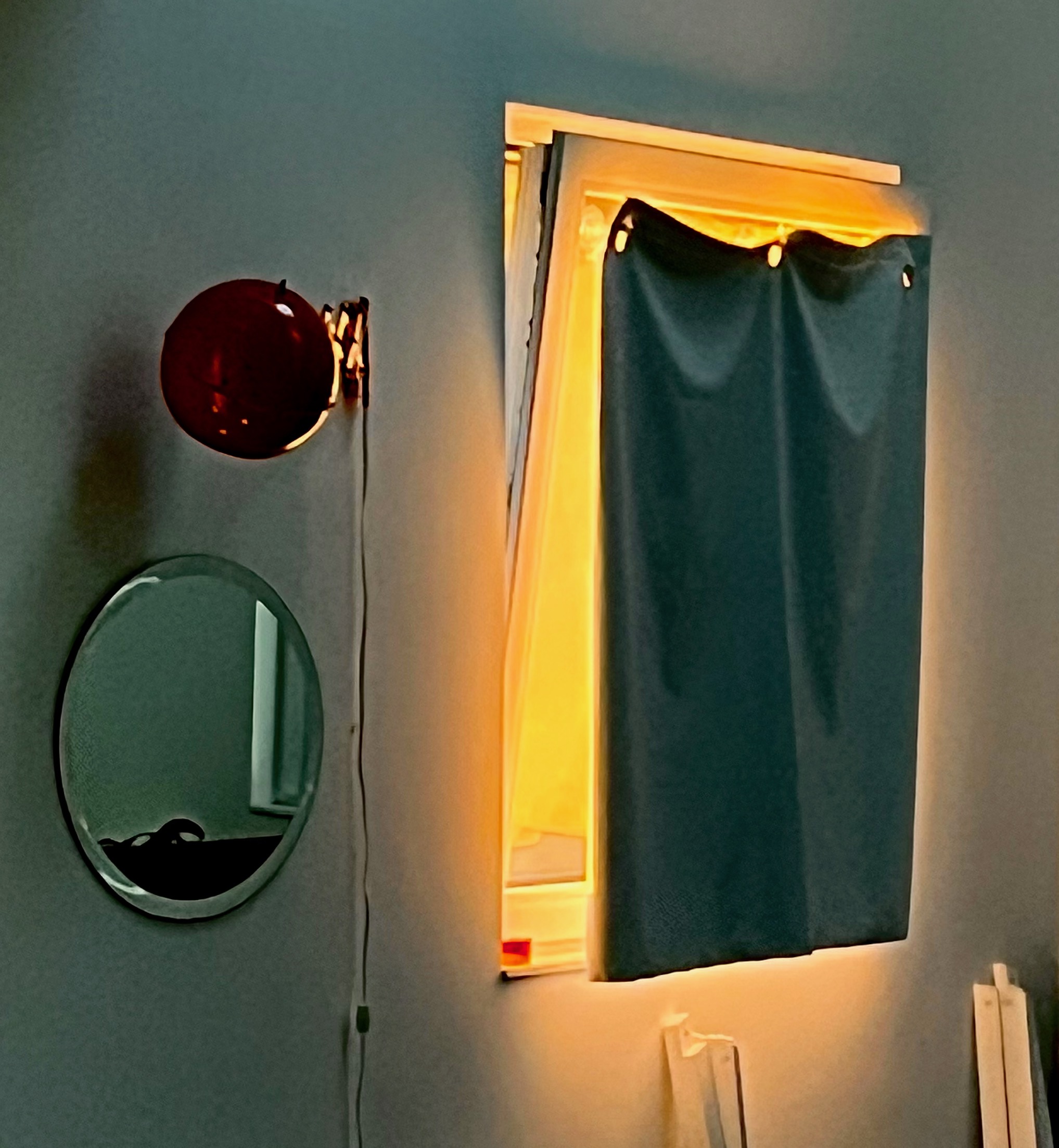 Sughra Raza. Sunset. Vermont, July 15, 2026.

 What makes a city? What gives a place its distinct character? I think of the slogan ‘dilwalon ki dilli’ – the supremely banal play on words. It works in the context of Delhi only because of a happy conjunction of the word dil, or heart, with the Hindi word for the city – ‘Dilli’. It works also because it simultaneously tells us everything and nothing. Okay, people in Delhi have hearts; though this might be disputed by many who live precarious lives in this city, the marginalized, the victims of the violence the state and citizens alike often perpetrate on them. In any event, do people in other cities not have large hearts? Still, it is a catchphrase that makes those of us who live in the city feel good about ourselves. As Delhi’s most famous poet would have said, “dil ke khush rakhne ko Ghalib yeh khayal achchha hai” – it is a thought that keeps us happy.
 For about 450 years, the western European colonial powers shit all over the world in spectacular fashion. Genocide across the Americas and the trans-Atlantic slave trade were the main drivers during the first phase. By the mid-19th century, European colonialism was approaching its bloody apogee with more genocide in Australia, the carving up of much of Asia, and eventually the scramble for Africa.
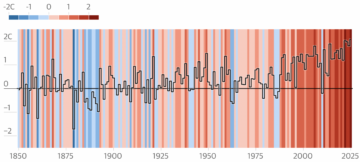 A recent
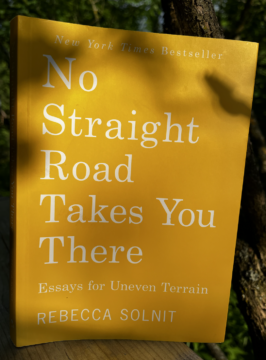 I always enjoy Rebecca Solnit’s writing, and her 2025 book,