by Eric Schenck
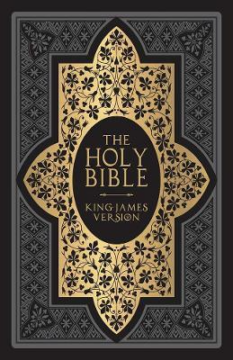 I started reading the Bible after Easter of this year. Five months later, I’m about halfway through-
And still waiting for my spiritual epiphany.
There was no particular reason I set this reading goal. I had read chunks before, but never the entire thing in one go-around. Making my way through the Bible simply felt like something I ought to do.
I’m not exactly sure what I was expecting to get from it. What I thought I was going to find. But almost half a year after I started, I have (many) more questions than answers:
- Why is there so much violence?
- Why is God obsessed with submission?
- Why are pagan worshippers considered evil?
- Why are Israelis the so-called “chosen people”?
- Why does God even have chosen people? Doesn’t that seem unfair to the rest of us?
None of these things make sense to me. The deeper I get into it, the less the Bible feels like a spiritual authority on truth…
And more like a bunch of illiterate farmers creating a flimsy justification to pursue tribal warfare.
(Which I suppose, historically, it kind of is. At least a little.)
But it’s not just that the Bible is illogical. Plenty of stories are, and still end up being enjoyable.
My problem is also that the Bible is, far too often, dull. Read more »
 In

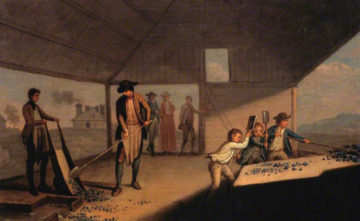
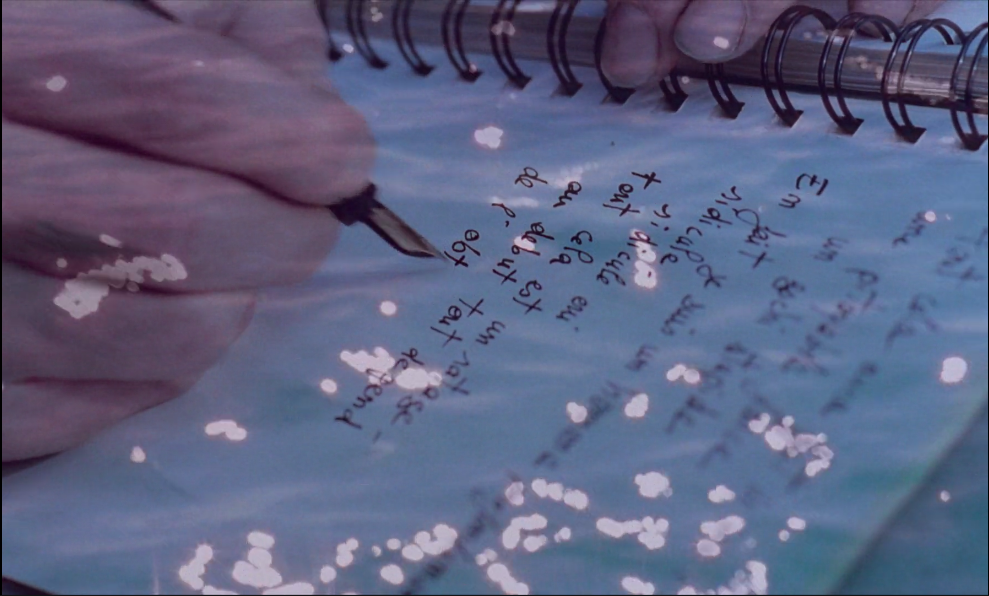 What if you took Paul Schrader’s “man in a room” concept and transposed it to the vast expanse of the African desert? You would get something like Claire Denis’ Beau Travail (1999), which shows that the room a man locks himself in doesn’t need to be literal—a prison can be made anywhere. In Denis’ film, the man in a room is Galoup, a French Foreign Legion sergeant who commands a group of some 15 men in Djibouti. He is, he tells us in voiceover, “a perfect Legionnaire,” and like Schrader’s protagonists, he writes in a journal and narrates his memories, a storytelling technique stretching back to Robert Bresson’s Pickpocket. The story thus proceeds along two timelines: one, with Galoup in Marseille, writing in his notebook after he has been dismissed from the Foreign Legion; and the other, the memories of the desert and the Legion that the notebook engenders.


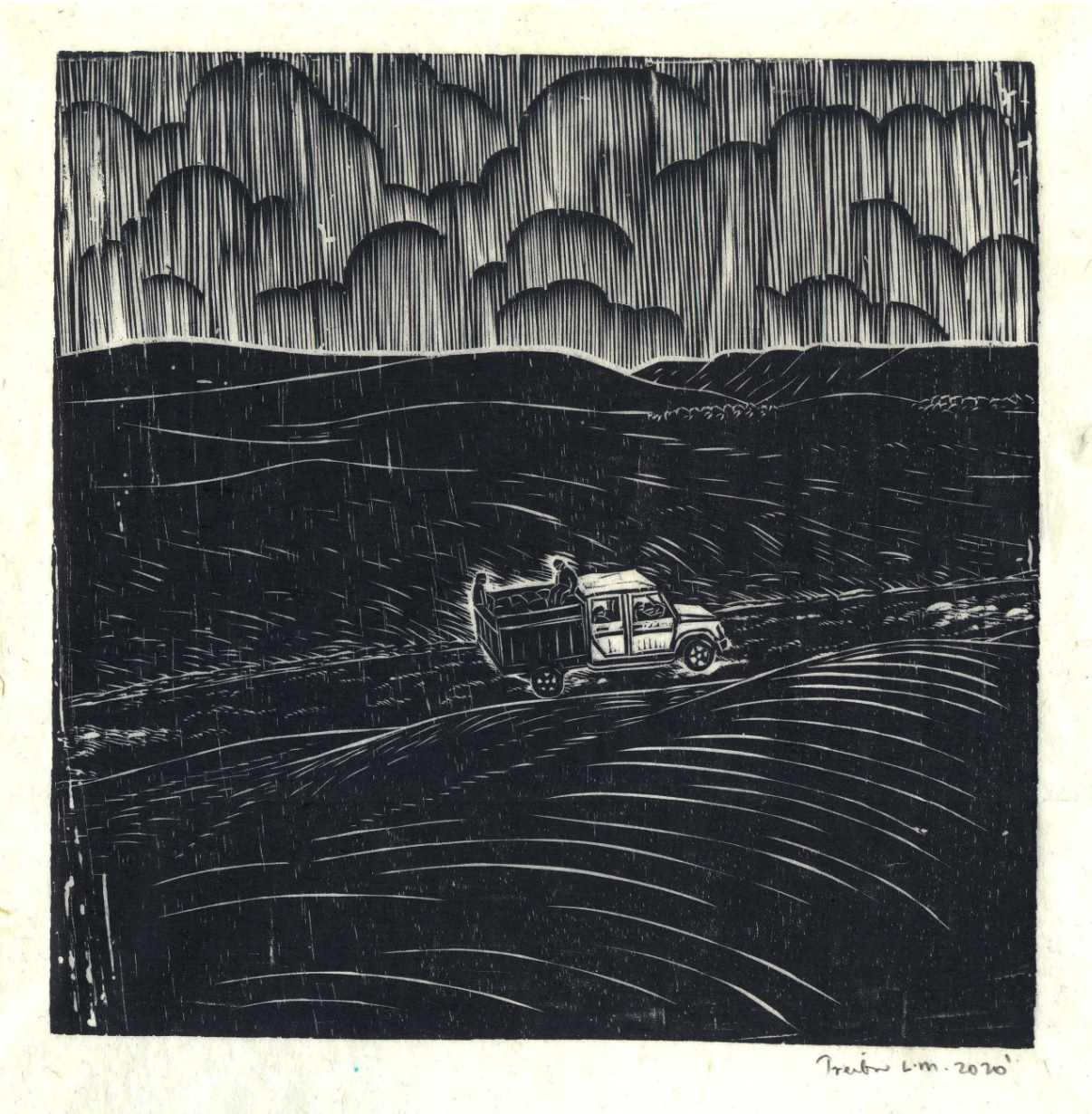 Treiborlang Lyngdoh Mawlong. From “Somewhere, Elsewhere, Here”, 2020.
 The
 I was born before language. Only waterfalls and wind and tumbling rocks.
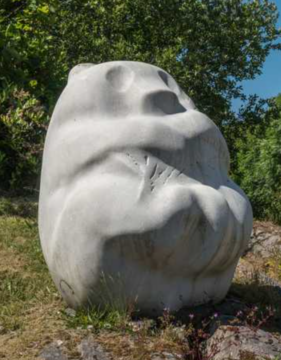 There is a white marble panda at the edge of the pier road in Sneem, and as a boy I walked past it most mornings on the way to Christian’s shop without once wondering why a panda should be standing in Kerry. It was cold in the mist and faced whatever the morning brought in off the bay, and I gave it about as much thought as I gave the wet tarmac.

 We went to the movies the other day, a rare occurrence. It wasn’t easy to find a film, since in Zurich at the moment most cinemas seem to be showing The Odyssey, which I don’t particularly want to see. This is for idiosyncratic reasons, some private red flags that were unfurled when the trailer evoked my last excruciating experience of a star-studded cinematic makeover, Kenneth Branagh’s 1996 Hamlet. (Anyone who remembers Billy Crystal’s cameo as the First Gravedigger may feel the same way.) My resolve was then strengthened by Emily Wilson’s