
by Carlota Figueroa
Actually, I can bet you another $5 that when you read the title of this article you thought that I was crazy and that there is no universe in which these two things can be the same. After all, you’d probably tell me that one is a stylish piece of clothing and the other is a kitchenware article that holds the magic potion to wake you up in the morning — definitely not the same thing. And you would be right. Well, partially right. But let me ask you just one thing: how do we define the word same? If we use every normal person’s definition of same as “resembling in every relevant respect,” (maybe you’re a normal person and you’d use a different definition, but this is Merriam-Webster’s so I’ll take it as a good point of reference) then yes, you win: a skirt does not resemble a coffee cup in every relevant respect. It’s not even a close call. However, if we use many mathematicians’ definition of same as “homeomorphic to one another”, then I’m sorry to tell you, but you owe me $5.
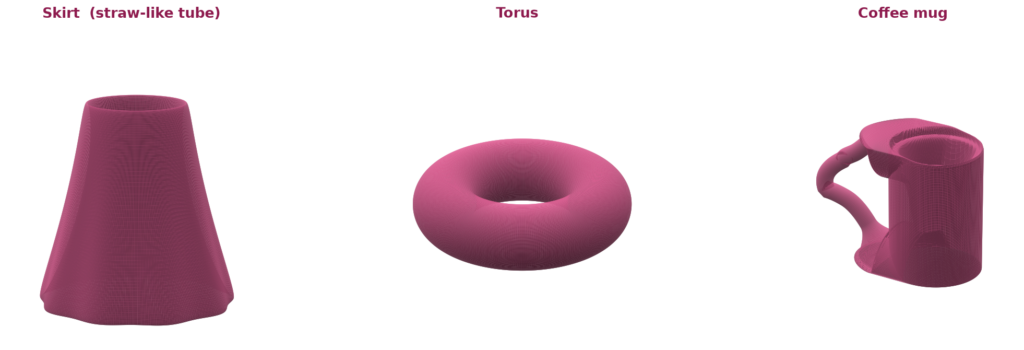
Now, unless you have some background in mathematics or physics, the adjective “homeomorphic” probably sounds rather made up. What does it mean for two spaces to be homeomorphic to one another? It means that there exists a homeomorphism between them. I know, way to go, using the word to define itself. The truth is, in mathematics, a homeomorphism is one of the most important and magical functions there is. In technical terms, a homeomorphism is a bijective and continuous function between topological spaces that has a continuous inverse function. Don’t panic, we will break down this sentence so you can get the full essence of what a homeomorphism is. Read more »




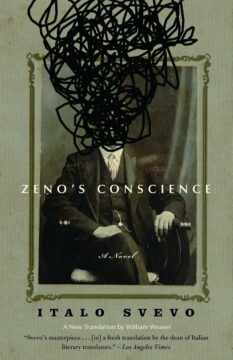 Zeno’s Conscience (1923) by Italo Svevo is the story of one such man suffering from talking too much (to himself). Zeno is a person with deep interiority, long meandering monologues, and feeling. However, despite his never-ending rhetorical skills and eccentricity—having gone through the tunnels of his mind many times over—he ironically enough lacks a conscience. He fails in health, in love, in his addictions, and in business. Rumination and ceaseless inner conversation do not produce moral clarity for Zeno. Instead, his often-comical interior life is insidious because his obsession with sentimentality and grand justifications prevents his self-actualization. And so, he lacks a real moral center. However, he does not fail to be incredibly entertaining as a personality.



 For most of the last hundred years, ships sailed the globe without much thought to who ruled the sea. Governments agreed on organizations and protocols for getting along, capital flowed, scientists collaborated and manufacturers built supply chains stretching around the world. The international commons became so ordinary as to disappear from view. That didn’t happen by accident, and it isn’t guaranteed to continue.
 In December of 2025, Miriam Sagan published a stunning merger of memoir and fantasy fiction,
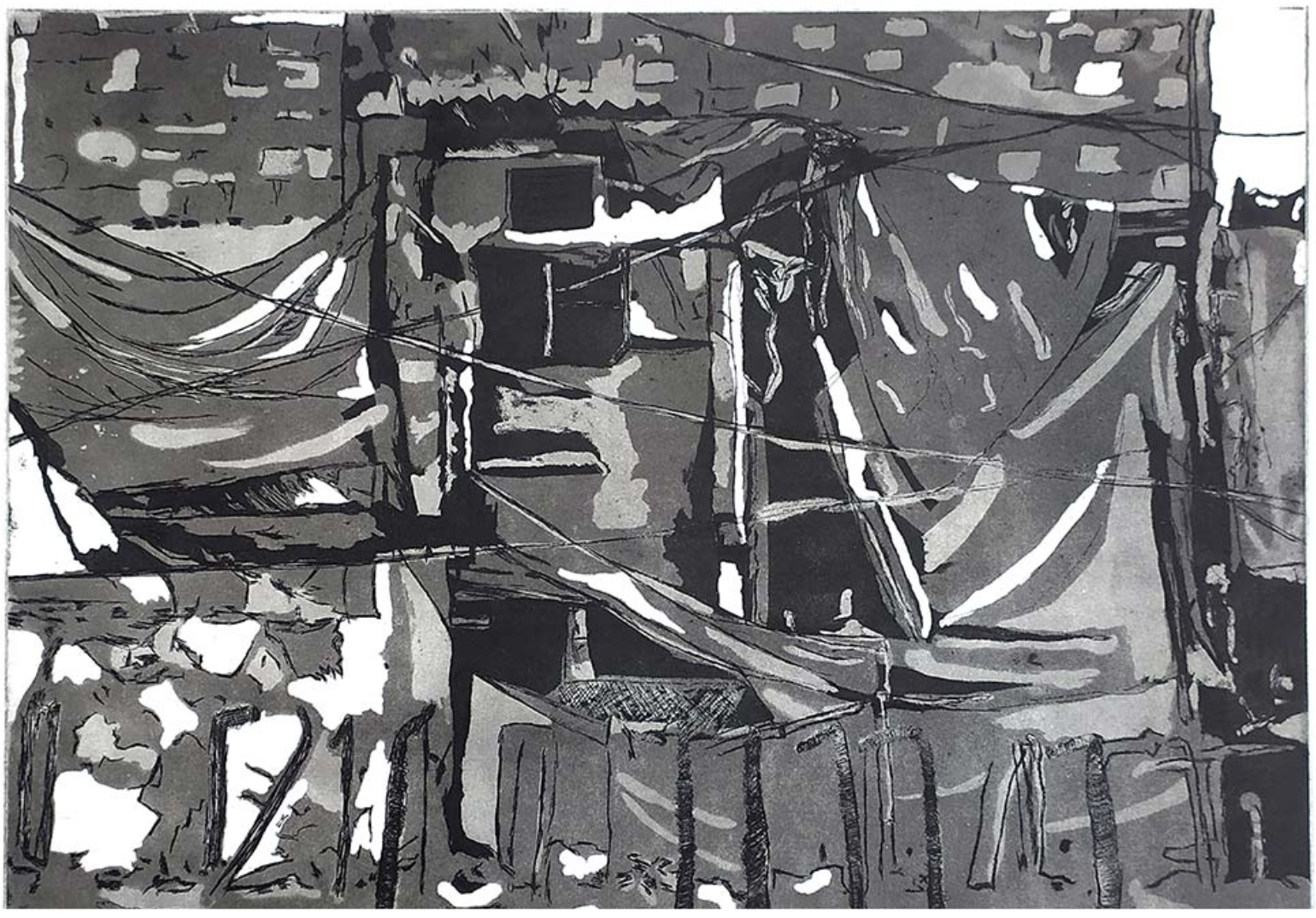 Zahabia Khozema. Untitled I, 2023.


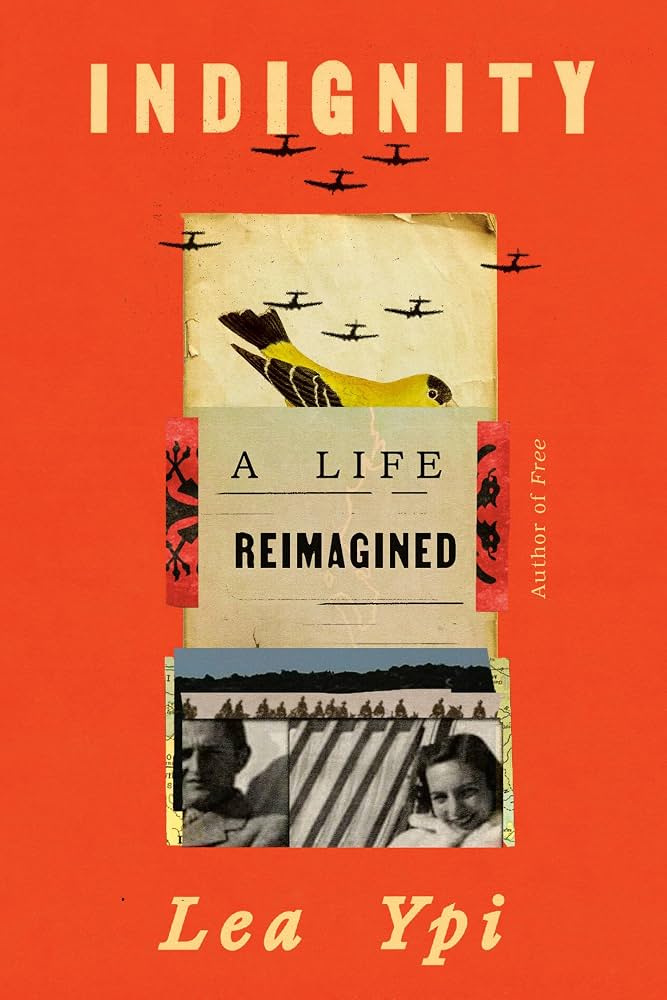 Lea Ypi’s first memoir, Free, began with a scene of her hugging a headless statue of Stalin in Durrës, Albania as a child. The image was effective in showing the young Ypi’s devotion to communism, which was important as the book dealt with her disorientation upon its fall and the realization that much of what she believed about her life had been a lie. Some readers, however, took issue with what they considered Ypi’s excessive use of artistic license: there was no statue of Stalin in Durrës, just a small bust with its head intact.