by Leanne Ogasawara
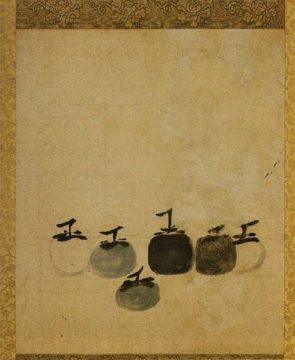
1.
From the very beginning of our marriage, my husband and I have spent an enormous amount of time side-by-side, silently looking at paintings. Mainly the Old Masters. We have many shared hobbies —and the older we get, the more these shared interests and passions tie us together. Even after ten years, I still love the way he appears in front of a masterpiece. He is totally awake. Sometimes we might talk a bit, hold hands, and exchange a smile, but mainly we stand there quietly soaking it all in.
That is perhaps why he immediately agreed to my plan to drive almost eight-hundred miles roundtrip in one day to see an ink painting from Japan.
“Well, I guess it isn’t that far to go….” He said, grabbing his phone to check the distance between our house in Pasadena and the museum in San Francisco, where the Asian Art Museum’s The Heart of Zen exhibition had opened to much fanfare.
“It’s a once in a lifetime chance,” I said.
“You always say that.” He looked amused and then asked, “How is it possible in twenty years in Japan you missed seeing this painting anyway?”
I had already told him countless times that in Japan, many masterpieces are kept away from public view, only trotted out once in a blue moon, when thousands of people line up to view it. And the 13th century painting Six Persimmons is not even kept in a museum. Painted with ink on paper by the Chinese Chan (Zen) monk Muqi, Persimmons is safeguarded in a Rinzai-sect Zen temple in Kyoto. Daitokuji temple only rarely displays the acclaimed picture—usually just once a year for a single day. And until 2019, it had never once been shown outside the temple even in Japan.
And so, I had missed it. Every single year.
But now—miraculously—it had crossed the ocean to be put on display for three weeks in San Francisco. Read more »
 Will re-branding Covid help people start acting to protect themselves from it? Maybe we need an ad campaign to kick-start public health. Outside of judicial rulings and before marketing, we had religious leaders to remind us to the best ways to survive, and before that we had stories passed down for generations to help keep children safe from harm by altering their behaviour,
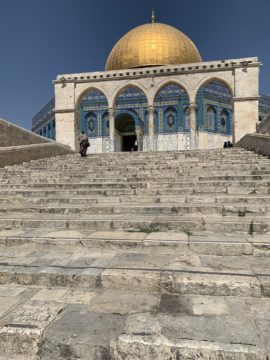 Masjid Al Aqsa, or The Far Mosque of Jerusalem, as the Quran calls it, is emblematic of the spirit of compassion and transcendence for Mevlana Rumi. “A heart sanctuary,” in the words of Rumi in his poem “The Far Mosque,” Al Aqsa represents a conquest over the egoistical desires of dominance, greed, vanity, violence and supremacy. It is held together by the sacred energy of merciful love, even “the carpet bows to the broom/the door knocker and the door swing together/like musicians.”
 In 2016,

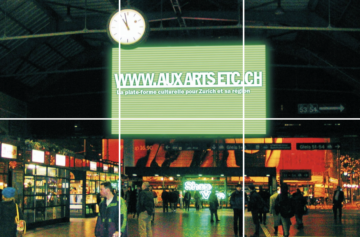
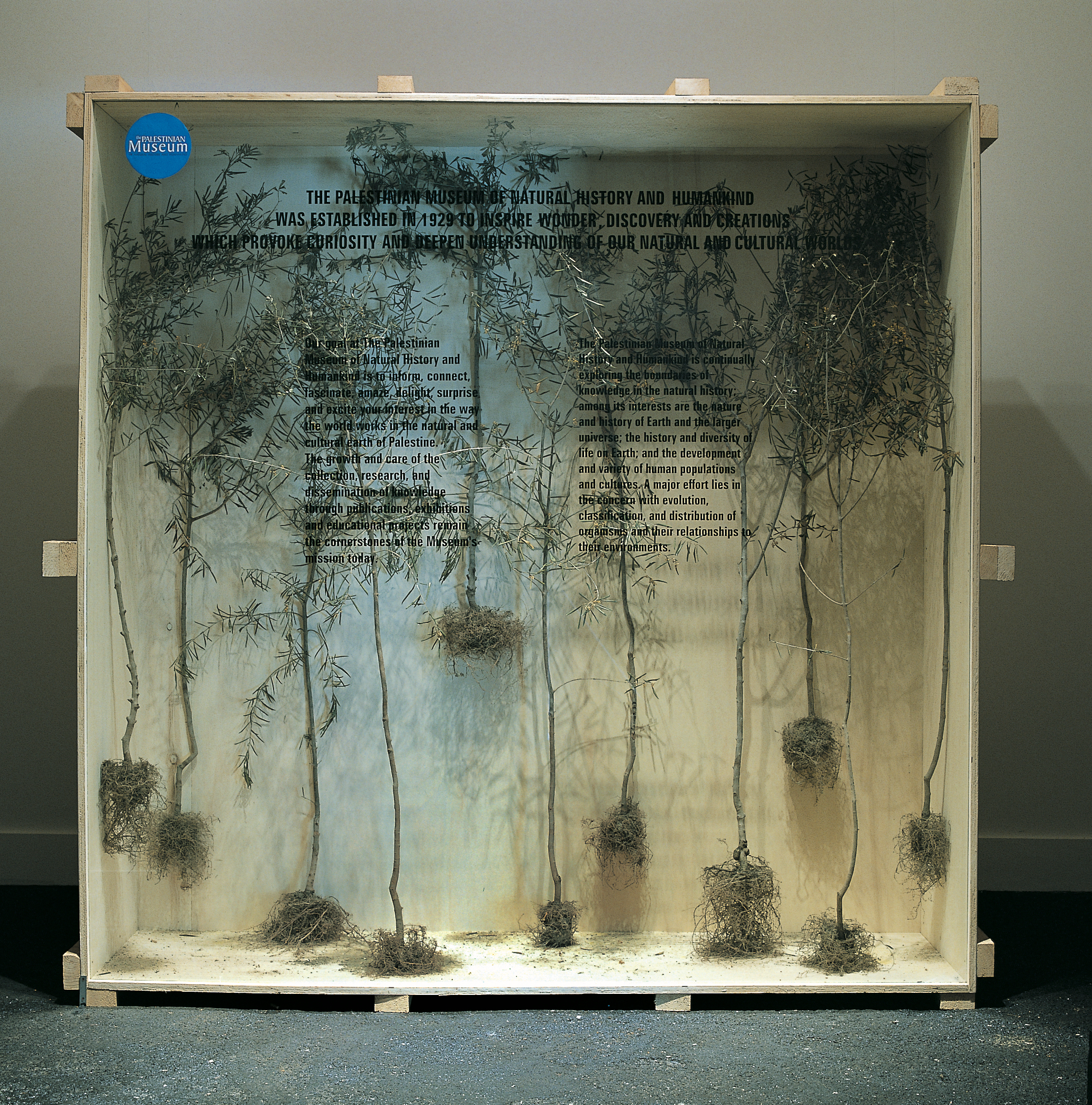 Khalil Rabah. About The Museum, 2004.