
by Bill Murray
 One Monday in 1883 Southeast Asia woke to “the firing of heavy guns” heard from Batavia to Alice Springs to Singapore, and maybe as far as Mauritius, near Africa.
“So violent are the explosions that the ear-drums of over half my crew have been shattered,” one ship’s captain wrote. “I am convinced that the Day of Judgement has come.”
Barometers traced a pressure wave that circled the earth. Not for days or weeks did people understand the cause: that the Krakatoa volcano had erupted from the sea. Now in our own time, political shock waves have been sent out. Western democracies must interpret their impact urgently.
During the lifetimes of everyone born this year, the world will surely become a harder place to live. The main causes are two: ever faltering human politics, and even longer-term human climate tampering.
The climate part grows so gradually that it’s hard to rouse people to the ramparts. The politics part comes from a new cycle of populist nationalism. We saw how that worked out in Europe last century. It’s hard to believe we’re already at it again, but here we are.
It’s tragedy but truth that the climate part only goads the politics part. Climate disruption leads to refugee flows, and they reinforce xenophobia.
Which sets up the mid-2020s as a 1968 or a 1989, the end of a time of complacent stability, of relative governability, and the beginning of churning disruption. The mid-2020s are a tinderbox, and Donald Trump was elected by people who enjoy playing with matches.
If Krakatoa was a natural catastrophe, Trump’s presidency is a political one, the trigger of America’s current fit of government-by-destruction. An accelerant, releasing long-gathering American political decay and imperial overreach.
The shock wave already batters the wider West’s institutions, and it’s an open question – not least to its own leadership – whether Europe can ride things out once the tsunami hits the shore.
“The West as we knew it no longer exists,” President of the European Commission Ursala von der Leyen told the German weekly Die Zeit in April. Her lament was that the EU couldn’t count on the United States. And that was before America’s 28-point Ukraine peace proposal last month, that read like it had been drafted over blinis in a banya.
Europe’s dilemma results from not finding its own place in the world. By spending eight decades as the ever hopeful attendant to American wishes, European leaders have lost unrecoverable time in a slow dance of deference to Washington, allowing their own security to be decided elsewhere.
Von der Leyen framed the problem, but the European Union she leads has done little to solve it. She and her fellow European leaders spent this summer’s G-7 and NATO summits papering over disagreements with the Americans. Likely scared out of their wits, they deployed flattery and forced good humor.
The biggest cringe event of the year, the one that still makes you wince, happened outside the EU. It came during a presidential visit to England in September. Here’s Janet Daley:
Downing Street seems to have pulled off a remarkable operation in persuading President Trump that having his second ‘state visit’ held at Windsor Castle behind virtual locked doors rather than the traditional triumphal procession down the Mall to Buckingham Palace was a great compliment. …. No one in his entourage, apparently, thought it odd that the legendary carriages which transported him in circles around the castle grounds were going from nowhere to nowhere.
They gave Donald Trump a carriage ride around Windsor Castle in circles, and he loved it.
Wait, though. This isn’t just one more Trump is bad column. Trump is bad, but what’s worse is what his second term reveals on both sides of the Atlantic. Four postwar generations imagined the West as both the irresistible force and the immovable object, but only now, late in the day, does the painful truth show: the game rested only on America’s postwar brawn and largesse, and that game is over.
What Moscow wants isn’t secret. It wants Ukraine to follow Belarus into Russian satrapy. Up to now, the US has resisted changing borders by force, as a principle. But in his second term, Russia’s goals don’t much seem to upset Donald Trump, who is clearly less bound by principle than by profit.

What should be simple enough, European allies standing in support of Ukraine, isn’t simple at all. Polish Prime Minister Donald Tusk, who lives in Ukraine’s European neighborhood, explained the problem: “the paradox is that five hundred million Europeans are asking three hundred million Americans to defend them against one hundred forty million Russians.”
Day after day for almost four years now, the drama of our time has played out in Ukraine, and now the country that designed the postwar order has quit the game. The United States is taking the West apart, and Europe just can not close ranks.
Since its triumph over the Soviet Union, the West has fancied itself economically advanced and rules-based. After this first quarter of the twenty-first century, that sounds quaint. The only time the words “rules” and “based” appear together in the new American National Security Strategy is to mock the idea.
The fall of the Berlin Wall may have been the last moment Americans could credibly believe history was bending their way. There was a minute back then when the future was so bright we had to wear shades.
That didn’t last long. An act of US electoral self-harm is all it took to shake the West’s foundation. Donald Trump’s bluster set the European allies bowing and scraping through the first Trump administration and straight into Trump II.
It turns out the postwar order relied on as much on American hard power as shared values. Once the US wavered, the allies woke up to how few options they’d arranged for themselves, but they did very little about it.
We’ve lived five years of the eight American voters gave Donald Trump. Risk consultants now advise clients to shift to a “defense first, hedge second” strategy, to pursue maximum flexibility in international relationships. Don’t be led by the US, they say, be mutually dependent. That is radical change.
And it’s exactly what the wider world is scrambling to do. From The Hill:
In Rio de Janeiro’s Itamaraty Palace, Brazilian President Luiz Inácio Lula da Silva raised a quiet toast. There was no anti-American rhetoric, no thunderous declarations — just a call for ‘cooperation without coercion.’ As BRICS leaders gathered for their July 6–7, 2025, summit, the message was unmistakable: this was not about replacing the United States, but about creating space from it.
At the first BRIC summit in Yekaterinburg, Russia in 2009, charter members Brazil, Russia, India and China stared across the table at one another wondering what precious little they might have in common. South Africa joined two years later, BRIC became BRICS, and BRICS became a coalition of countries chafing against Western institutions like the World Bank and the IMF.
Today, its alternative to the World Bank has extended loans worth tens of billions of dollars, many denominated in local currencies. It has taken steps to reduce exposure to Western financial systems. It settles some trade in local currencies, not dollars. It has ten members, annual summits, and working groups on finance, health, education, science, and security.
As the rest of the world moves to get on with things, it’s striking how Europe and NATO cling to an increasingly hostile America. Breaking up may be hard to do, but going along to get along has returned precious little so far to the European institutions headquartered in Belgium.
THE NEW NATIONAL SECURITY STRATEGY
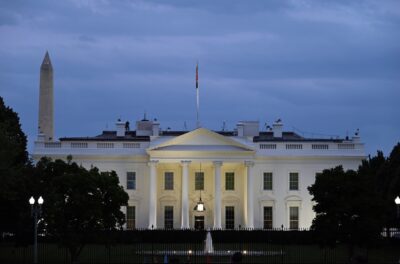
The United States’s new National Security Strategy (NSS) appeared on the White House website one night week before last. Every National Security Strategy signals a president’s broad policy intentions, but this one signals at least one stark American departure: on Europe.
Its Europe section might well be titled ‘the mask drops here,’ because with it, the second Trump administration has abandoned pretense. It treats the European Union as a threat to be countered and declares as a new American goal, “Cultivating resistance to Europe’s current trajectory within European nations.”
This new policy is meant to “help Europe correct its current trajectory.” One way to read that is “we will undermine elected governments as it suits us.” It means explicit American support for the rising European far right. And that’s not just a statement of policy; it’s already happening.
US Vice President JD Vance attended this year’s Munich Security Conference and met with a co-leader of the far right German AfD party and while there. He criticized the annulment of a Romanian presidential election, a judicial decision by that government based on evidence of Russian interference.
Vance said at Munich that the greatest threat to European democracy is “internal,” not the external threat of Russia’s occupation of Ukraine, 4,300 days since the ‘little green men’ entered Crimea.
Donald Trump, Jr. followed up with a visit to the region. Later, the president sent his homeland security director, Kristi Noem, to Poland to campaign for Karol Nawrocki, the ultimately victorious conservative candidate for president who has worked closely with the far right PiS party.
The New National Security Strategy ties all their work together. It can be seen as an early draft of a Project 2028, that allows blood-and-soil future MAGA aspirants like Vance, Trump Jr. and Noem to groove on their shared xenophobia.
The NSS seeks to bring European governments to heel. It pairs “cultivating resistance” with “reestablishing conditions of stability within Europe and strategic stability with Russia.” Framing Europe as an unstable continent on the verge of collapse invites the US to play a paternal, colonizing role, to intervene to elevate its preferred European politicians to office.
The NSS’s Europe section amounts to a direct attack on the European Union, and it’s hard to imagine how European leaders, having watched Donald Trump turn US policy against Ukraine, could have any illusions whether he might do the same across Europe.
•
We proclaimed it for so long it became just a slogan: the USA was the leader of the free world. Now it abandons the role, and as it tears down the scaffold it built, we might consider what being leader of the West really meant. For one thing, we see how happily Europe was willing to be led.
We got into this mess together. As the US comes apart it will be up to Europe to find its own way, and the signs are not encouraging.
America’s MAGA meanness is contagious. Once the Trump administration made wholesale cuts to foreign aid, Europe hastened to follow. The UK slashed its own foreign aid by something like £6 billion. Germany cut its 2024 aid budget by about €2 billion. Norwegian aid dropped about five percent.
The US is clear, even performative, about its official xenophobia. Taking the cue, Denmark’s immigration policies last year led to under a thousand grants of asylum, a historic low. This week Keir Starmer embraced the approach of his Danish colleague.
And so on.
A thousand books must have been written about the coming of last century’s Fascism. So far, to what effect?
Here at home Republican MAGA politicians queue up to bow down. Nationalists, isolationists and populists are well-along toward capture of their party. They already have the vice-presidency and seek much more.
Democrats wring hands and fret.
Former NATO Secretary General Jens Stoltenberg begins a chapter of his new memoir this way:
“Here comes my big money collector!”
These were the words with which Donald Trump welcomed me as I entered the Oval Office is mid-May 2018.
It’s hard to imagine an adult man holding the American presidency who really thinks if there’s nothing in it for him, he’s just not going to do it. But here we are.
For three years and a month before Inauguration Day 2029, power is all money, transactions, all the time. The whole world sees the Trump family’s daily monetization of political power. Certain world leaders are delighted by it. Europe must be appalled, but so far you wouldn’t know it.
Last week the United States published the most alliance-rattling document in postwar history and the Trump administration rolls right along like nothing is even amiss.
After having its way for eighty years, the United States has become an unreliable, self-destructive hegemon. It built the world it wanted, and now it doesn’t want it anymore. It forces its allies – hapless and unimaginative as they may be – into frantic improvisation, or paralysis.
To Europe, the National Security Strategy is less a policy than an insult. The trouble is, it’s hard to imagine how Europe could fail to respond, but it’s just as hard to imagine how it could.
NATO Secretary General Mark Rutte told an audience in Berlin last week that “At the end of this first quarter of the 21st century, conflicts are no longer fought at arm’s length – conflict is at our door.”
The Krakatoa shock wave took hours to reach distant shores. The Trump shock wave is still resounding across the world, and Europe has felt the initial blast. What its leaders do before the tsunami hits will decide whether our moment is a warning, or a point of no return.
***
I write more like this at Common Sense and Whiskey on Substack.
Enjoying the content on 3QD? Help keep us going by donating now.