by Barry Goldman

I started this series of articles by claiming the adoption of the rule of law was the second biggest mistake in the history of the human race. I modeled my claim on Jared Diamond’s assertion that the biggest mistake in human history was the adoption of agriculture. I said the move from face-to-face resolution of disputes by people who knew each other to a bureaucratic system of written rules administered by strangers did not advance the cause of justice. I explained some of the most serious defects of the legal system here, here, here, and here. Essentially, the system of written laws distracts us from our real disputes and prevents us from proposing particularized, nuanced resolutions; the rich and powerful control the process; and the system pays for itself by extracting value from the disputants. Then I promised I would propose an alternative.
The alternative is that we resolve our disputes the way our ancient ancestors did, by talking to each other. This is not just historical romanticism. The idea that talking to each other is a good way to solve problems has support in modern psychology. Consider, for example, “the illusion of explanatory depth.” Here’s a question: On a scale of 1 to 7, how well do you understand how a zipper works?
Most people say they know how a zipper works. You pull the tab up, the little teeth fit together, and the zipper closes. You pull the tab down, the little teeth separate, and the zipper opens. Right. But that describes what a zipper is. Everybody knows what a zipper is. The question is whether you know how it works. Please describe in as much detail as you can all the steps involved in a zipper’s operation.
Finished?
Okay, now try the first question again. On a scale of 1 to 7, how well do you understand how a zipper works?
What you have just demonstrated is the illusion of explanatory depth. It isn’t just you, and it isn’t just zippers. We all believe we understand much more than we do. There are books on the subject. One of the most accessible is The Knowledge Illusion by Steven Sloman and Philip Fernbach. Read more »

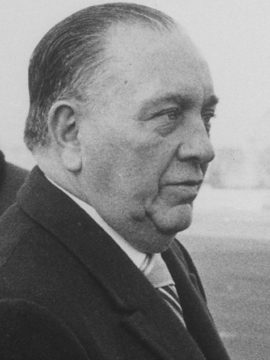

 Sughra Raza. Yarn Art on The Mass Ave Bridge, July 2014.
 Daniel Goleman’s





 The man who’d spoken to me before appears at my side and whispers into my ears again.
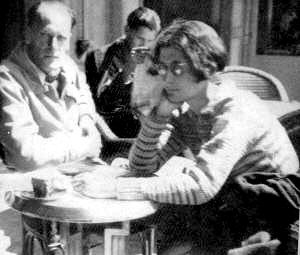 In the past decade, the writer Simone Weil has grown in popularity and continues to provoke conversation some 80 years after her death. She was a writer mainly preoccupied with what she called “the needs of the soul.” One of these needs, almost prophetic in its relevance today, is the capacity for attention toward the world which she likened to prayer. Another is the need to be rooted in a community and place, discussed at length in her last book On the Need for Roots written in 1943.
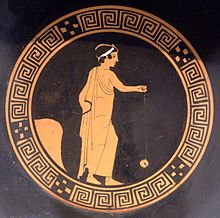
 In debates about hedonism and the role of pleasure in life, we too often associate pleasure with passive consumption and then complain that a life devoted to passive consumption is unproductive and unserious. But this ignores the fact that the most enduring and life-sustaining pleasures are those in which we find joy in our activities and the exercise of skills and capacities. Most people find the skillful exercise of an ability to be intensely rewarding. Athletes train, musicians practice, and scholars study not only because such activities lead to beneficial outcomes but because the activity itself is satisfying.