
by Rebecca Baumgartner
I’m currently reading The Hunchback of Notre-Dame in translation, and it’s got me thinking about how much we rely on translators to bring us literature from around the world, and how important it is to be able to trust what they tell us. I can only imagine the patience and creativity, the erudition and intuition, required to be a good translator. I’m deeply beholden to every translator who has enriched my life by unlocking the magic of Anna Karenina, Ferrante’s Neapolitan Quartet, War and Peace, A Young Doctor’s Notebook, the novels of Carlos Ruiz Zafón, the novels of Anna Gavalda, The Three Musketeers, Beowulf, the haiku of Issa and Basho, all the stories of Greek mythology, and now – The Hunchback of Notre-Dame.

The duty of a translator assumes outsize importance once you get invested in a story. It’s crucial they get it right; you have to be able to trust their interpretation and sense of style. You want them to be faithful to the spirit and letter of the original, but if you had to prioritize one over the other, you want the spirit to come first. Most of all you want the impossible: To borrow their French- or Italian-speaking brain for a few hundred pages, to see into the soul of Victor Hugo or Leo Tolstoy, however briefly, with as little mediation as possible, to be able to believe that this text was written in English all along, that you are drinking from the original source. When done well, this is a gift that can never be adequately appreciated or repaid.
The flip side of this weighty responsibility is an equally weighty disappointment if it’s handled poorly. Even in the best translations, I’ve stumbled on phrasings that are simply too clunky or awkward to be the best possible rendering, and it grates like a pebble in my shoe. I’ve read novels translated from Russian that persist in translating “bored” as “dull” – words that might seem interchangeable, until you read a sentence saying that someone is dull, when it’s obvious from context that what they really mean is that they’re bored. I’ve seen the word “explanation” used to describe what should have been translated as “argument” (characters having violent explanations in the next room, for example).
One of the most cringe-inducing examples of a mistranslation came to my attention recently when a character referenced the Latin motto “Sapere aude,” which was the Enlightenment-era rallying cry meaning “Dare to be wise” or “Dare to know.” Unfortunately, the translator rendered this as “To learn, listen,” mistakenly confusing the verbs audere (to dare) and audire (to listen). I only knew this was a mistake because of my rusty Latin. But other readers have no choice but to take that mistranslation at face value. Read more »

 Sughra Raza. Night Seagulls at Karachi Harbor, Dec 7, 2023.
 The philosopher Aristotle, who lived in the 4th century BC, wrote in The Nicomachean Ethics that you cannot become good without practice. Even the ideal utterly good person whose every action is carried out at the right time for the right reason, has gone through a long process of trial and error; their ultimate victory over bad tendencies, precipitous judgement and external obstacles is a victory achieved through blood, sweat and tears. Aristotle’s promise is that the effort that engages both body and mind– if carried through with constancy and a bit of luck – will some day be sublimated into a way of being which will become both effortless and wholly constitutive of the moral agent. True enough, this ideal remains somewhat shrouded in the mist of a far-away horizon, but the path is paved, however arid and mountainous it may be. With the help of guides and maps, models and teachers, it is up to us to commit to the daunting effort.



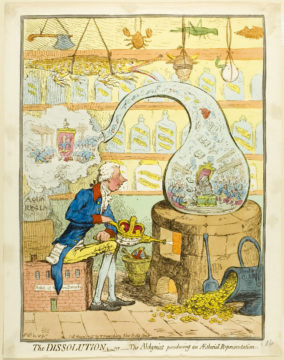

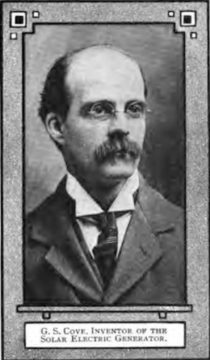
 The broken-down jalopy that was Hubert Humphrey’s campaign wheezed its way out of Chicago and headed…anywhere but there. The Convention was an utter disaster. The only “bump” in the polls was a shove backwards, and Humphrey seemed to have nothing with which to shove back. He had no coherent message on the biggest issue of the day—Vietnam. He was working for an absolutely impossible boss, LBJ, who demanded complete loyalty and delighted in humiliating him. His campaign was broke…it literally didn’t have enough money to pay for orders of Humphrey buttons.
 I teach at a large, public university in the mid-Atlantic region of the United States. For about a decade now, the upper administration has had a habit of sending “comforting” emails whenever there’s a major school shooting. Of course there are far too many school shootings in America to send a note for each one, so I suppose the administration tries to keep it “relevant,” for lack of a better word. These heartfelt missives arrive in my Inbox once or twice a year, typically after some lunatic shoots up a college campus. So far as I can tell, they go to everyone. To every faculty member, staff member, and student on campus. To 25,000 people or more.



 Will re-branding Covid help people start acting to protect themselves from it? Maybe we need an ad campaign to kick-start public health. Outside of judicial rulings and before marketing, we had religious leaders to remind us to the best ways to survive, and before that we had stories passed down for generations to help keep children safe from harm by altering their behaviour,