by Mike Bendzela
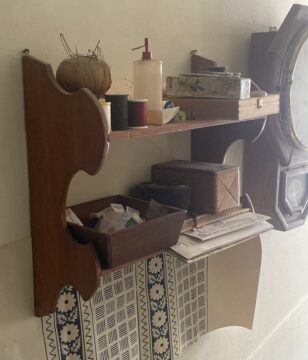
One of the last of the traditional wood craftsmen in New England was born in the nineteen-fifties outside Boston, appropriately, historic home of many spindle turners and chair caners, lumber joiners and paint-stainers. His most vivid memories of the period involve his grandmother’s house in Cambridge, including the smell of cabbage from her tenants boiling dinner in their kitchenettes. After his parents’ marriage and his birth, the family lived on the first floor of her house for several years before moving further out of town. Unbelievably, even though he would have been only around two years old at the time, he remembers the fancy wallpaper that was still in the room and all the original woodwork having been painted white from earlier owners who had tried to un-Victorianize the old house.
Throughout his childhood he would frequently visit his grandmother’s house, and he can describe the layout of the place even though he was less than eight years old at the time. The structure was a late nineteenth century three-storey, mansard-roofed tenement building that was originally a single-family home with a carriage shed. The second floor consisted of three great rooms with double doors that his grandmother shared with tenants. His father had built a wall to make a little room four feet wide between two big rooms to function as a kitchenette for one of the tenants. The room he stayed in as a boy on the third floor was only large enough to accommodate a three-foot wide bed, an armoire, and a chair. He understood at the time that the room’s small size corresponded to the layout of the bathroom below and that the diminished ceiling was caused by the pitch of the mansard roof above. He claims to be able to draw the entire house from memory to this day. Read more »



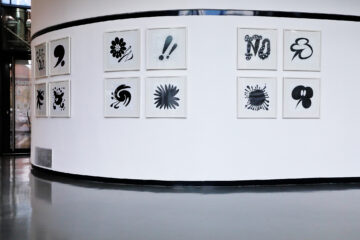

 Watching Israel and Iran lob bombs at each other these last few weeks makes me tired. Just when the world seemed completely destabilized and clinically looney, two countries who both trace their religions back to Abraham or Ibrahim decide to make things worse. I know you’re supposed to reach for the most recent issue of Foreign Affairs or parse treaties on nuclear non-proliferation to make sense of this missile orgy, but this latest war might make you reach for your earplugs and blindfold instead.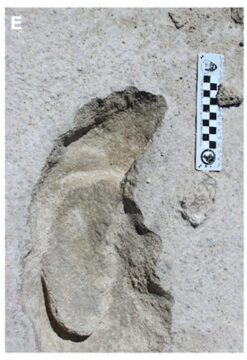



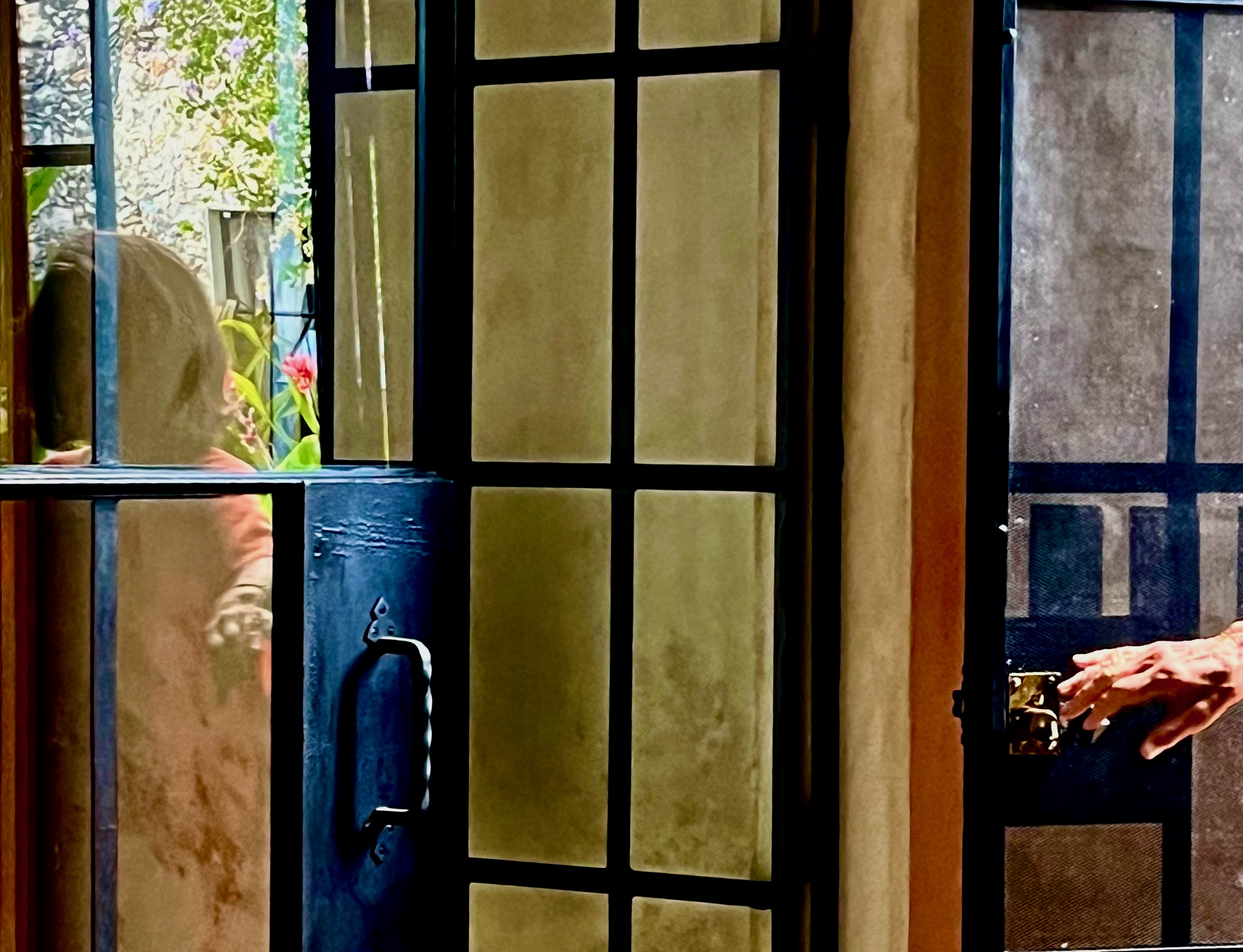 Sughra Raza. The Visitor. Mexico, March 2025.

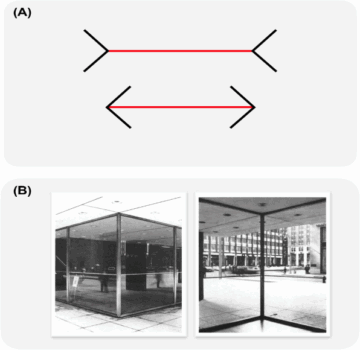


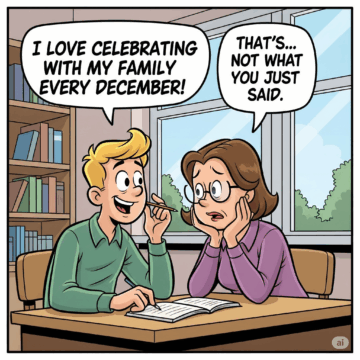 At a Christmas market in Germany, I told my German girlfriend’s mother that I masturbate with my family every December.
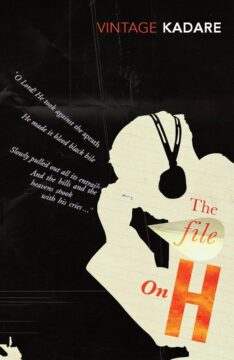 The File on H is a novel written in 1981 by the Albanian author Ismail Kadare. When a reader finishes the Vintage Classics edition, they turn the page to find a “Translator’s Note” mentioning a five-minute meeting between Kadare and Albert Lord, the researcher and scholar responsible, along with Milman Parry, for settling “The Homeric Question” and proving that The Iliad and The Odyssey are oral poems rather than textual creations. As The File on H retells a fictionalized version of Parry and Lord’s trips to the Balkans to record oral poets in the 1930’s, this meeting from 1979 is characterized as the genesis of the novel, the spark of inspiration that led Kadare to reimagine their journey, replacing primarily Serbo-Croatian singing poets in Yugoslavia with Albanian bards in the mountains of Albania.