by Dwight Furrow
 In a culture oscillating between dietary asceticism and culinary spectacle—fasts followed by feasts, detox regimens bracketed by indulgent food porn—it is easy to miss the sensuous meaningfulness of ordinary, everyday eating. We are entranced by extremes in part because they distract us from the steady, ordinary pleasures that thread through our daily lives. This cultural fixation on either controlling or glamorizing food obscures its deeper role: food is not just fuel or fantasy, but a medium through which we experience the world, anchor our identities, and rehearse our values. The act of eating, so often reduced to a health metric or a social performance, is in fact saturated with philosophical significance. It binds pleasure to perception, flavor to feeling, and the mundane to the meaningful.
American culture harbors a long-standing discomfort with pleasure born of its Puritanical roots and sustained by the contradictions of consumer capitalism. Even as we chase pleasure through consumption, we cloak it in guilt or dismiss it as indulgence. This ambivalence has moral, psychological, and spiritual dimensions. The dominant message is clear: enjoy, but not too much; indulge, but repent.
But this suspicion of pleasure misunderstands its role in life. Pleasure is not a passive sensation, an add-on to more “serious” pursuits. Rather, pleasure is a mode of attention, a reinforcement mechanism fundamental to cognition, agency, and sustained activity. The human brain is wired to experience pleasure from a bewildering range of sources and for good reason: Pleasure is a fundamental motivation. We are much more likely to engage in beneficial behaviors if we enjoy them. (Or course the same is true of harmful behaviors but the point about pleasure as motivation still stands.)
Indeed, pleasure motivates and sustains the very activities that give life meaning. When we speak of “flow,” of deep absorption in physical, creative or intellectual tasks, we are describing a form of pleasure inseparable from the activity itself. The distinction between pleasure and happiness matters here. Happiness is a long-term orientation toward life, a disposition of coherence and fulfillment. Pleasure, by contrast, is episodic, but no less essential. A life bereft of pleasure may be, under some circumstances, productive and ethical as well, but it is likely to be empty. Thus, we ought not treat pleasure as a luxury. It is part of the infrastructure of a life well-lived. Read more »
 Since 1914, the Federal Trade Commission ‘s mission has been to enforce civil antitrust and unfair competition/consumer protection laws. The question is whether this mission has been supplanted—whether the FTC under Trump 2 .0 is becoming the Federal Political Truth Commission.


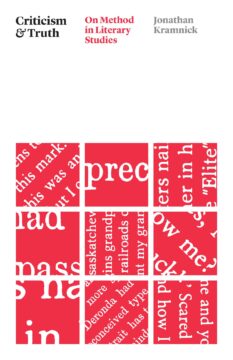 It is now close to 20 years since I completed my Ph.D. in English, and, truth be told, I’m still not exactly sure what I accomplished in doing so. There was, of course, the mundane concern about what I was thinking in spending so many of what ought to have been my most productive years preparing to work in a field not exactly busting at the seams with jobs (this was true back then, and the situation has, as we know, become even worse). But I’ve never been good with practical concerns; being addicted to uselessness, I like my problems to be more epistemic. I am still plagued with a question: Could I say that what I had written in my thesis was, in any particular sense, “true?” Had I not, in fact, made it all up, and if pressed to prove that I hadn’t, what evidence could I bring in my favour? Was what I saw actually “in” the text I was studying?


 Sughra Raza. Colorscape, Celestun, Mexico. March 2025.
 Lana Del Rey exists in a meticulously crafted world of her own. It’s a world apart. I purchased an invite to drop-by this summer, so that I might glimpse its finer details. Along with the crowd at the Anfield stadium in Liverpool, I was standing at its perimeter, gazing inwards, wondering. The atmosphere seemed rarified, there were even lily pads on the custom-built pond.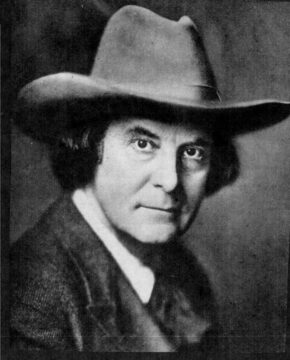

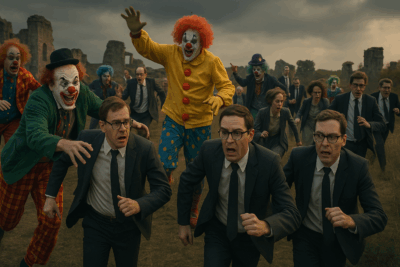 Today’s modest topic is the future of the West. Will it end in a bang, whimper or maybe just sort of muddle through in some zombie stagger? Whatever happens, a quarter of the way through the American Century, the standard of liberal democracy we hoisted as global inevitability twenty years ago hangs by the scruff of the neck and its enemies are eager to boot it straight into irrelevance.